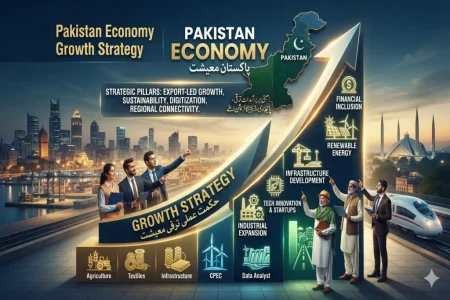



Pakistan’s economy has been under pressure for years and 2026 is proving no different. This year, however, there is a new twist. After helping broker talks during the Iran War, Islamabad is now asking Washington for a $10 billion financial lifeline. This moment of the Pakistan economy crisis moment could bring real relief or another round of high hopes and slow delivery for a nation just recovering from near-default.
The $10 Billion Request: What’s It All About?
Pakistan’s Finance Minister Muhammad Aurangzeb has asked US Treasury Secretary Scott Bessent to create a $10 billion bilateral exchange stabilization support facility to be paid back over a period of up to five years. This is not a grant. It is more of a financial backstop, comprising loans, currency swaps and guarantees, designed to protect the Pakistani rupee and strengthen foreign exchange reserves against shocks.
Why US-Iran Mediation Matters in This Case
Pakistan’s army chief and senior officials were seen to have played a role in talks about the Iran war, raising Islamabad’s profile in Washington. That diplomatic goodwill is now being leveraged for economic benefits. The report said officials in Washington see “strong chances” of approval, in part because the current US administration wants closer ties with Pakistan, including investment in projects like the Reko Diq copper and gold mine.
The Larger Economic Picture
Pakistan avoided default in 2023 with a $3 billion IMF bailout and is halfway through a $7 billion IMF program approved in 2024. Growth is modest, about 3.6 to 3.7 percent this fiscal year. Reserves have been held up by rollovers from China and Saudi Arabia rather than consistent export income, leaving the country vulnerable whenever a big repayment is due, as was the case when Pakistan paid back $3.5 billion to the UAE earlier this year.
What This Means for Normal Families
This is not just diplomatic news for ordinary Pakistanis. Usually a stronger rupee means the price of fuel, cooking oil and imported medicine will not rise as fast. The country has a large informal banking sector, with many households managing money through mobile wallets such as JazzCash and Easypaisa, rather than bank branches, so currency swings hit daily budgets quickly.
Quick household checklist now:
•Keep a small emergency fund in a mobile wallet or savings committee (BC/committee).
•Stay updated with State Bank of Pakistan interest rate announcements.
•Avoid large informal dollar borrowing when the rupee is volatile.
•Diversify income when possible, including small online or delivery work.
•Look out for updates on the state of the IMF review that will affect fuel and electricity prices.
Conclusions
The proposed $10 billion facility could really ease pressure on Pakistan’s reserves and rupee but approval is not assured and disbursement, if it happens, will take time. Normal families shouldn’t have to wait for this deal to sort out their own finances. The most practical way to remain financially steady through 2026 is through small savings habits and knowledge of IMF and central bank decisions.
References: