




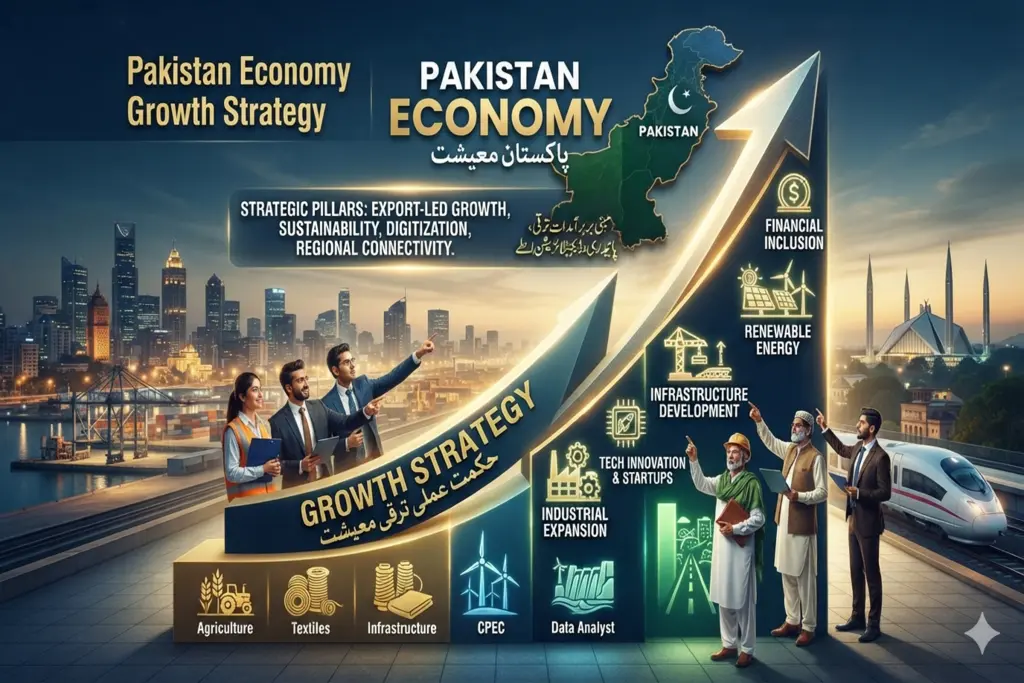
The country’s economy is taking the right steps, Federal Minister for Finance and Revenue Muhammad Aurangzeb said in a key macro-financial address to change national investment patterns and fast track the privatization of state-owned enterprises and development of parallel economy in the country. The minister said a structural shift from emergency stabilisation towards long-term growth of assets with a high product content was underway in his talk before top corporate brass at the Overseas Investors Chamber of Commerce and Industry (OICCI) in Karachi. The strategic policy redirect is particularly strong on the need to replace the aging boom and bust credit cycles with more efficient and effective fiscal infrastructure based on a more vibrant private sector jobs base technical efficiency and better export corridors.
As regional emerging markets face structural liquidity constraints transitioning from foreign aid dependencies to trade-driven cross-border capital infusions remains an absolute priority for state economic planners. Minister Aurangzeb highlighted that the government’s operational role is shifting toward digital regulatory facilitation and maintaining an unalterable business-friendly environment. By implementing system-vetted transparency tools across macro-industrial sectors the state successfully builds global investor predictability, stabilizes its sovereign external positions and projects a highly progressive sophisticated image of economic governance onto the global financial landscape.
Audits of Local Capital Mobilization and Privatization Node Ingestions
According to the operational logs presented at the chamber, domestic business syndicates have successfully demonstrated elite financial agility shifting traditional resource allocations toward large-scale national infrastructure plays.
The technical tracking sandbox monitors several primary investment streams currently undergoing structural reform:
The Consolidated PIA Transaction Pool: Local private sector groups successfully mobilized a record $1.2 billion in investment capital to participate in the landmark aviation privatization matrix proving massive domestic corporate liquidity depth.
The Power Sector Privatization Intersections: Advanced asset vetting has unlocked immediate interest from Turkish corporate investors targeting the privatization of electricity distribution companies (DISCOs) under a system-vetted legal sandbox.
Strategic Foreign Sovereign Capital Flows: Premium mining mineral extraction high-tech agriculture and green refinery upgrades have secured active evaluation pipelines from Saudi Arabian and international consortia via centralized investment facilitation boards.
Tracking Structural Taxation Expansions and Underserved Housing Credits
The macro-financial implications of these synchronized reforms are extensive, fully integrating with active state digitization campaigns. To drive deep structural taxation enforcement the FBR data warehouse has successfully scaled its active repository to over 5.7 million registered income tax filers marking an aggressive shift from 3.9 million last fiscal year and a baseline of just 1.8 million in 2022.
| Macro-Fiscal Indicator | Current Status | Previous Fiscal Base | Baseline Metric (2022) |
| Active Tax Filer Ingestion | 5.7 Million Records | 3.9 Million Records | 1.8 – 1.9 Million Base |
| Apna Ghar Funding Disbursals | PKR 60 Billion Settled | Pipeline Ingestion | Structural Concept |
| Private Capital Mobilization | $1.2 Billion Deployed | Legacy Aid Inflows | State-Funded Allocations |
Concurrently, public finance channels have safely routed approximately PKR 60 billion in credit allocations through the Prime Minister’s Apna Ghar Program to expand affordable housing access lines. To unlock further domestic savings pools, the state is actively introducing legal updates to deepen local capital markets and integrate emerging technologies—including blockchain Web 3.0 and digital SME financing grids. By enforcing policy continuity and minimizing document validation friction Pakistan eliminates structural risks, anchors corporate trust and safely preserves national economic stability.