

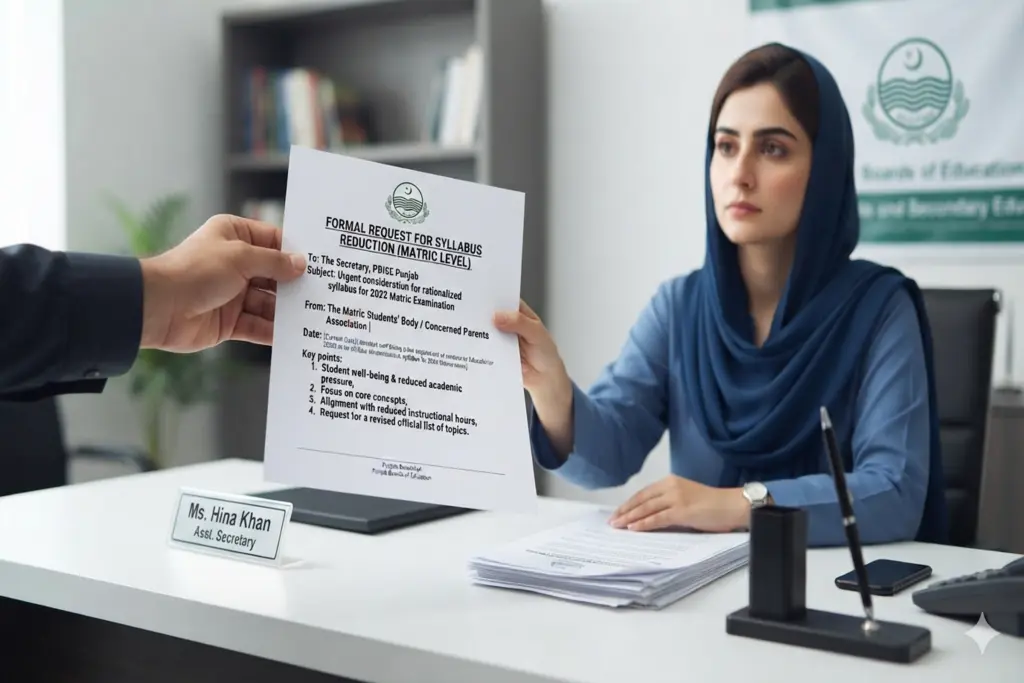
In a major policy intervention aimed at protecting national secondary education indices, maximizing academic delivery compliance and removing structural burdens from the matriculation examination lifecycle the Serving Schools Association has formally demanded an immediate reduction in the Class 9 and 10 syllabus. The emergency intervention transitions legacy rigid academic timelines into an adaptable crisis-mitigated learning framework. Formally presented by Association President Raza-ur-Rehman the baseline resolution warns that millions of students face immense academic transaction friction due to an acute shortage of active classroom sessions during the current academic year.
As regional educational boards align their testing grids with global assessment parameters, protecting student performance metrics remains an absolute priority for public sector planners. The rapid loss of active instructional intervals has created a massive backlog leaving secondary institutions under immense operational pressure as they race to complete dense textbook structures before the board evaluations. By calling for high-speed curriculum adjustments backed by centralized administrative overrides the association aggressively mitigates the risk of widespread student failure, stabilizes educational institutional predictability and successfully projects a highly responsible adaptive image of Pakistan’s secondary school networks onto the global academic landscape.
Audit of Teaching Deficits and Upcoming Seasonal Disruptions
According to the statistical database logs released by the association’s central execution board the total volume of classroom attendance has dropped to critical lows failing to cross the baseline benchmarks required for thorough textbook digestion.
The structural deficit in the academic timeline operates under the following performance parameters:
The Historic Instructional Shortfall: Despite half of the academic year already passing, students have been able to attend formal classes for a total of only 45 days driven by frequent unannounced school closures.
Secondary schools have a very short four-month period in which they can make tight Class 9/10 class groups before the official board exams begin.
Future Calendar Overlaps: Worsening of instructional days as the winter holidays Eid-ul-Fitr and seasonal Basant vacations are expected to reduce the remaining instructional days to a mere 60 days in the future.
Mitigating Examination Failure Risks and Protecting Long-Term Employment Indices
The impact of this education lag on the macro-financial and economic aspects is wide-spread affecting the future supply line of white collar human resources to the enterprise grids of the Local Area. Association leadership emphasized that sitting the board exams on a high density un-truncated syllabus increases the likelihood of a dramatic increase in the number of metrics failures when students take the exams.
| Academic Class Bracket | Current Year Attendance | Remaining Exam Horizon | Projected Future Disruptions | Long-Term Career Vulnerability |
| Class 9 (Secondary Part I) | Only 45 Active Days | 4 Months Bounded | Winter Break / Eid Vacations | Reduced corporate entry capabilities if board results contract. |
| Class 10 (Secondary Part II) | Only 45 Active Days | 4 Months Bounded | Winter Break / Eid Vacations | Systemic drop in future labor pool market entry values. |
To actively safeguard student progression metrics the association is urging immediate e-governance synchronization across all regional boards to drop non-essential units from the testing templates. Shifting from obsolete long-standing textbook dimensions to core conceptual frameworks directly shields young learners from severe mental fatigue, guarantees stable academic re-evaluations and safely preserves state public service human development indices.