



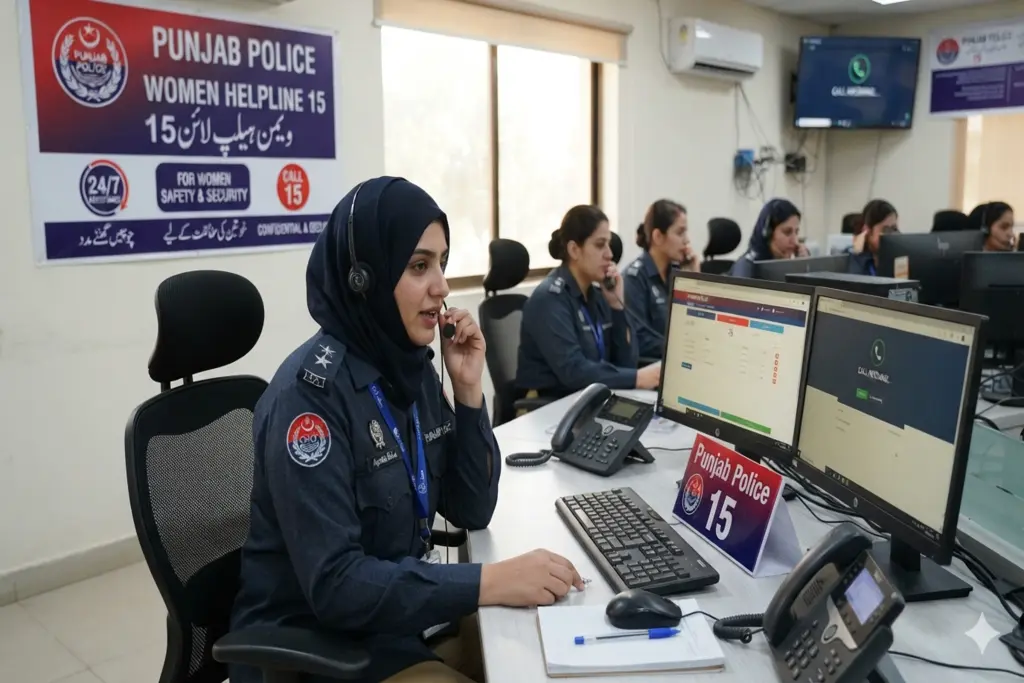
In a major citizen-centric deployment aimed at upgrading provincial public safety administration integrating high-speed geo-location response parameters and eliminating administrative communication layers within the law enforcement ecosystem the Punjab Police has officially launched a dedicated emergency response framework for women and children on Helpline 15. The progressive structural configuration transitions legacy manually routed desk complaints into a highly synchronized software-driven intervention sandbox. Formally initialized as a pilot project within the Model Town Division the framework dictates that female law enforcement personnel will act as the absolute primary first responders to instantly isolate threats, capture digital testimony and lock down secure spatial coordinates.
As global public safety utilities deploy smarter community policing algorithms safeguarding vulnerable urban demographics remains a top priority for state judicial planners. The rapid deployment of this touchless emergency dispatch system directly targets structural delay loops that historically forced domestic crime victims to undergo stressful visits to regional police stations. By introducing immediate on-scene application processing backed by unalterable backend ledger tracking the state successfully dampens documentation shortfalls, protects valid individual rights and projects a highly sophisticated secure image of Pakistan’s domestic security networks onto the global landscape.
Allocation of On-Scene Application Routing and Verification Parameters
According to the operational manual distributed by the provincial inspectorate the revamped helpline architecture completely discards slow manual data processing loops. The dispatch mechanism maps out explicit automated layers to execute immediate victim support directly at the scene of the incident:
The Automated Mobile Dispatch Unit: Upon receiving an verified distress flag involving family or minors on the Helpline 15 central dashboard the routing engine automatically assigns the nearest female patrol squad using live spatial tracking telemetry.
On-Spot Application Ingestion: Bypassing standard administrative waiting rooms female officers collect the electronic or physical application directly from the affected entity at the location.
Instant Digital Diary Log: The field team immediately issues an official diary number on the spot uploading the file profile into the central records management system to trigger real-time legal routing in seconds.
Mitigating Operational Shortfalls and Strengthening Legal Guidance Frameworks
The commercial and national security implications of this high-utility safety integration are extensive, fully aligning with active interior ministry cleanup mandates and human rights protection index guidelines. By establishing female officers as primary legal guides at the scene the system guarantees that domestic violence complaints receive a quick highly professional response without localized reporting bias. Shifting from slow manual reporting structures to interconnected digital data flows effectively shields victims from unnecessary travel and systemic legal friction. Once the pilot phase validates performance parameters within the Model Town sector the police command will execute a broader province-wide rollout across all metropolitan grids optimizing domestic security metrics and safely preserving state public safety indices.