

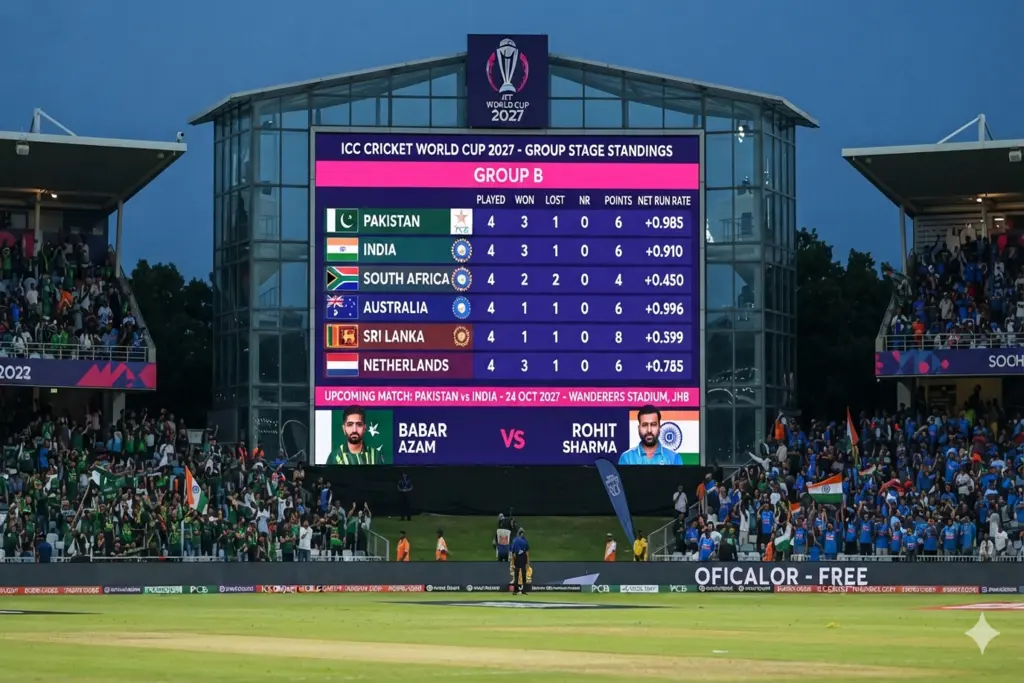
In a major geostrategic advancement for the global sports economy, international media broadcasting telemetry and macro-cricket infrastructure integration Pakistan and India are highly likely to be placed within the same group at the ICC Men’s ODI World Cup 2027. The calculated tournament configuration transitions traditional legacy group allocations into a highly automated commercial asset sandbox. Promoted directly by critical structural evaluations from primary global broadcasting corporations, the strategic pooling isolates the historic subcontinent rivalry as an essential group-stage anchor designed to instantly scale digital streaming metrics and optimize worldwide commercial interest.
As the International Cricket Council (ICC) and Cricket South Africa officially unveil the comprehensive tournament blueprint in Cape Town on Thursday October 1, 2026 the mega-event formally enters its historic one-year countdown window. Spanning a highly synchronized multi-nation hosting grid across South Africa, Zimbabwe and Namibia the 14-team tournament is scheduled to launch its live itinerary on October 2, 2027 before concluding with the grand final match on November 21, 2027. By integrating strict competitive metrics alongside localized audience demand nodes, global schedulers successfully eliminate structural viewership deficits and maximize regional sports tourism indices across shared African networks.
Allocation of the Expanded 14-Team Super 7 Format
According to the operational manifesto released by the ICC scheduling command the 2027 edition introduces a completely overhauled competitive architecture to manage team progressions without administrative bottlenecks. Bypassing old round-robin layouts the system deploys a structured phased elimination grid.
The engineered tournament framework operates on three primary performance layers:
The Preliminary Super Series Sandbox: The championship lifecycle launches with an intense qualifiers group involving the three lowest-ranked qualified teams to filter early entries.
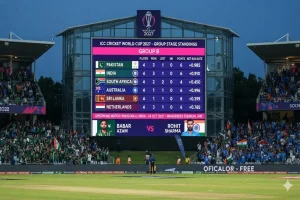
The 12-Team Dual-Group Matrix: Following the initial phase the central tournament shifts to a 12-team layout divided into two strict groups of six teams each. It is within this configuration that Pakistan and India are scheduled to be placed to secure their high-stakes group encounter.
The High-Yield Super 7 Stage: The top-performing units from each group securely advance into the newly engineered Super 7 stage creating a high-octane round-robin environment to determine the semifinalists and final contenders.
Expanding International Brand Equity and Enhancing Cricket’s Soft Image
The commercial and industrial implications of this automated group alignment are extensive, providing critical momentum to central sports boards, corporate sponsors and global ticketing networks looking to monetize peak audience engagement. Because encounters between these traditional rivals consistently shatter global viewership records the ICC has systematically integrated their match profiles into its modern scheduling scripts to shield tournament revenue portfolios from early financial shortfalls.
The Pakistan Cricket Board (PCB) has synchronized its team preparation logs against this newly revealed timeline, prioritizing premium athletic conditioning and squad stabilization ahead of the African campaign. This highly organized development utility systematically minimizes performance predictability shortfalls, drives up worldwide marketing engagement and establishes a secure space for sustainable corporate athletic sponsorships across global television networks.