

Diplomacy seldom gets the front pages that cricket or politics gets in Pakistan, but this trip is worth noting. Syria’s foreign minister arrived in Islamabad for a two-day visit that many are calling a turning point for ties between the two countries, and it’s worth understanding what actually happened and why it matters to people here at home.
A Historic First Visit
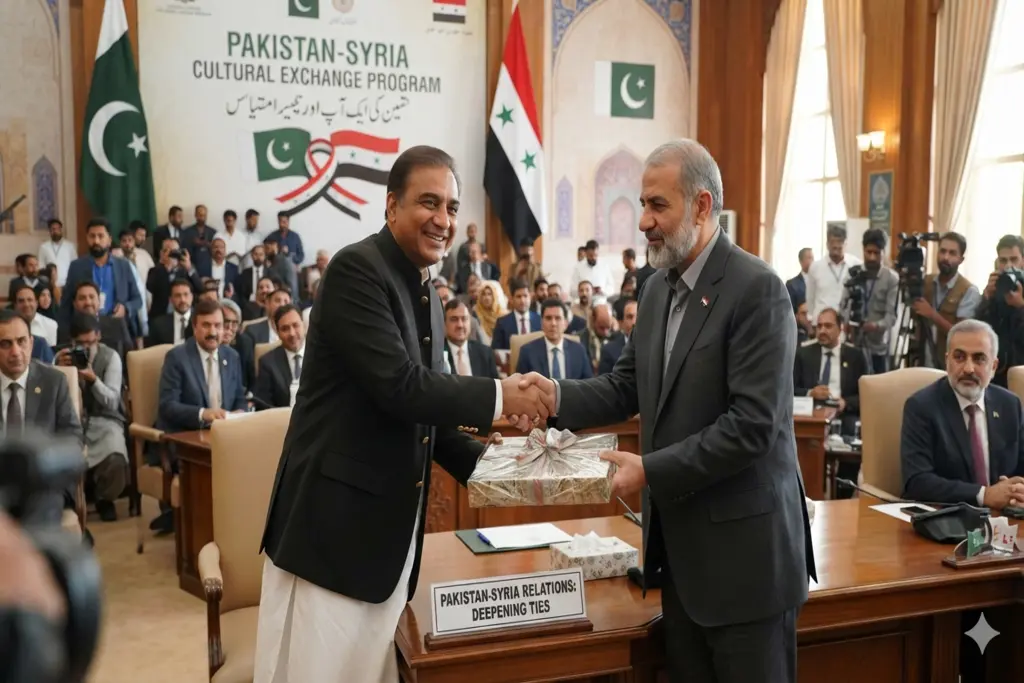
On August 19, 2026, Syria’s Minister for Foreign Affairs and Expatriates, Asa’ad Hassan Al-Shaibani arrived in Pakistan and stayed until the next day. He had been personally invited by Senator Mohammad Ishaq Dar, who is also the Deputy Prime Minister and the Foreign Minister. The significance of this trip lies in the fact that no Syrian foreign minister had visited Pakistan since the formation of the new government in Syria. This alone added to the importance of the visit to both sides.
Conversations between the two foreign ministers
In their meeting Dar and Al-Shaibani discussed the resumption of a relationship both countries described as brotherly. Some of the things that came out of these discussions were:
•Both sides agreed to restart the official mechanisms that used to guide cooperation between the two governments.
•They promised to extend cooperation where their interests coincide.
•Plans were made to promote more contact between ordinary citizens of both countries, not just officials.
•Both sides reiterated the historic, old bond between Pakistan and Syria.
Outside the Ministry of Foreign Affairs
The visit included more than one meeting room. Al-Shaibani also had talks with Prime Minister Shehbaz Sharif, an indication that Islamabad wanted to make more than a routine protocol of this visit. He also met the Minister for Interior and Narcotics Control, the Minister for Commerce and the Chief of Army Staff. The fact that the two will cover interior affairs, trade and defense in one visit suggests they may be thinking about cooperation beyond paper.
Why Pakistanis Should Care:
Closer ties with Syria could eventually open new trade routes, particularly for local exporters already active in the Middle East. It might also be important for Pakistani workers who look to the region for jobs, since better diplomatic relations often mean easier travel and labor arrangements down the line.
WHAT TO WATCH NEXT:
•Any formal trade deal or joint commission announcement.
•Latest from Pakistan’s Commerce Ministry on Syria.
•News about easier visa or travel arrangements.
•A possible return visit to Damascus by Pakistani officials.
Conclusion
This visit sets the stage for a working relationship, not just symbolic photo ops. It will take time to see real outcomes, but the renewed diplomatic contact between Islamabad and Damascus is one worth keeping a close eye on.