


Money issues are almost never a government meeting issue. When Pakistan’s ambassador talks about US trade and investment in Washington, it ultimately boils down to the cost of goods, employment opportunities and business prospects at home. Pakistan’s envoy has recently presented a compelling case for deeper economic ties, which could shape how ordinary Pakistanis earn and spend in the years ahead.
Why the Envoy’s Push Matters
Pakistan’s ambassador to the United States, Rizwan Saeed Sheik, has been touring business leaders and officials in American cities, seeking greater US investment in sectors such as minerals, surgical instruments and manufacturing. This is not a diplomatic language. The US is Pakistan’s single largest export market and any change in this bilateral trade relationship impacts thousands of jobs in Sialkot’s surgical industry, Faisalabad’s textile mills and Balochistan’s mining regions.
Implications for Pakistani Business
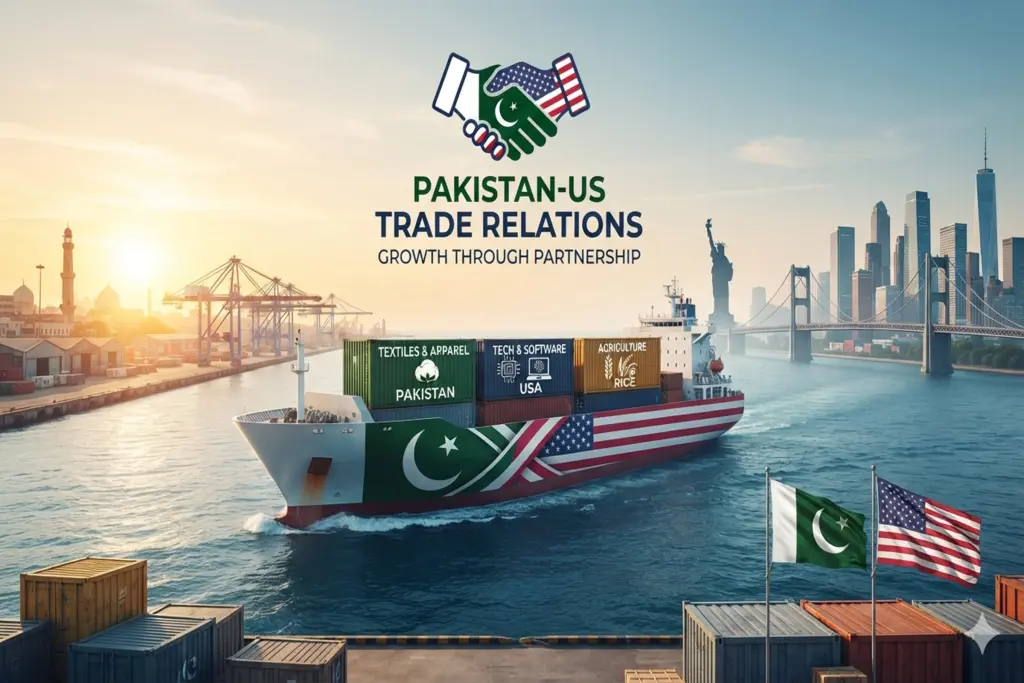
Pakistan US ties could open new doors for small and medium exporters that were previously closed due to high costs or limited access to American buyers. Trade terms could be the biggest boon to textile exporters, as the US already takes a big chunk of Pakistan’s garment and apparel exports.
Local Context Pakistanis Need to Know
•Pakistan’s trade with the US crossed nearly nine billion dollars last year, largely on the back of textiles.
•Many exporters still depend on informal networks or intermediaries because they have little direct access to the American market.
•Mobile-first businesses, especially those with digital payment apps, are better positioned to facilitate rapid international transactions.
•The State Bank of Pakistan keeps on relaxing some of the foreign exchange rules to help exporters searching for new investment avenues.
How it impacts the average Pakistani
But a stronger trade relationship doesn’t mean an overnight change for the average household. But if dollar inflows through investment increase, it can mean more factory jobs, better wages in export-linked sectors and a more stable rupee over time.
Quick Checklist for Businesses Keeping an Eye on This Space
•Follow updates from the Board of Investment and the Ministry of Commerce.
•Register with trade bodies such as FPCCI for export opportunities.
•Digital platforms promise to connect you directly with US buyers.
•Track any new investment policies announced after high-level talks.
•Don’t just look at textiles. The US is also interested in some sectors like minerals and IT services.
Conclusion
The real test, though, will be whether these talks translate into real dollars, jobs and factory orders for Pakistan, apart from the diplomatic push and photo opportunities. The message from Washington for now is clear: there is American interest but Pakistan needs to keep showing up with consistency and reliable policies to turn that interest into lasting economic benefit with deeper US trade and investment ties.