




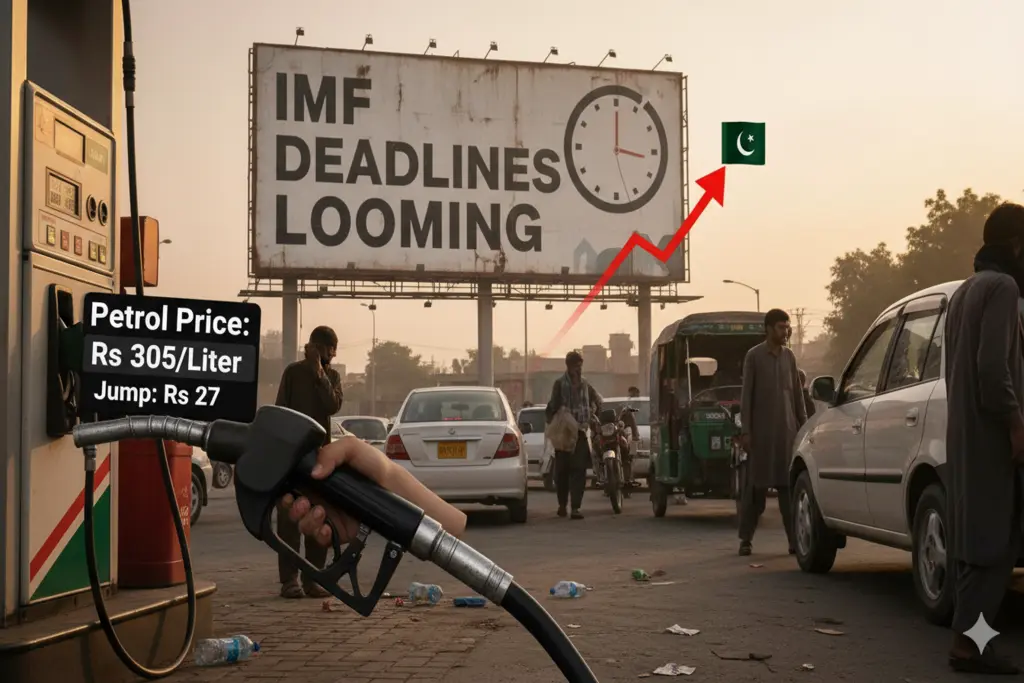
Today, April 25, 2026, has come as a shock for the Pakistani populace. There are reports circulating in financial and social media that the government has given a green signal for a massive Rs. 27 per liter hike in petrol prices. The abrupt decision comes at a pivotal time as Pakistan engages in intense talks with the International Monetary Fund (IMF) to adhere to key deadlines in May for its next bailout.
The economic climate in Pakistan is currently under immense pressure. While global oil prices have shown relative stability, the domestic Petrol Price Hike in Pakistan is being driven by structural demands rather than market fluctuations. Analysts suggest this hike is a strategic maneuver to satisfy the IMF’s requirement to increase the Petroleum Development Levy (PDL) and eliminate energy subsidies before the May review.
The IMF Connection: Meeting the May Deadlines
The International Monetary Fund (IMF) has imposed tough targets for the country to meet by May 2026. These include the curbing of circular debt and a substantial increase in tax collection from the power sector. Sources within the Ministry of Finance indicate that the government had little choice but to pass on the cost to consumers to secure the next tranche of funding.
Market Reaction: The Ripple Effect on Daily Life
Typically, fuel price adjustments are announced on the 15th or the last day of the month. But the timing of this Petrol Price Hike in Pakistan – on a Saturday morning – has surprised many. Inquiries from the public on social media have flooded the Oil and Gas Regulatory Authority (OGRA) to verify the price increase at the forecourts.
The immediate consequences of this hike include:
Public Transport: Overnight, expect public transport and freight charges to increase by 10-12%.
Food Inflation: With rising transport costs, the prices of dairy products, vegetables and flour will also rise.
Electricity Rates: There will be larger Fuel Price Adjustments (FPA) in the next electricity bill.
What’s in Store for Consumers?
This could be only the beginning, say experts. As May deadlines loom, the government could be compelled to take more austerity measures.
If the global market experiences any volatility, we could see another Rs. 15 to Rs. 20 added to the price before the end of the quarter.