



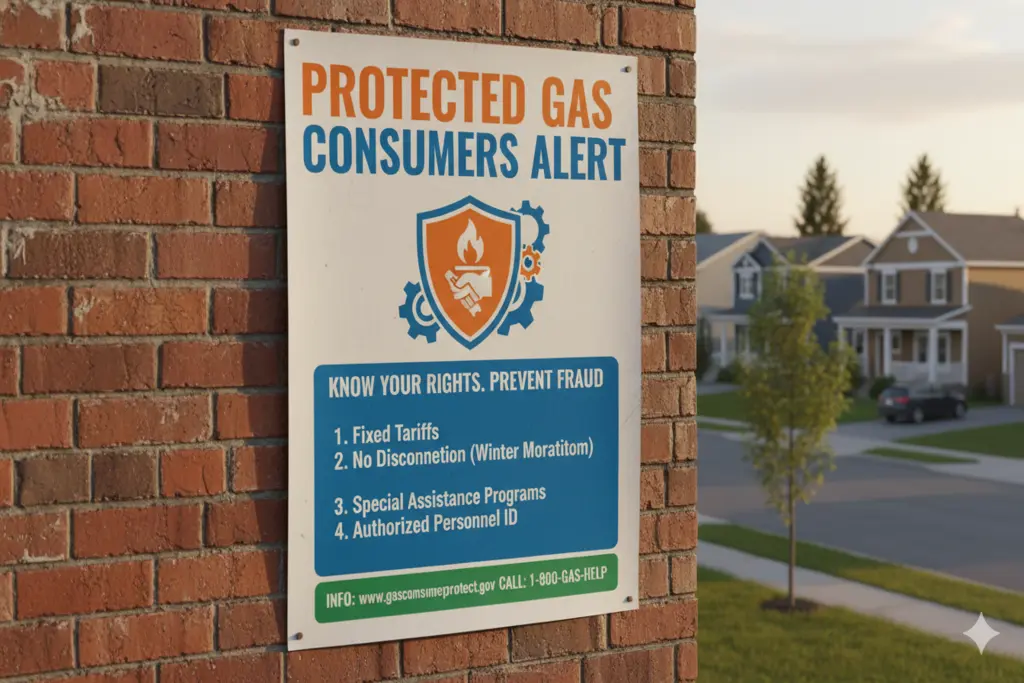
A major structural shift is heading toward Pakistan‘s domestic energy sector. The federal government has committed to a sweeping reform package under its structural adjustment program with the International Monetary Fund (IMF). This Protected Gas Consumers Alert highlights the upcoming elimination of the Rs140 billion gas cross-subsidy [6]. The decision directly impacts millions of low-income and protected domestic consumers who previously enjoyed highly subsidized gas tariffs.
This analytical article breaks down how this fiscal adjustment alters your gas bills, the structural mechanics behind the change, and the exact implementation timelines.
Understanding the Discontinuation of the Cross-Subsidy
Historically, Pakistan’s domestic gas tariff structure did not rely on direct cash injections from the federal budget to support low-income families. Instead, the government utilized a “cross-subsidy” mechanism. Under this framework, high-volume domestic users, commercial businesses, CNG stations, cement factories, and industrial Captive Power Plants were charged inflated, premium rates. The surplus revenue generated from these high-tariff segments was then used to artificially lower the fuel costs for low-income or “protected” domestic households .
To eliminate energy sector market distortions, minimize circular debt, and create a sustainable fiscal footprint, the IMF has mandated the complete dismantling of this cross-subsidy framework.
New Gas Tariffs: How Much Will You Pay?
According to initial policy frameworks outlined by the Ministry of Energy (Petroleum Division), the discontinuation of the subsidy means Pakistan will move away from its legacy multi-tiered slab system for protected groups.
- The Equalization Target: The ultimate goal of this reform is to bring all domestic consumers to a uniform, cost-reflective national flat rate.
- The Price Benchmark: Currently, the average gas price required to clear corporate circular debt sits at approximately Rs1,750 per MMBtu.
- The Billing Impact: Once the subsidy is completely withdrawn, protected households will no longer pay cheap token tariffs. Instead, they will be billed directly against the flat rate of Rs1,750 per MMBtu. For a household that previously paid only a few hundred rupees per month, this flat-rate billing model will lead to a multi-fold increase in monthly utility expenditures.
Implementation Timeline: From When Will It Be Effective?
The government has assured international lenders that it will transition away from distorted pricing matrices through a phased approach to prevent immediate macroeconomic shockwaves:
- Final Transition Deadline: The government has established a strict target of January 2027 to completely eliminate the Rs140 billion cross-subsidy.
- Phase-In Adjustments: Initial structural adjustments—including revisions to monthly fixed pipeline charges and gradual slab compressions—are anticipated to commence via the Oil and Gas Regulatory Authority (OGRA) alongside incoming budgetary sessions.
The New Cash-Based Direct Relief Alternative
Recognizing that immediate exposure to international pricing scales could severely impact vulnerable demographics, the government is shifting from commodity-based subsidies to direct targeted income support:
- Income-Based Qualification: Relief will no longer be determined by how little gas a household burns. Instead, eligibility will be strictly calculated based on verified household income data.
- Integration with BISP: The state will leverage the socio-economic registry data of the Benazir Income Support Programme (BISP). Eligible, low-income families registered with BISP will receive direct monthly cash transfers to supplement their income, helping them offset the rising cost of market-rate utility billing.
READ: More Informative Content