

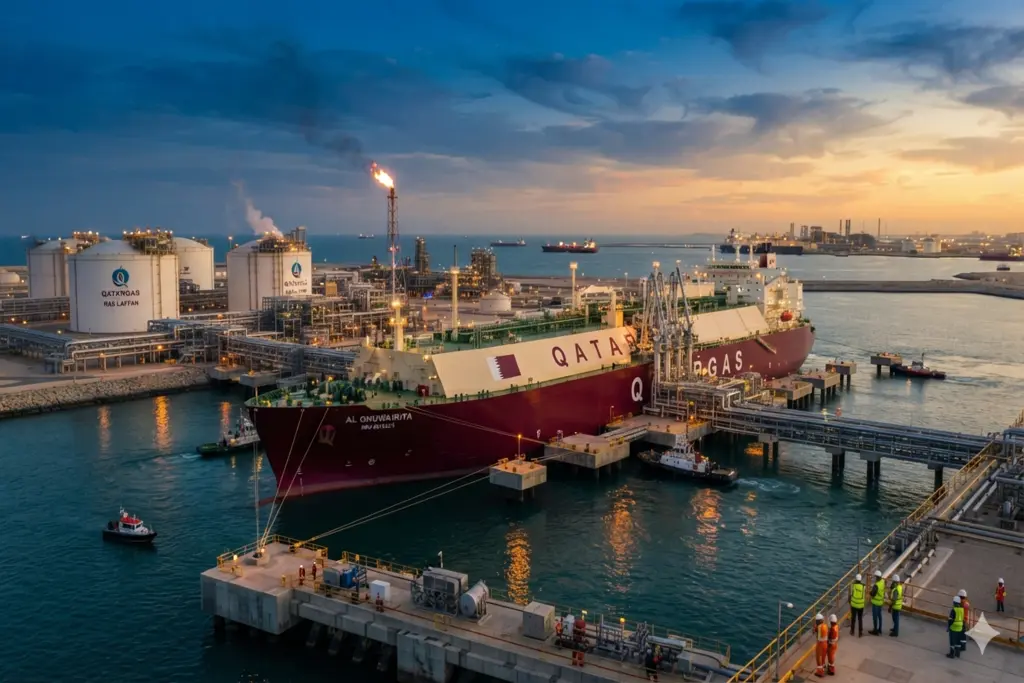
For weeks, Pakistani households have been enduring long power outages and higher fuel bills due to tension in the Gulf region. And now for some good news. A Qatari liquefied natural gas vessel has finally crossed the Strait of Hormuz and reached Karachi, the first such delivery since July 11. This shipment is very important for a country already grappling with energy shortages.
What went wrong at Port Qasim?
The vessel, named Al Marrouna, was carrying some 82,000 tonnes of LNG from Qatar’s Ras Laffan terminal. It crossed through Hormuz on Monday and arrived at the Engro LNG Terminal at Port Qasim on Thursday morning. Regular Qatari cargoes have been stopped since mid-July due to regional tensions near the strait, a narrow but extremely important sea route through which a large share of the world’s oil and gas passes, port officials confirmed.
Why This Matters for the Power Sector in Pakistan
Pakistan buys this LNG under a government-to-government agreement with Qatar. It is used to operate gas-fired power plants across the country. When shipments cease, gas supply to these plants dwindles and this usually means longer hours of load-shedding for common citizens. The new cargo won’t fix the crisis overnight, but it provides some short-term relief for an already-stressed power sector.
The Bigger Picture: Gas Prices and Everyday Life
Currently, many parts of Pakistan are facing six to 12 hours of power cuts daily. On top of that is the daily fuel price mechanism by the government that hikes petrol and diesel prices, triggering public protests. Transport companies have already raised freight charges by 10 percent, pushing up the prices of everyday goods, ranging from vegetables to medicines.
Things the Average Pakistani Should Notice
•Watch official notices regarding load-shedding schedules in your community.
•Before planning your travel or business expenses, check the fuel prices every day.
•Support local businesses that may have higher prices due to increased transportation costs.
•Stay updated through trusted local news sources, not rumors on social media.
Conclusion
This LNG shipment is a small but important step in stabilizing Pakistan’s energy supply at a time of tension in the Gulf. But genuine relief for households and businesses will only come if such shipments are sustained on a regular basis and if the pricing of fuels is reviewed. In the meantime, the best way for Pakistani families to deal with increasing costs is to be informed and plan ahead.