


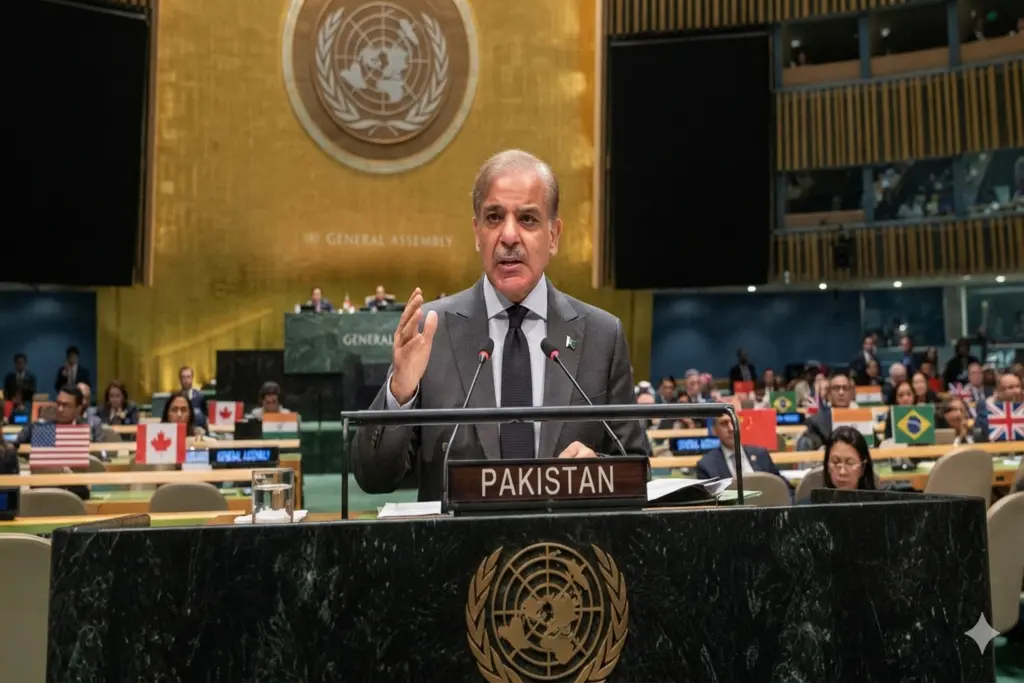
New York was the venue, but the message was aimed squarely at home. Prime Minister Shehbaz Sharif took the podium at the United Nations General Assembly this week and, over roughly twenty minutes, ran through nearly every issue that keeps Pakistanis up at night. The Kashmir dispute got attention, so did Gaza, and so did a few things closer to home like river water and rising climate stress.
Why This Speech Actually Matters Back Home
This is the fourth time Shehbaz has stood at that podium, so there was nothing new about the setting. What stood out was the tone. He wasn’t just talking to diplomats in suits, he was talking past them, to the 240 million people he kept referencing throughout the speech. He brought up the numbers most Pakistanis already know by heart: nearly 100,000 lives lost and over 150 billion dollars gone in the fight against terrorism. It’s a figure that gets repeated often, maybe too often, but it still lands because the sacrifice was real.
Kashmir and the Water Question
On Kashmir, nothing changed in substance. He called again for the UN-backed plebiscite that has been promised for decades and reaffirmed political and moral support for the right to self-determination. What got sharper was the language on the Indus Waters Treaty. He didn’t hedge. Any move by India to block or divert Pakistan’s share, he said, would be treated as an act of war. For anyone farming in Punjab or Sindh, or just paying attention to how canal levels affect the price of wheat, that line probably mattered more than anything else in the speech.
Gaza and a Message About Islamophobia
He spoke about Gaza with more feeling than the usual diplomatic script allows, pushing for an independent Palestinian state with Al-Quds Al-Sharif as its capital. He also raised Islamophobia directly, pointing to mosque attacks and hate speech abroad, something that resonates strongly with a population that follows these stories closely on social media.
A Few Other Things He Touched On:
- Gave credit to the military leadership for helping ease tensions after the Makkah drone attack earlier this year
- Pointed to the Field Marshal’s meetings in Riyadh as a sign that Muslim countries are coordinating more closely on defence
- Defended last year’s response to India under Article 51 of the UN Charter, calling it self-defence, not aggression
- Asked Afghan authorities, again, to stop militant groups from operating out of Afghan territory
- Talked up economic reforms and continued cooperation through CPEC, plus a push into IT and AI training for young people
- Pressed wealthy nations to actually pay up on climate finance, noting Pakistan produces under one percent of global emissions yet keeps absorbing the damage
What It Means If You’re Just Trying to Get By
Most people watching this on their phone between work and traffic aren’t thinking about UN reform. They’re thinking about fuel prices, water for their fields, and whether any of this diplomacy translates into something real. That’s the honest gap here, big speeches versus daily life, and it’s one every Pakistani government eventually has to answer for.
Conclusion
There wasn’t much in this speech that broke new ground, but that wasn’t really the point. It was Pakistan restating where it stands, on Kashmir, on water, on Gaza, on peace, loudly enough that nobody in that hall could pretend not to hear it. Whether any of it moves the needle is a different question entirely, and one only will answer.