




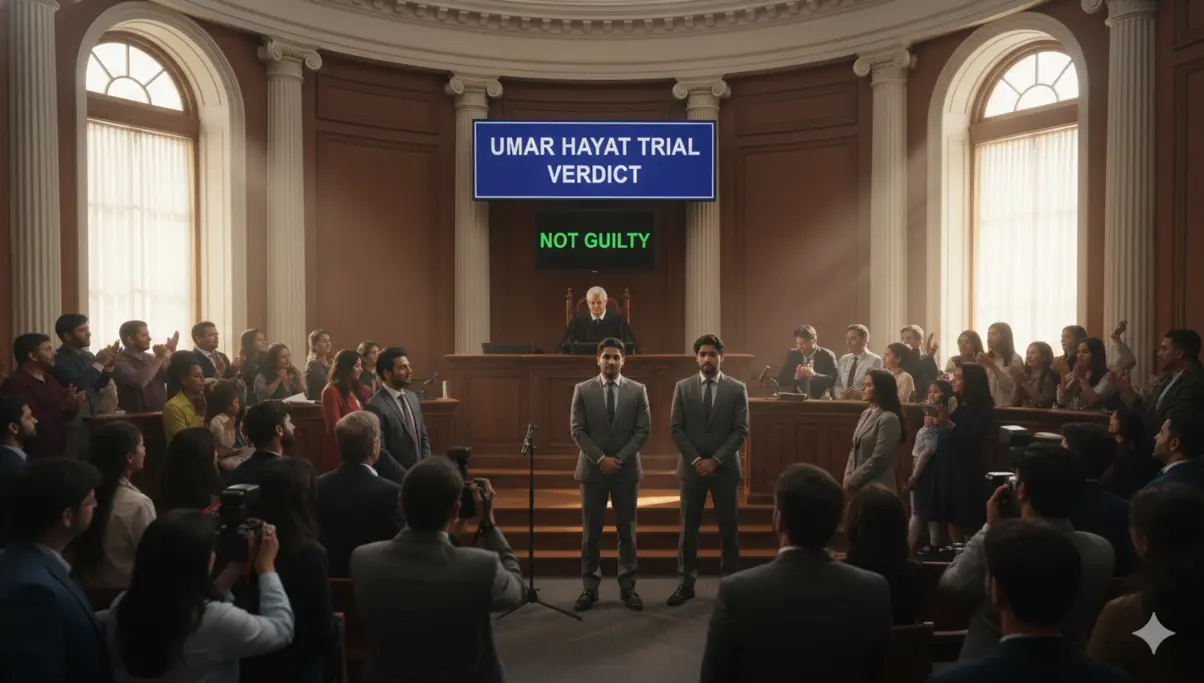
The high-profile Umar Hayat Trial Verdict marks a significant step in the realm of digital safety, cybercrime prevention, and women’s protection in Pakistan. The prime culprit Umar Hayat, who killed Tik Tok influencer Sana Yousaf, 17, has been sentenced to death by a District Court and Sessions Court in Islamabad. The tragic case is a chilling reminder of how easy it is to become obsessed with someone on the internet and how it can turn deadly.
Background: From Online Interactions to Fatal Obsession
The official investigative reports have it that the engagement started on mainstream social media platforms between Umar Hayat from Faisalabad and Sana Yousaf, who was originally from Chitral, and is 17 years old. Sana was a popular lifestyle and fashion influencer, who had built a large following on TikTok.
In time, Umar became very obsessed about one thing, which was the right eye. Sana became aware of his negative character, set clear limits and finally rejected his advances, which drove Umar to make extreme attempts of stalking him, both digitally and physically. The Capital Territory Police confirmed that the attack, which resulted in the second killing, was a deliberate retaliation based on “repeated rejection.”
The Horrific Incident of June 2, 2025
The convict tried to forcefully meet Sana on her birthday, but the attempt failed, and the convict planned a very cold and dark plot. Umar rented a car on June 2, 2025 and went from Faisalabad to Islamabad to enter Sana’s family residence in Sector G-13 with the security clearance of the residence. He was able to break into the upper part of the house and a heated argument broke out, whereby Umar fired two bullets at Sana that struck his chest.
The whole incident was in front of the victim’s mother and aunt. In an effort to cover up the online harassment he had been carrying on for years, Umar had the opportunity to steal Sana’s iPhone before leaving the crime scene. The Islamabad Police managed to track Umar and apprehend him in Faisalabad from advanced CCTV footage and mobile data triangulation in just 20 hours after his theft.
Inside the Courtroom: The Umar Hayat Trial Verdict
The heavy court proceedings were conducted at Islamabad District Court and Sessions Court presided by Additional Sessions Judge Afzal Majoka. Defendant gave an initial confession in the presence of a Magistrate under Section 164 of the CrPC, but later withdrew it at the trial, arguing that the police had coerced them.
The prosecution case was, however, air tight and aided by forensic DNA matching, CCTV evidence and eye-witness evidence. The court handed down the final Umar Hayat Trial Verdict on 19 May 2026 which included the following severe sentences:
The death penalty: Be sentenced for premeditated murder under Section 302 of the Pakistan Penal Code (PPC).
Rigorous Imprisonment: A second concurrent sentence of 21 years imprisonment for Armed Robbery and Theft under the various sections of the victim’s phone.
Fine: PKR 2.5 million to be paid to the aggrieved family.
The state’s top agency for combating digital vulnerabilities, FIA Cyber Crime Wing, has reiterated the importance of prosecuting digital stalkers. The quick decision from a court sends a clear and firm message to cyber stalkers nationwide, according to legal professionals.
The Critical Need for Digital Safety Measures
Upon the announcement, the victim’s father Syed Yousaf Hassan said he was immensely happy that the capital punishment will act as a deterrent forever. Digital rights activists also note that women are the victims of tremendous amounts of online abuse in Pakistan.
While in the case of digital harassment, cyber threat or persistent stalking, the offenders must be immediately reported through the official portal of the National Cyber Crime Investigation Agency (NCCIA). The tragic ending of this trial should remind us that digital threats can have real-world consequences, and should not be taken lightly.