
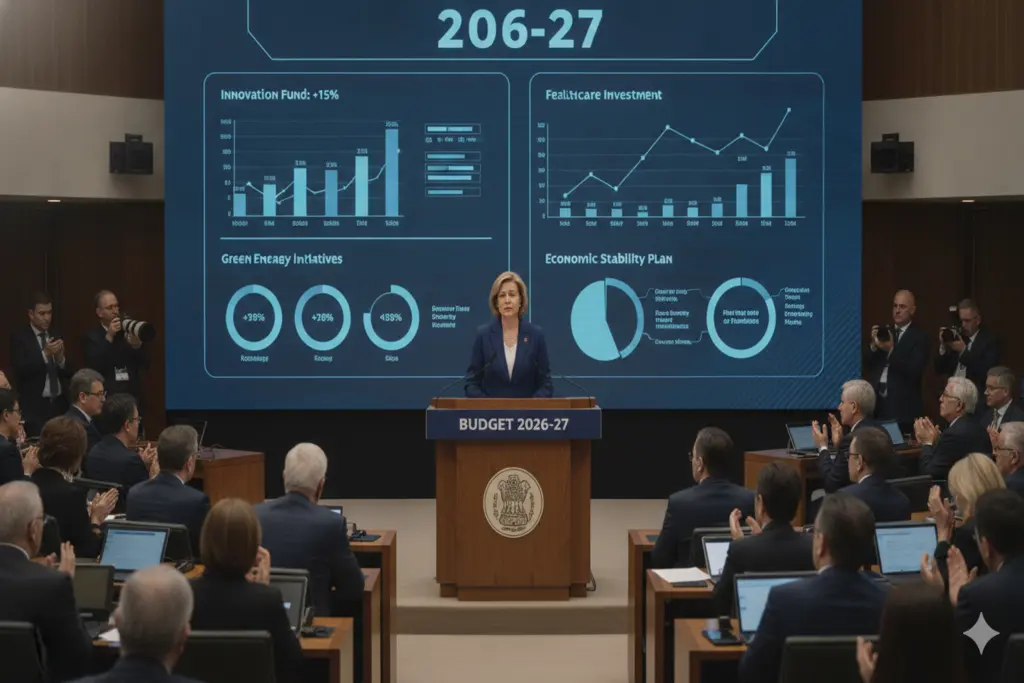
The Federal government has presented the Federal budget 2026-27 to the National Assembly. The new economic blueprint, drawn up under strict International Monetary Fund (IMF) guidelines, is firmly based on the three priorities of widening the tax base, slashing any unnecessary public spending and normalizing macro-economic markers.
It can be daunting for citizens, businesses and investors to follow all the sweeping fiscal changes. This is a simplified and decoded list of 10 key Budget 2026-27 Highlights that you should be aware of.
1. Massive Revenue and Collection Targets
The total outlay of the Budget 2026-27 is projected at Rs. 18.77 trillion. To fund this ambitious expenditure framework, the Federal Board of Revenue (FBR) has set an aggressive tax collection target of Rs. 12.97 trillion. The government aims to secure these funds primarily by digitizing retail systems and aggressively chasing non-filers.
2. Relatable Relief for Salaried Individuals
In a highly anticipated move, the government restructured income tax slabs for the formal employment sector. Salaried professionals earning over Rs. 183,000 per month will experience a slight reduction in their net income tax deduction. Furthermore, the temporary emergency income tax surcharge introduced in the previous fiscal year has been entirely abolished.
3. Salary and Pension Adjustments for Public Sector
To help government workers combat the lingering impact of inflation, the fiscal layout includes a 7% raise in salaries and pensions for all federal public sector employees. Additionally, the national minimum wage for low-skilled and manual laborers has been raised to Rs. 40,700 per month.
4. Significant Growth and Inflation Targets
The economic roadmap has a realistic target for Gross Domestic Product (GDP) growth of 4.0% for the next fiscal year. The Ministry of Finance is working to tightly bring the core inflation rate down to the annual level of 8.2%, alongside economic growth.
5. Escalation in Defense Allocations
Amid evolving regional security dynamics, national defense remains a top spending priority. The defense budget has received a significant 17.6% boost compared to last year, with an allocation of Rs. 3.0 trillion dedicated strictly to military expenditures and security maintenance operations.
Key Financial Targets of Budget 2026-27
| Metric / Sector [16, 17] | Budget Target |
| Total Outlay | Rs. 18.77 Trillion |
| FBR Tax Target | Rs. 12.97 Trillion |
| GDP Growth Target | 4.0% |
| Inflation Ceiling | 8.2% |
6. Boost for Real Estate: Slashing Property Taxes
In a bid to revive a stagnant construction and property market, the government has given significant relief to registered tax filers. The withholding tax applied on buying or selling immovable property has been reduced from 2.5% down to 1.5% for active taxpayers, though penalty rates for non-filers remain exceptionally high.
7. IT Sector and Freelancer Tax Holiday Extension
Recognizing the IT sector as a primary engine for foreign remittance, the budget secures long-term stability for digital exports. The current 0.25% fixed tax regime for IT exporters and digital freelancers has been extended for another three years, guaranteeing protection until the fiscal year 2030.
8. Relief on Foreign Card Transactions
To promote legal banking channels over the informal gray market (Hundi/Hawala), the withholding tax on international debit and credit card transactions has been drastically slashed. The previous 5% tax rate has been cut to just 0.5%, making online international subscriptions and overseas travel spending much cheaper for bank account holders.
9. Restructured EV Import Tax Slabs
The government has introduced a new luxury tax slab system for completely built-up (CBU) imported electric vehicles. While eco-friendly EVs valued under Rs. 20 million enjoy a 0% customs duty rate, mid-tier luxury EVs (Rs. 20M to Rs. 30M) face a 30% duty, and premium EVs valued over Rs. 30 million face a heavy 40% duty.
10. Expanding the Social Safety Net (BISP)
To protect the most vulnerable segments of society from economic shocks, funding for the Benazir Income Support Programme (BISP) has been scaled up by 17%. The program’s total funding now stands at Rs. 838 billion, which will directly provide monthly financial stipends to over 12 million deserving families across Pakistan.