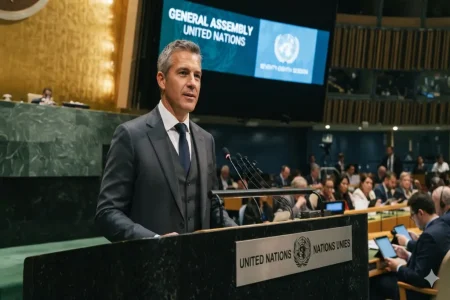
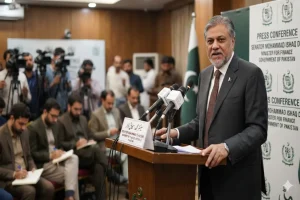
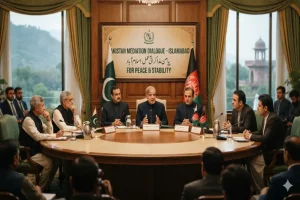


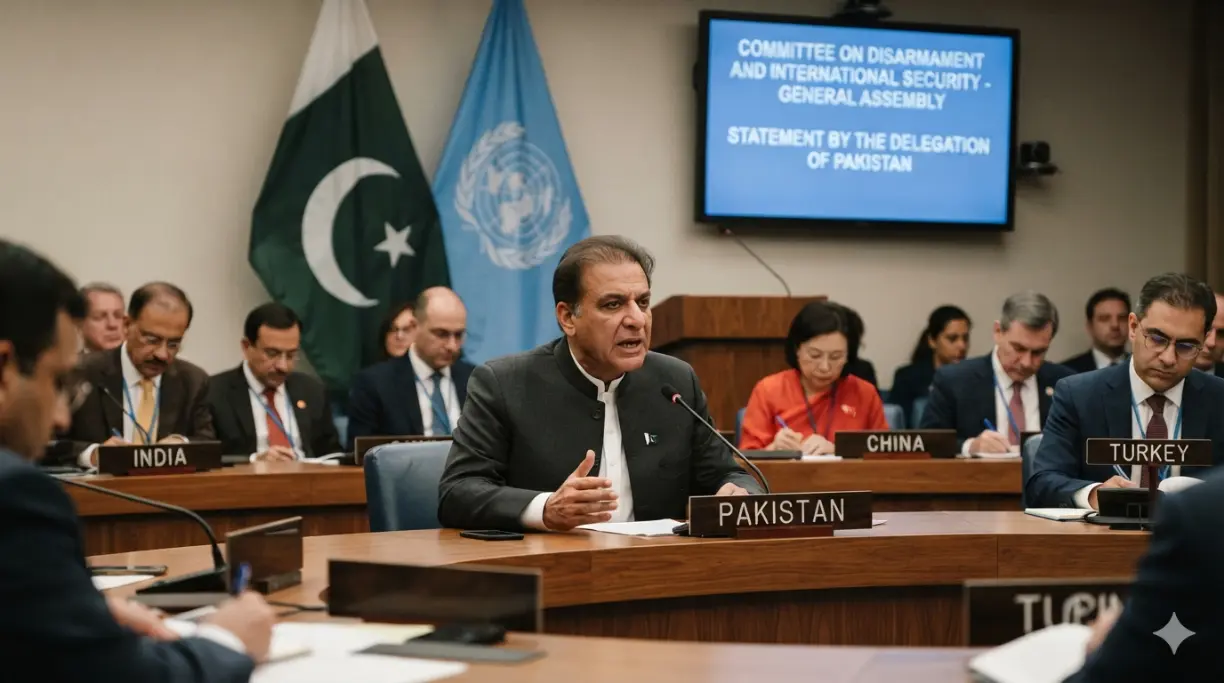
Pakistan has again raised the alarm at the United Nations. Afghanistan remains a safe haven for banned militant outfits, its envoy told the UN Security Council. It is not a diplomatic language for the families in Khyber Pakhtunkhwa and Balochistan. It is a daily reality of bomb explosions and checkpoints and fear.
What Pakistan said at the UN
Addressing a Security Council briefing on terrorism, Ambassador Asim Iftikhar Ahmad, Pakistan’s Permanent Representative to the UN, said, “He said there are a number of groups operating freely from Afghan territory, including the banned Tehreek-e-Taliban Pakistan (TTP), the Balochistan Liberation Army (BLA) and its Majeed Brigade, Islamic State Khorasan (IS-K) and the East Turkistan Islamic Movement (ETIM).
The security situation in Afghanistan “continues to be deeply alarming” since the Taliban took power in August 2021, the envoy said. “These groups are flourishing in what he termed a more and more permissive environment,” he said.
Why This Matters for Ordinary Pakistanis
This is not just a problem for diplomats in New York. It impacts:
•Families living near the Pak-Afghan border who are always living in fear of cross-border attacks.
•Security personnel used in KP and Balochistan regularly ambushed.
•Transporters and traders whose routes go through militancy-hit districts.
•Students and workers whose daily commutes are impacted by security lockdowns.
The figures and Pakistan’s stance
The Pakistan envoy gives disturbing figures. He said Pakistan faced more than 5,300 terrorism-related incidents in a single recent year and more than 1,200 people were killed in violence linked to groups based across the border. Pakistan has repeatedly urged the Taliban administration to take verifiable and lasting action against these groups but says these calls have gone unanswered.
What Pakistan Has Given Afghanistan
The situation is tense, but Pakistan says it has supported the Afghan people through:
•Humanitarian assistance and relief supplies.
•Political participation and debate.
•Incentives to promote bilateral trade.
•Hosting millions of Afghan refugees for decades.
A simple checklist to diagnose the problem
•Pakistan says groups based in Afghanistan are planning attacks on its soil.
•The Taliban government denies it provides safe havens to the groups.
•The UN Security Council has been briefed several times this year.
•Pakistan is continuing to press Kabul for “verifiable, non-reversible” action.
Conclusion
Pakistan’s UN envoy has sent the message loud and clear. Until Afghanistan’s rulers take concrete, verifiable action against banned groups, Pakistan’s border areas will continue to pay the price in lives and livelihoods. It is important for citizens to be aware of these developments, because peace at the border means peace at home.
References