


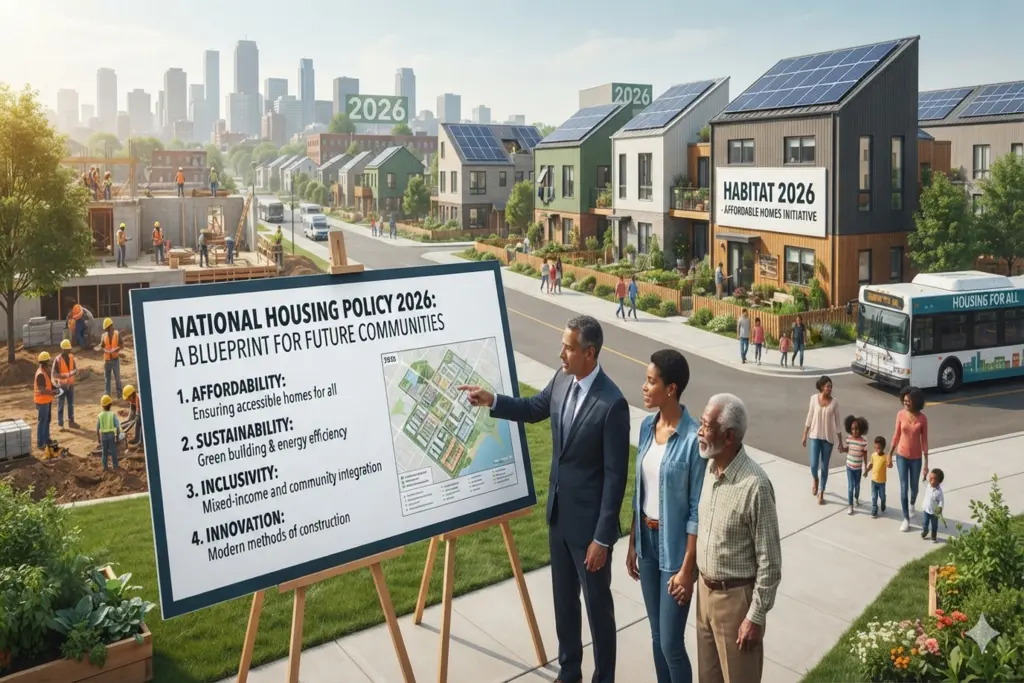
In a monumental step toward addressing the country’s housing crisis and regulating urban growth, Pakistan’s Federal Cabinet has officially approved the National Housing Policy 2026 and its implementation action plan. Chaired by Prime Minister Shehbaz Sharif, this landmark approval marks the first time in nearly a quarter of a century that the country has overhauled its housing framework, with the last national housing policy dating back to 2001.
This comprehensive, forward-looking strategic framework is specifically designed to bridge the rapidly expanding housing shortage and ensure the delivery of sustainable urban infrastructure. Federal Minister for Housing and Works, Mian Riaz Hussain Pirzada, termed the cabinet’s approval a monumental achievement for the housing, real estate, and urban planning sectors.
Key Strategic Themes of the National Housing Policy 2026
The new modern policy was crafted by a high-level working group of national and international experts following extensive, multi-layered consultations with federal ministries, provincial governments, and development partners. The National Housing Policy 2026 revolves around nine critical strategic themes:
Land Availability and Finance: Streamlining land allocation for housing projects and introducing affordable housing finance models.
Technology and Construction Material: Standardizing low-cost, innovative, and eco-friendly construction materials and techniques.
Slum Regularization: Delivering sustainable solutions for the rehabilitation and regularization of informal settlements (Katchi Abadis).
Low-Income Housing Programs: Prioritizing affordable housing projects for the poor and middle-income segments in both rural and urban areas.
Climate Resilience: Incorporating disaster-resilient building standards to protect housing units from climate change, flash floods, and earthquakes.
Direct Shift to Vertical Construction and Energy Efficiency
While approving the policy, the Federal Cabinet issued strict instructions to relevant provincial and federal authorities to guard fertile agricultural land against unregulated real estate expansion. To counter this sprawl, the policy shifts the national focus heavily from horizontal expansion to vertical construction. Going forward, multi-story apartments and high-rises will be heavily incentivized to accommodate larger populations on minimized land footprints.
Furthermore, the cabinet ordered the mandatory integration of modern ‘Energy-Efficiency Codes’ within the new policy framework to combat environmental degradation and the ongoing energy crisis. All upcoming residential projects must legally comply with green building standards and energy-saving designs. All housing schemes are also required to strictly align with regional zoning regulations.
Progress Report on the ‘Apna Ghar’ Housing Scheme
Alongside the policy framework, the cabinet was thoroughly briefed on the operational progress of the Prime Minister’s flagship ‘Apna Ghar‘ Housing Finance Scheme. The forum was informed that local banks have so far approved heavily subsidized housing loans worth PKR 220 billion for various applicants across the country. Out of this approved amount, over PKR 32 billion has already been successfully disbursed to beneficiaries.
The government has further expanded the scope of this subsidized financing facility to include overseas Pakistanis and collaborative private developer projects. Under this tier, first-time homebuyers can secure concessionary financing of up to PKR 10 million to construct or purchase their own homes.