



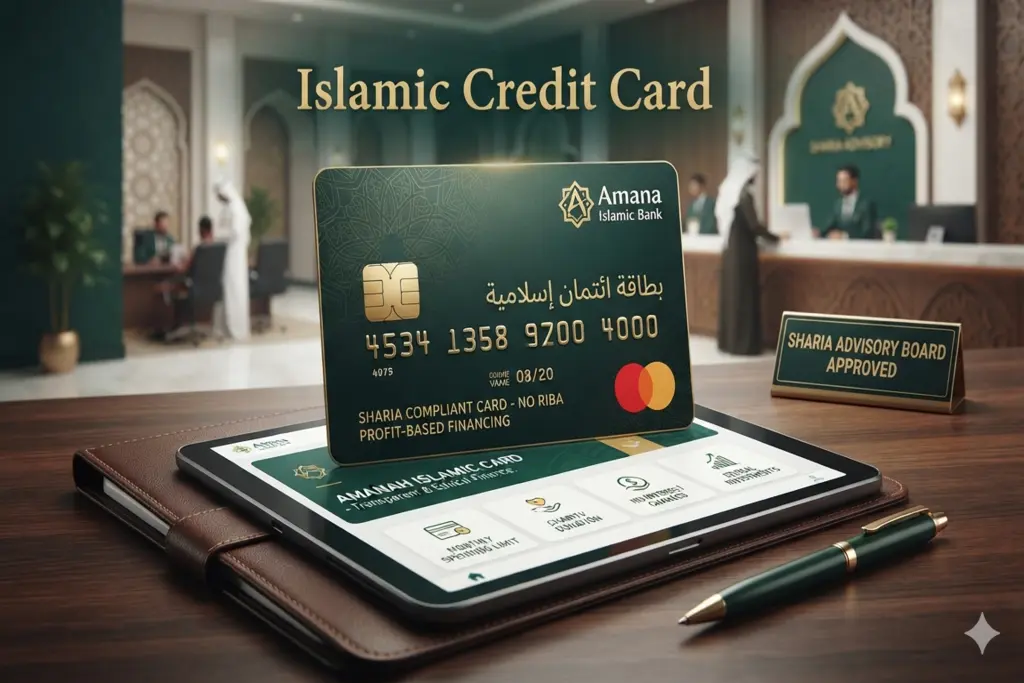
In a landmark move to accelerate digital, cashless banking in Pakistan, Meezan Bank Limited (MEBL)—the country’s first and largest Islamic commercial bank—has announced its entry into the credit card ecosystem. During its Corporate Analyst Briefing for the first half of 2026, the bank management officially revealed that it is developing two new Islamic credit cards to provide a strictly Shariah-compliant alternative to conventional, interest-based credit cards.
These two innovative financial products are titled the “Meezan Charge Card” and the “Meezan Islamic Financing Card.” Both products have received formal approval and vetting from Meezan Bank’s highly respected Shariah Supervisory Board.
Understanding the Two New Shariah-Compliant Credit Cards
Meezan Bank’s upcoming plastic cards are explicitly structured to eliminate the element of interest (Riba) inherent in conventional credit products. The two cards will function on distinct Islamic financial contracts:
Meezan Charge Card: This card is currently undergoing a soft launch phase. It is structured for short-term payment processing where the cardholder is required to settle the full balance within a stipulated timeframe. The bank does not levy any interest or extra profit on this short-term credit facility.
Meezan Islamic Financing Card: This product is actively under development. Operating on Shariah-approved financing models (such as Murabaha or Musawamah), it will allow customers to purchase goods on deferred payment or installment plans. Unlike conventional credit cards, it completely eliminates compound interest and exploitative late payment penalties.
According to bank executives, the full commercial rollout of both card types is projected for Calendar Year 2027 (CY27).
Structural Differences: Conventional vs. Islamic Credit Cards
For millions of practicing Muslims in Pakistan, conventional credit cards remain an untapped tool due to interest-based penalties. In a conventional system, failing to clear the monthly balance triggers steep interest charges alongside late payment fees, creating a cycle of compounding debt.
In contrast, Meezan Bank’s Islamic credit cards utilize sale-based or lease-based Shariah structures. There are no hidden usurious charges. If a consumer delays a payment, any contractual penalty levied does not form part of the bank’s income; instead, it is directed toward a dedicated Charity Fund managed under strict Shariah supervision. This provides a transparent alternative for consumers who want modern purchasing power without compromising religious principles.
Meezan Bank’s “Phygital” Strategy and Financial Performance
During the briefing, Meezan Bank’s leadership re-emphasized its commitment to a Phygital banking model—a strategic combination of brick-and-mortar physical branches and high-end digital infrastructure. Instead of shifting exclusively to digital-only platforms, Meezan continues to aggressively expand its physical reach. By June 2026, the bank’s branch count reached 1,150, with a clear target to add another 100 branches by the end of the year, bringing the total to 1,250.
The bank’s robust growth is further highlighted by a 23% year-on-year increase in deposits, which currently stand at a massive PKR 3.7 trillion, representing a 9.15% overall market share in Pakistan’s banking sector.