



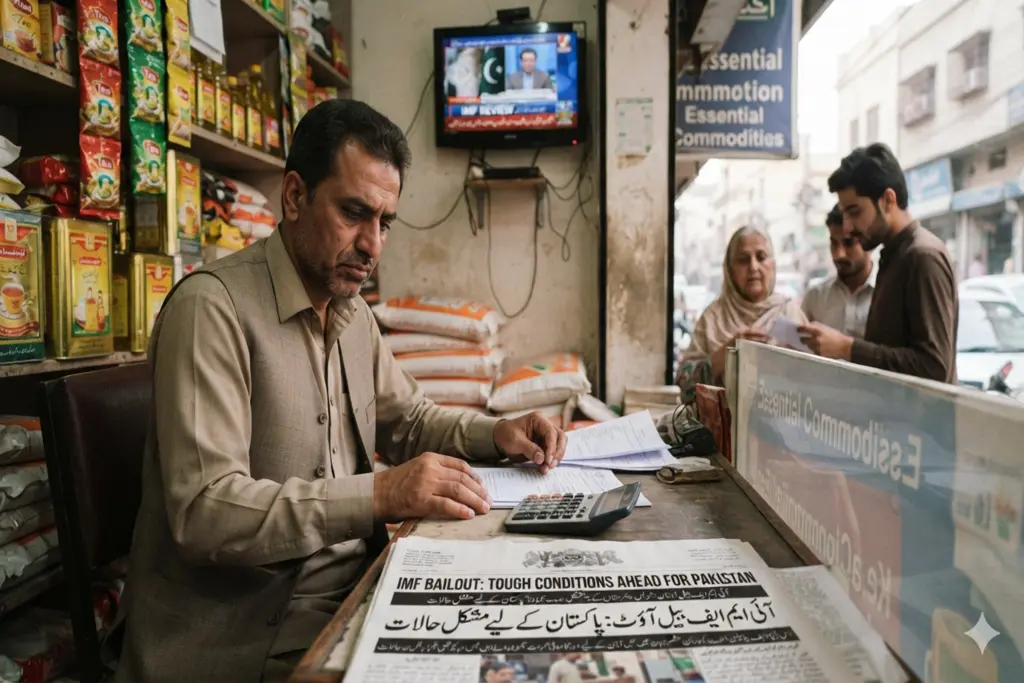
In a major development for South Asian macroeconomic policy, sovereign financing pipelines, and domestic fiscal reforms, an official delegation from the International Monetary Fund is scheduled to arrive in Pakistan this month to conduct its biannual economic evaluation.
Led by Mission Chief Iva Petrova, the high-level IMF staff mission will hold consecutive structural policy dialogs with federal managers in Islamabad and Karachi. The upcoming technical review serves as a mandatory performance desk to evaluate the sovereign baseline achievements under the country’s multi-billion dollar Extended Fund Facility alongside the Resilience and Sustainability Facility program. A successful outcome from these technical consultations will clear the path for the IMF executive board to unlock the next multi-million dollar loan tranche before the end of the current fiscal quarter.
Technical Audits of Federal Board of Revenue Targets
According to the operational manifest released by international compliance monitors, the visiting IMF team will examine the state’s structural revenue collection metrics. The inspection begins with deep-dive technical evaluations at the State Bank of Pakistan before moving to direct structural dialogs with the Federal Minister for Finance and Revenue, Senator Muhammad Aurangzeb.
The macro-prudential evaluation will explicitly focus on three critical financial indicators:
The Biannual Revenue Collection Threshold: The mission will perform a rigorous software audit of the Federal Board of Revenue’s performance metrics, examining its capacity to hit historical semi-annual tax generation marks without resorting to manual structural shortfalls.
National Finance Commission Provincial Cash Audits: This review marks the first operational test of the newly aligned provincial revenue framework, under which local state governments are bound to maintain a collective cash surplus of over one trillion rupees to balance the federal deficit ledger.
Commodity Market Market De-Regulation: Consular monitors will inspect state operations to verify that federal ministries have successfully phased out manual market interventions in agriculture pricing, particularly regarding wheat and sugar distribution sandboxes.
Enforcing Structural Reforms and Anti-Corruption Governance Frameworks
Despite calculated efforts by the federal cabinet to stabilize the domestic currency value and scale up clean energy integration, public dataset logs indicate that the country has met only a portion of its structural performance criteria. The fund has explicitly pushed Pakistan to permanently retire outdated manual procurement customs inside state-owned enterprises, mandating the absolute transition to open, competitive digital bidding software platforms.
Furthermore, the staff mission will actively review the implementation lifecycle of Pakistan’s Governance and Anti-Corruption Diagnostic Assessment. The empirical findings from this institutional audit will be linked directly to the upcoming Article IV Consultation data portals, serving as a transparent international benchmark of Pakistan’s macro-fiscal compliance and software transparency index.