


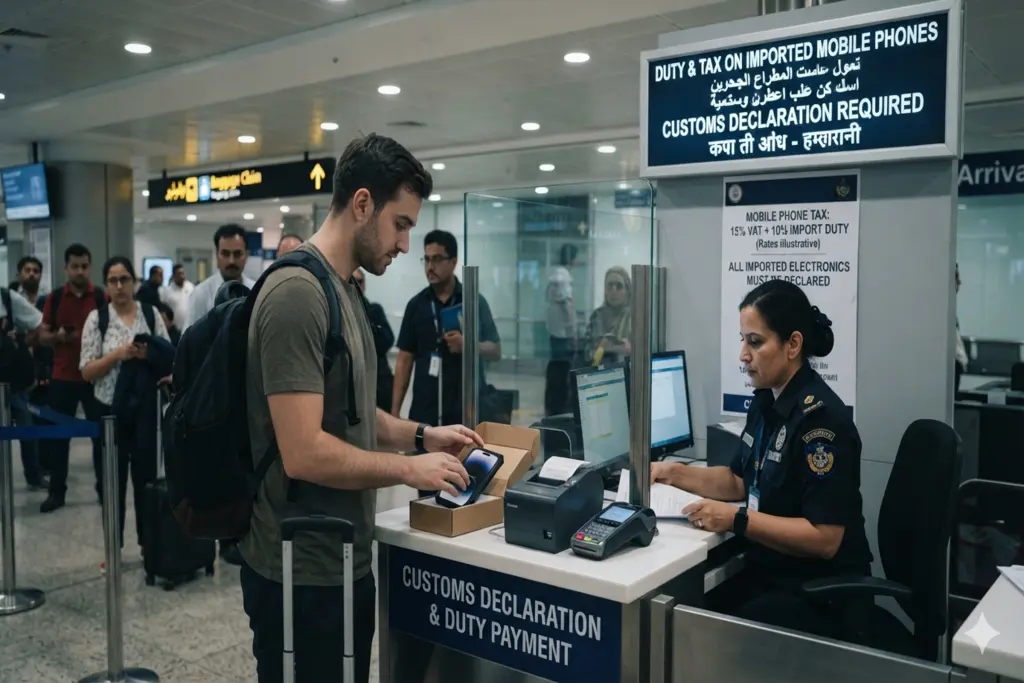
In a massive consumer-focused breakthrough aimed at digitizing the domestic economy and expanding standard regulatory compliance, the Federal Board of Revenue has officially authorized an installment payment plan for sales tax on imported mobile phones. The landmark fiscal measure completely discards the traditional requirement for large upfront lump-sum payments that previously discouraged timely handset registration across the country.
Sovereign tax logs confirm that the new facility has been formally introduced into the national framework through FBR Circular No. 1 of 2026, issued on September 11, 2026. By inserting a new legislative provision under the Ninth Schedule of the Sales Tax Act, 1990, the state transitions mobile device taxation into a highly flexible, consumer-friendly model designed to ease immediate upfront financial friction.
Technical Integration with the PTA DIRBS Network
According to the implementation directives issued by treasury managers, the dynamic installment configuration is directly integrated into the Pakistan Telecommunication Authority’s web interface. Specifically, the automated payment engine connects directly with the Device Identification, Registration and Blocking System (DIRBS) to track compliance and prevent tax evasion.
The newly deployed financial sandbox operates under three strict statutory guidelines:
Linked DIRBS Vetting: When an individual registers a newly imported or passenger-accompanied smartphone, the DIRBS portal will automatically display an option to split the sales tax liability instead of forcing a lump-sum payment.
Fixed Financial Year Deadlines: While users can distribute their payments over multiple intervals, the legal framework explicitly mandates that all installments must be fully cleared before the end of the same financial year in which the mobile device is imported.
Zero Reduction in Total Liability: The newly introduced software module serves strictly as a structural liquidity buffer. It does not provide any hidden discounts or reductions in the total tax liability owed to the state. Non-compliance or missed schedules will result in an automated system alert, triggering an immediate IMEI block via the DIRBS remote tracker.
Political Drivers and High-End Smartphone Market Stabilization
The structural rollout of this installment mechanism follows continuous legislative debates within the National Assembly’s Standing Committee on IT and Telecommunication. Public representatives had strongly advocated for consumer relief, highlighting that high upfront registration taxes were creating an artificial barrier to digital inclusion and pushing premium devices into the gray market.
This policy update provides essential relief for owners of premium international handsets. Under active FBR tariff codes, high-end smartphones valued over $500 are subject to a steep 25 percent sales tax at the time of entry, while devices valued below the $500 baseline incur an 18 percent tax. By spreading out these multi-thousand rupee liabilities, the state actively stabilizes consumer purchasing power.
Commercial banks, cellular mobile operators, and digital wallet platforms including Easypaisa and JazzCash are currently collaborating with the PTA to launch unified mobile payment corridors. This network will allow citizens to scan system-generated QR codes from home to instantly clear their scheduled monthly dues, ensuring seamless regulatory compliance and driving digital inclusion across Pakistan.