


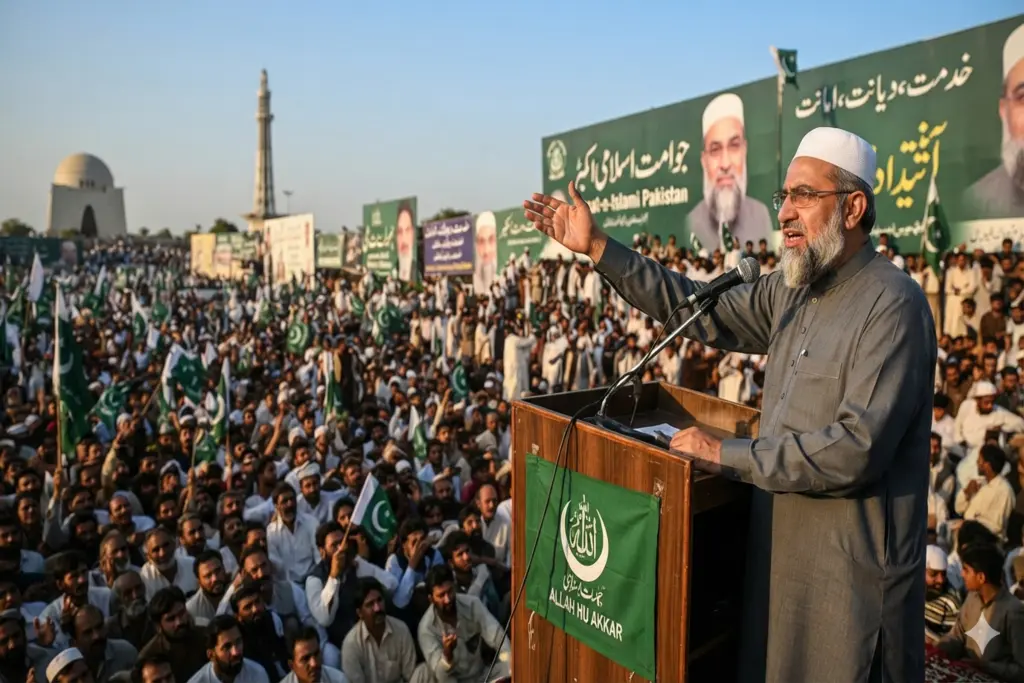
Pakistan’s political temperature is rising again as Hafiz Naeem reached Sukkur after leaving Karachi as part of his party’s train march. The Jamaat-e-Islami (JI) chief has openly accused the Sindh government of creating hurdles for his supporters trying to join the movement. This journey is part of JI’s wider protest against the petroleum levy, a tax that has made fuel prices painful for ordinary households across the country.
What Happened On The Way To Sukkur
Hafiz Naeem left from Karachi’s Cantonment Station, speaking briefly to workers before boarding the train. As the convoy passed through Hyderabad, Landhi, Nawabshah and Rohri, he claimed that local authorities in Sindh were quietly discouraging people from showing up at railway stations along the route. In his view, this was a soft attempt to reduce turnout before the march reached Sukkur, which was meant to be a major stop before the train moved on to Multan and finally Islamabad.
Why The Petroleum Levy Protest Matters To Ordinary People
This story is not only about party politics. It touches everyday life in a very real way.
- Fuel prices decide transport fares, delivery costs and food prices in local markets
- A large number of families in Sindh and Punjab rely on motorcycles or public vans to reach work
- An added petroleum levy puts more pressure on households already struggling with inflation
Hafiz Naeem has said several times that the levy, which he calls unjustified, should be removed rather than placing the burden on citizens while government spending continues unchecked.
How The Sindh Government Has Responded
Sindh government officials have denied any deliberate attempt to stop JI workers, calling the checks routine security measures. JI leaders, however, insist that several vehicles carrying supporters were stopped before they could reach the railway line, which they believe was not a coincidence.
What To Watch Next
- Whether the train march reaches Multan and then Islamabad without further delay
- If fresh talks between JI and the federal government take place over the levy
- How the Sindh government answers further accusations from JI leadership
- Any early impact on fuel prices if public support for the protest grows
Conclusion
The stop in Sukkur makes one thing clear. This protest is not fading anytime soon, and neither side seems ready to back down. Whether the petroleum levy is eventually withdrawn or not, the pressure on the government to justify its fuel pricing decisions is only going to grow from here.