

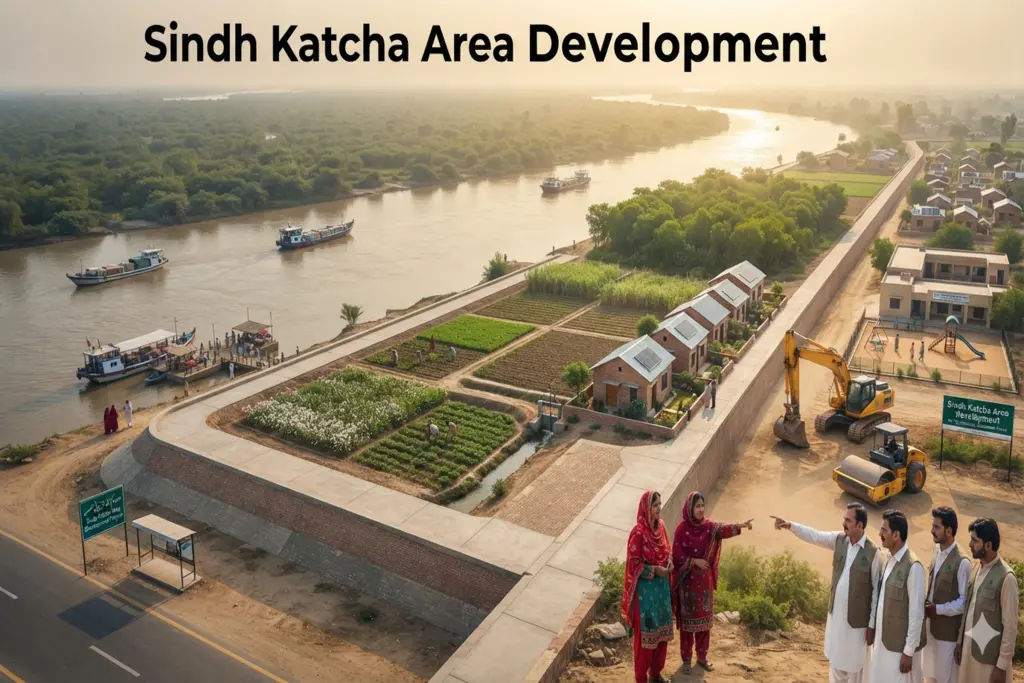
In a major regional stabilization advancement for rural human security, cross-district logistics development and systemic public sector governance the Sindh Government has authorized a massive rehabilitation and development blueprint for the Katcha areas. The extensive operational framework transitions legacy unstructured local security desks into a highly coordinated multi-agency infrastructure sandbox. Formally finalized during a high-profile legislative session at the Sindh Assembly under the chair of Faryal Talpur head of the Standing Committee on Home Affairs the policy dictates that all newly established forward tactical police camps will be officially named after law enforcement martyrs to permanently honor their sovereign sacrifices in the line of duty.
As emerging riverside infrastructure grids demand tighter telemetry controls to prevent parallel security vacuums delivering deep institutional stability across the Sukkur and Larkana divisions remains a critical priority for provincial planners. The comprehensive development package targets immediate infrastructure voids across un-surveyed regions that historically lacked direct public sector inclusion. By introducing fully auditable cross-departmental coordination loops alongside measurable municipal goals the state successfully eliminates local transit shortfalls, establishes institutional predictability and projects a progressive image of institutional alignment onto the global development landscape.
Allocation of Civil Infrastructure and Security Telemetry Layers
According to the official administrative briefs delivered by the Commissioners of Sukkur and Larkana divisions the multi-sector intervention deploys custom operational parameters to satisfy human capital needs across complex geographical terrains.
The engineered civil interface operates across three primary strategic tracks:
The Rural Health and Ingestion Sandbox: Launching mobile medical dispensaries and primary healthcare nodes to systematically drop health access deficits across isolated family clusters.
Centralized Learning and Access Grids: Constructing secure road layouts alongside dedicated primary educational blocks to link un-surveyed settlement logs with mainstream economic channels.
Tactical Enforcement Configurations: Mapping out spatial needs for new fully digitized police stations security posts and advanced tactical training facilities to monitor regional security parameters.
Mitigating Operational Shortfalls through Multi-Agency Coordinated Ingestion
The broader commercial and national security implications of this synchronized development blueprint are extensive, explicitly backing the macro-stabilization priorities outlined by the provincial executive. Sindh Home Minister Zia-ul-Hassan Lanjar emphasized that the sustainable transformation of the Katcha sectors remains an absolute priority for this fiscal season requiring all relevant entities to establish smooth digital and operational handshakes.
| Governance Vector | Mandated Project Directive | Vetted Monitoring Node |
| Public Health & Welfare | Deploy mobile dispensaries and localized healthcare slots. | Divisional health management scripts. |
| Transport & Connectivity | Construct durable road lines connecting un-surveyed zones. | Communications and Works engineering registries. |
| Tactical Security Enforcement | Deploy system-vetted, martyr-named policing posts. | Home Department and regional policing commands. |
Elected members of both the National and Provincial Assemblies from Sukkur and Larkana actively synchronized their regional demands during the briefing presenting data-verified proposals to lock in optimal financing paths. Shifting from obsolete ad-hoc administrative patches to interconnected data-backed regional grids ensures absolute transparency across public expenditures. Through these unified civil assets and modernized operational oversight modules the state minimizes public service shortfalls, anchors corporate trust across adjacent commercial channels and safely safeguards rural socio-economic growth indices.