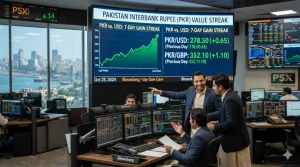
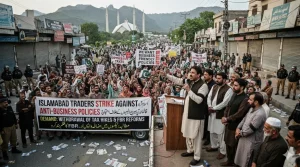



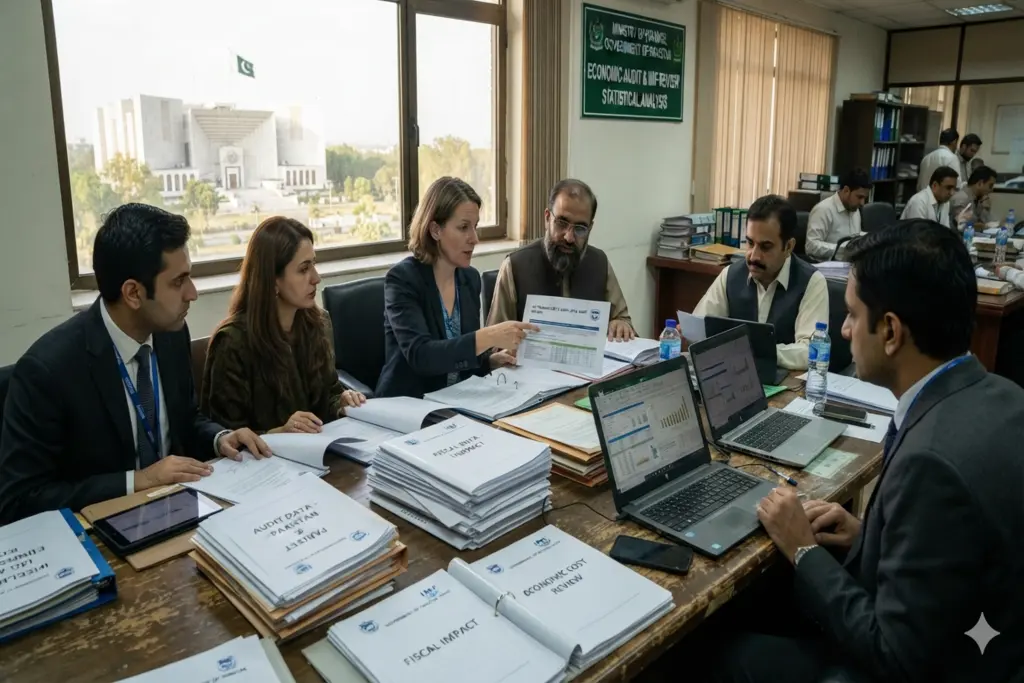
In a massive macroeconomic blow to the national fiscal consensus former Economic Adviser to the Ministry of Finance Dr. Ashfaque Hassan Khan has admitted that Pakistan has faced a national loss of $148 billion due to IMF policies over five years. The calculated economic critique transitions conventional structural adjustment metrics into a deeply scrutinized high-velocity debt performance ledger. Speaking to a private news channel the veteran economist highlighted that this massive $148 billion structural revenue drain represents a far more destructive financial reality than the gross infrastructural damage observed during the country’s multi-decade security engagements.
As federal economic planners continue to deploy strict budgetary filters under global visibility evaluation. Dr Ashfaque specifically pointed out that the losses suffered because of a mere 5 years of IMF program conditions far outweigh the losses suffered by the Pakistani taxpayers during 13 years of their partnership as a frontline ally in the War on Terror costing the Pakistani economy $130 billion. The audit reveals a pattern of a capital deficit as the state absorbed around $6–7 billion in genuine IMF loans over this period, a pattern which brings to the fore the effects of rigidity in international policy constraints and how such rigidity can create high transaction costs and consequently lower productivity indices in the region.
Audit of Supply-Side Inflation and Central Bank Rate Bottlenecks
According to the analytical models presented during the economic broadcast the State Bank of Pakistan’s (SBP) current monetary tightening stance relies on obsolete economic toolkits that fail to address the core engines of domestic inflation.
The macroeconomic breakdown of Pakistan’s current structural cost spikes reveals three primary distress tracks:
The Ineffective Policy Tools Option: Dr. Ashfaque heavily questioned the SBP’s benchmark policy rate currently locked at around 11.5 percent arguing that interest rate manipulations are functionally incapable of suppressing supply-side price spikes.
The Logistical Fuel Levy Burden: The critique explicitly targeted the addition of a heavy Rs. 80 per litre petroleum levy which instantly drove up freight transport prices and expanded supply chain transaction costs nationwide.
Commodity and Food Ingestion Inelasticity: The ongoing inflationary trend is structurally driven by soaring global fuel benchmarks alongside sharp increases in food costs such as domestic wheat baselines rather than excess consumer demand or overheating market liquidity.
Restructuring Macroeconomic Stabilization Outside Monetary Tightening Sandboxes
The broader industrial and socioeconomic implications of this policy induced stagnation are extensive, explicitly compressing the balance sheets of domestic manufacturers and small-scale enterprise networks. Under standardized economic theory aggressive monetary tightening scripts are engineered exclusively to dampen demand-pull anomalies by making commercial credit more expensive.
| Macroeconomic Strain Vector | Historical/Active Baseline | Total Vetted Economic Impact | Primary Systemic Outcome |
| Post-9/11 War on Terror | 13-Year Security Engagement | $130 Billion Incurred Losses | Massive infrastructure friction and border security shocks. |
| IMF Structural Compliance | 5-Year Restricted Framework | $148 Billion Lost Capacity | Industrial slowdown and severe supply-side inflation loops. |
| SBP Benchmark Intervention | Active Central Bank Position | 11.5% Policy Rate Applied | Compressed corporate borrowing and halted investment lines. |
If the energy tariffs in the energy sector are imposed by the state and the import of commodities is deficient however, high policy rates only bring an acute liquidity squeeze. The immediate need for rupee stabilization is to move away from the interest-rate induced demand suppression towards direct local manufacturing expansion. Through these unified fiscal corrections and restructured development planning loops the state targets deep industrial structural healing lowers sovereign default probabilities across corporate trading channels and safely safeguards long-term human development indices.



2 Comments
Pingback: Makkah Joint Defence Agreement Activation: Troops Deployed
Pingback: Faheem Akram US Postal Fraud Bounty: $100k Reward Set