

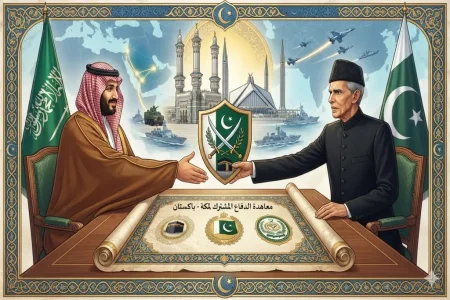
In a monumental realignment for Middle Eastern defense architecture, cross-border military logistics and global Islamic strategic deployment grids, Pakistan, Saudi Arabia and Turkiye have finalized a joint directive to rapidly deploy military forces inside the kingdom under the Makkah Joint Defence Agreement. At the military level the swift mobilization turns the traditional passive diplomatic treaties into a very integrated active defense sandbox. The sovereign action comes as a direct response to worsening security setups caused by the severe missile and drone attacks from the Yemen conflict corridor, at a time in which the Strategic Political and Defence Committee (SPDC) in Riyadh was formally initiated in a high-stakes emergency session.
Tracking fluid security monitoring around primary Arabian energy routes that are safeguarding Arabian infrastructure checkpoints is a key priority for allied planners as it continues to be monitored by the international community. The activation of collective defense provisions explicitly isolates hostile non-state actions targeting civilian and state assets. By executing synchronized troop and hardware ingestions in absolute compliance with the national legislation of the respective member states the allied command successfully eliminates tactical vulnerabilities, protects critical economic assets and projects an image of absolute military readiness onto the global geopolitical landscape.
Allocation of the Joint Command Structure and Trilateral Support Roles
According to the official communique distributed by Pakistan’s Foreign Office the trilateral alliance has formalized its structural tracking mechanisms to enable touchless asset routing across the theater.
The newly engineered operational grid functions across three central performance tracks:
The Multilateral Mutual Defense Clause: Signalled on August 7, the core charter binds its members to treat an attack on one as an attack on all mirroring absolute mutual security integration.
The Unified Secretariat Command: To eliminate systemic communication shortfalls the SPDC appointed Pakistan’s Lieutenant General (Retd) Nauman Mahmood as the alliance’s first Secretary General for a verified three-year operational term.
The Dedicated Theater Partition: Pakistani Defense Minister Khawaja Asif verified that while Pakistani and Turkish forces maintain an active presence in theater to fulfill supportive and defensive logistics roles, frontline active combat parameters remain managed exclusively by Saudi Arabian troops.
Restructuring Border Defense Metrics Amid Escalating Regional Energy Shocks
The broader macroeconomic and national security implications of this synchronized military deployment are extensive, directly stabilizing the valuation of global petroleum trading channels. The high-profile emergency summit in Riyadh took place as the Saudi-led coalition initialized intense counter-offensives which followed a destructive Houthi long-range strike targeting a vital Aramco facility located south of Riyadh.
| Alliance Deployment Branch | Mandated Operational Vector | Vetted Monitoring Node |
| Saudi Arabian Combat Core | Frontline tactical engagements and territorial recovery lines. | Ministry of Defense, Riyadh |
| Pakistan & Turkiye Allied Forces | Rapid deployment of supportive defense capabilities. | Allied Strategic Theater Command |
| SPDC Unified Secretariat | 3-Year administrative and operational logging execution. | Lt. Gen. (Retd) Nauman Mahmood |
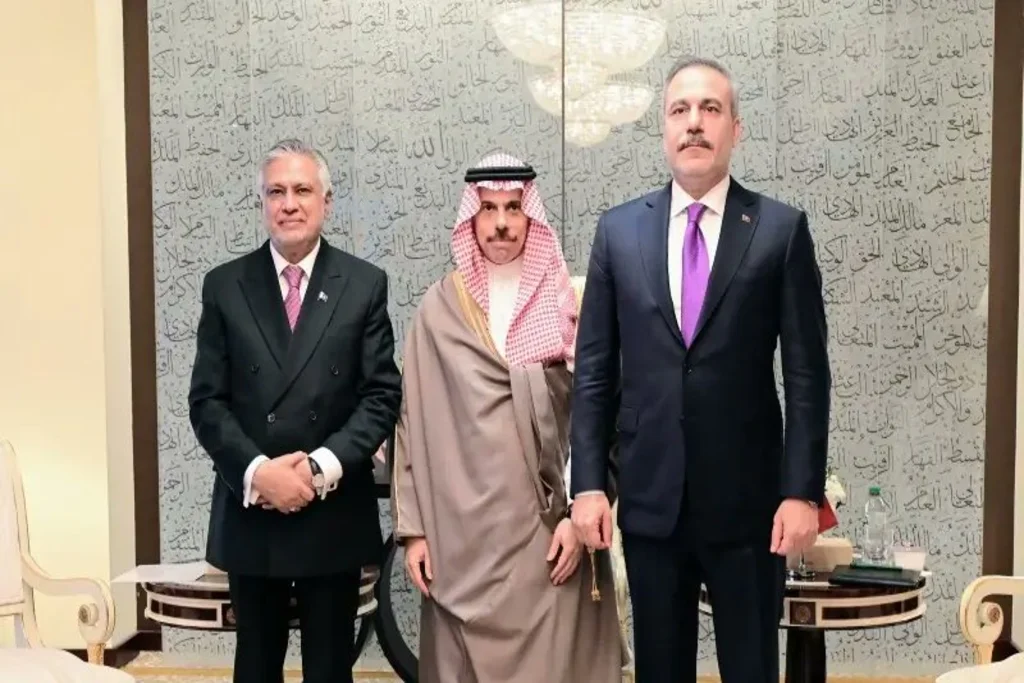
The high command team of Pakistan comprised Deputy Prime Minister and Foreign Minister Ishaq Dar, Chief of Army Staff Field Marshal Asim Munir and Defense Minister Khawaja Asif. This robust military-diplomatic deployment underscores Islamabad’s complete sovereignty pledge to defend Saudi Arabia’s territorial sovereignty and to mitigate hostile incursions into the holy places. Switching from manual and slow-tracking to electronic real-time tracking of all troops guarantees flawless operations across the allied borders. Through these updated trilateral defense channels and secure coordination assets the Makkah alliance minimizes strategic gaps, secures consumer trust across critical global trade zones and safely safeguards sovereign economic sustainability indices.


1 Comment
Pingback: Makkah Defense Alliance NATO Middle East: US Applauds Pact