




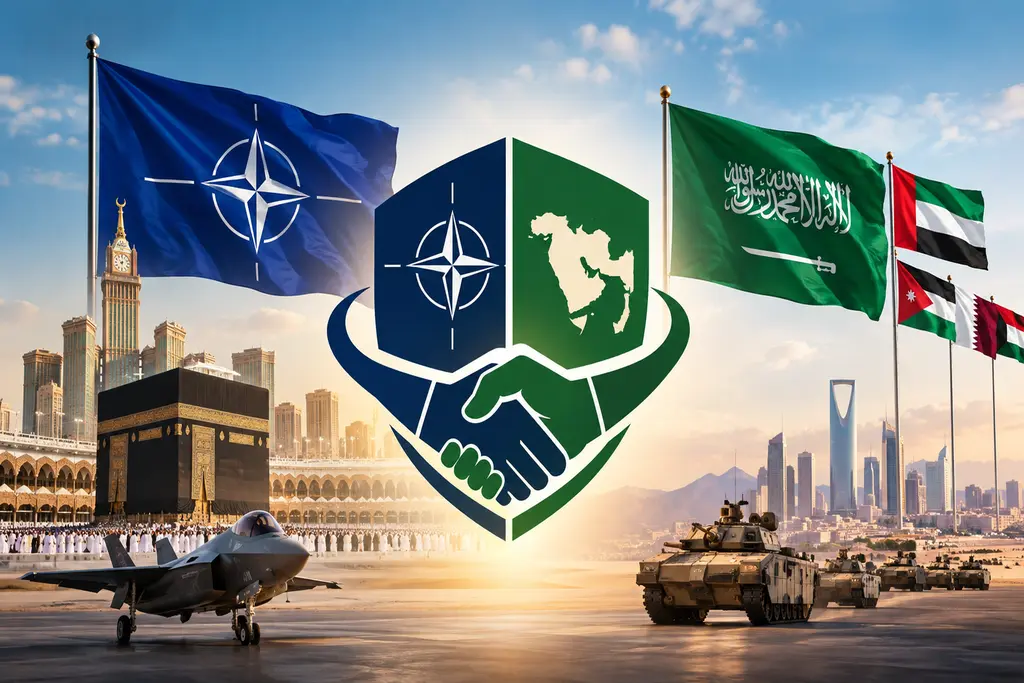
US Congressman Joe Wilson announced that the Makkah Defense Alliance can become the NATO of the Middle East in a significant geopolitical validation of the trilateral military coordination, global defense diplomacy and security infrastructure in the region. The international endorsement of the high-profile summit meeting between Pakistan, Saudi Arabia and Turkiye puts that new arrangement of the three countries into a multilateral security mechanism under the supervision of a system. In a formal expression of the swift deployment of allied troops in the Kingdom the US lawmaker directly thanked the three member nations for their indomitable stance against Iranian-backed Houthi aggression.
As global defense commands track fluid security telemetry across the Arabian Peninsula establishing a resilient collective deterrent remains an absolute priority for allied planners. The Congressman’s remarks follow an emergency summit in Riyadh where the Strategic Political and Defense Committee (SPDC) approved immediate steps to implement mutual security obligations. By executing coordinated troop and hardware ingestions in complete compliance with the national legislation of each member party the alliance successfully minimizes localized tactical vulnerabilities, secures critical global energy infrastructure and projects an image of absolute military readiness onto the global geopolitical landscape.
Allocation of Collective Defense Commitments and Command Profiles
According to the platform operating logs released by regional diplomatic missions the Makkah Joint Defense Agreement utilizes rigid operational guidelines modeled after established global defense syndicates.
The trilateral mutual assistance framework operates across three central execution tracks:
The Inter-Ally Security Matrix: On 7 August the Basic charter linking absolute mutual security integration was signed establishing the Inter-Ally Security Matrix which is a legally binding document that defines a hostile action against one member state as an attack against all three.
The Centralized Executive Command: To remove administrative delay loops in theater logistics and streamline the theater committee’s functioning the committee appointed retired Pakistani Lt. Gen. Nauman Mahmood as its first Secretary General for a verified three-year term.
Vetted Theater Support Divisions: Pakistani Defense Minister Khawaja Asif confirmed that while Pakistani and Turkish forces maintain an active presence in the operational area to fulfill supportive and defensive tasks active combat fields remain managed exclusively by frontline Saudi Arabian troops.
Countering Cross-Border Insurgency and Protecting Holy Sites From Incursions
The broader macroeconomic and national security implications of this Western political validation are extensive, directly stabilizing investor trust across cross-border industrial and maritime trade channels. Allied foreign offices have strongly condemned continuing drone and missile strikes targeting sovereign Saudi cities, commercial facilities and vital economic networks.
| Defense Sector Vector | Mandated Operational Vector | Vetted Monitoring Node |
| Sovereign Mutual Charter | Treat an attack on one as an attack on all three nations. | Combined Alliance Database |
| Allied Secretariat Desk | 3-Year tactical and administrative logging coordination. | Lt. Gen. (Retd) Nauman Mahmood |
| Allied Deployment Forces | Rapid deployment of supportive defense capabilities. | Joint Theater Command |
Central to the alliance’s mandate is the absolute protection of Makkہ and Madinah against hostile border incursions. Shifting from slow, manual security planning to real-time electronic troop tracking ensures seamless defensive synchronization. The endorsement by the US House Representative establishes that Western security planners look at this trilateral alliance as the most viable remote roadmap to anchor long-term liquidity and peace across Middle Eastern trading corridors. Through these updated defense channels and secure coordination assets the Makkah alliance minimizes strategic gaps, secures consumer trust across critical global energy nodes and safely safeguards sovereign economic sustainability indices.