
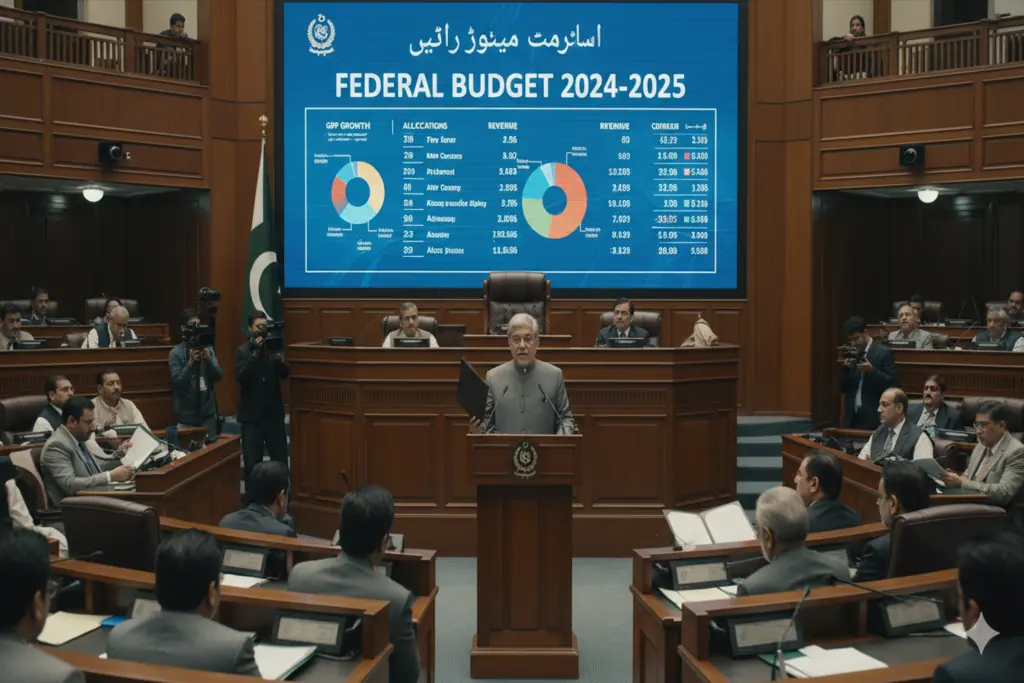
The federal budget for fiscal 2026-27 was first to be presented to the Parliament on June 5, but has been officially postponed now. In confirming the sudden change in the legislative schedule, the federal government has moved the Federal Budget announcement date up to June 10, 2026.
The move comes as a consequence of a previous rescheduling of an important National Economic Council (NEC) meeting, caused by unavoidable administrative re-alignments, in the structure of the Council. Postponement of the NEC directly squeezed the compilation deadline of the final documents for the ministry of finance as the NEC is the one that gives the constitutional approval for the country’s key economic parameters.
Core Factors Behind the Budget Postponement
1. Rescheduling of the National Economic Council (NEC) Session
The main reason for the delay is the change in the NEC that has the mandate to formally approve the Public Sector Development Programme (PSDP) and the provincial development outlays. If this highest constitutional body doesn’t give a definitive green light on the limits of development spending, then the central government can’t legally approve a larger budget bill.
2. High-Stakes Negotiations with the IMF
The government is engaged in critical discussions with an International Monetary Fund (IMF) delegation on highly challenging revenue targets, subsidy cutbacks and structural changes in the energy sector. Economic managers are carefully tweaking the financial bill in order to meet the strict conditions imposed by the IMF to ensure its smooth implementation of the tranches of the stabilization program.
3. Parliamentary Logistical Hurdles
Original drafts of the structures sought to kick off the debate in the parliament in the first days of June. But a number of lawmakers, however, were absent during the season, due to having to travel to Saudi Arabia for the annual Hajj, and in the process of formulating a schedule for the assembly, leadership allowed for some flexibility in the timing.
Proposed FY27 Economic Volume and Macro Targets
Even if the formal presentation of the budget is delayed, the basic macro-economic goals and budgetary allocations for fiscal year 2026-27 have already been planned by economic planners.
Total Budgetary Volume: This is expected to be the total of federal budget outlay for FY27 at around Rs 17.1 Trillion.
Aggressive Tax Target: The federal government has laid an ambitious tax collection target of Rs 15,267 Billion for the Federal Board of Revenue (FBR) with the goal of making the country’s tax base much wider.
Real GDP Growth and Inflation: The planners have laid out a target real GDP growth rate of 4.1% and they have targeted an average annual consumer price inflation rate of 8.4%.
The defense allocation is estimated at Rs 2,665 Billion and the federal Public Sector Development Programme (PSDP) is limited to Rs 1.1 Trillion.
Salient Adjustments for Salaried Classes and Tax Reform
The salary class and other employees in the public sector are eagerly monitoring for any signs of relief packages, even though the federal budget announcement has been delayed. Proposals to pay government salaries and pensions 7% to 10% more are being discussed, but employee unions are asking for bigger increases to counter escalating inflation.
At the same time, the government is also planning to crack down on tax evasion by implementing a 15% to 30% capital gains tax on real estate flips, supply chains and digital assets such as cryptocurrency trading, for the first time, to ensure that it complies with strict revenue demands.