




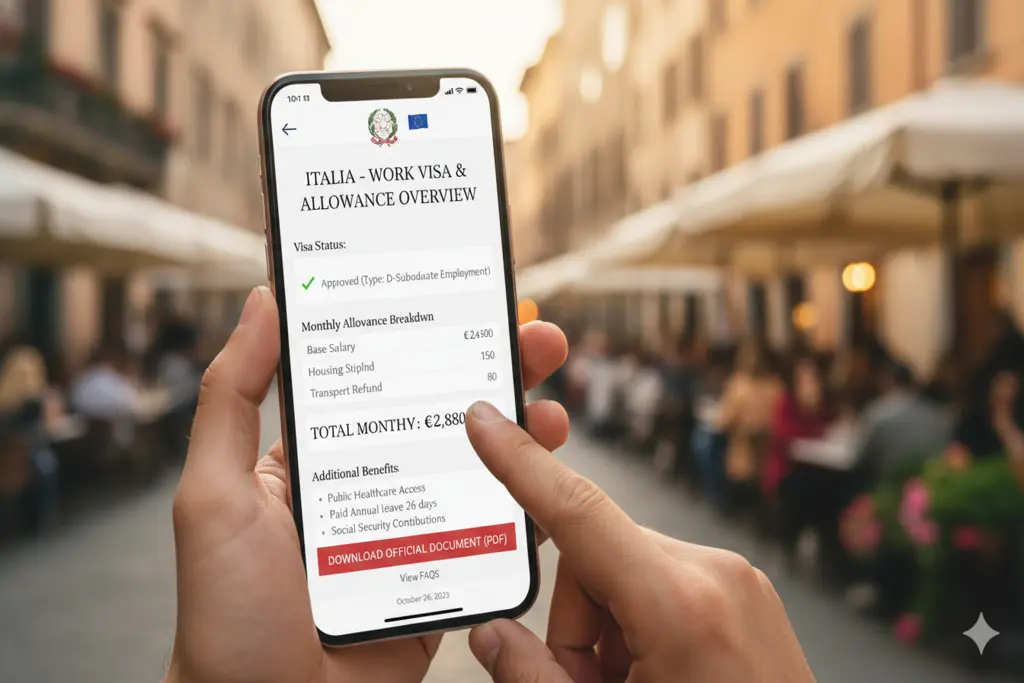
In a monumental development for Pakistani professionals and skilled laborers aspiring to build a secure legal career in Europe, the Government of Italy has introduced a historic labor migration initiative. Under its official migratory framework known as the “Decreto Flussi” (Flow Decree), Italy has allocated a dedicated quota of 10,500 work visas specifically for citizens of Pakistan. According to the Ministry of Overseas Pakistanis and Human Resource Development, Pakistan has become the first South Asian country to establish this type of formal, streamlined labor supply pipeline with a European state.
The core objective of this bilateral arrangement is to completely discourage undocumented immigration and dangerous illegal pathways, offering Pakistani workers a legal and transparent route into the European Union’s job market.
Breakdown of the Work Visa Quota and Timeline
The authorized allocation of 10,500 job opportunities under the Italy Work Visa Allowance is structured to be rolled out systematically over the next three fiscal years. This ensures a steady and organized migration flow of 3,500 Pakistani workers annually.
The work visas are bifurcated into two primary operational streams to match distinct employer needs:
- Seasonal Visa Quota: Accounting for 1,500 visas annually, this stream is designed for short-term contracts. It primarily serves the agricultural and harvest sectors, allowing individuals to work for a fixed period before returning home.
- Non-Seasonal Visa Quota: Providing 2,000 visas annually, this segment targets long-term or permanent employment contracts across Italy’s growing industrial, manufacturing, and services sectors.
In-Demand Sectors and Monthly Salary Packages
The Italian government has opened the gates in several technical and non-technical areas to actively respond to the alarming situation of a shortage of labor in the country’s economy.
The main groups of occupations and average monthly earnings are:
Agricultural Sector: Field workers, harvesters and farm machinery operators. (Expected Monthly Salary: €1,200 to €1,500).
Hospitality and Tourism: Professional chefs, kitchen workers, waiters and hotel housekeepers. (Expected Monthly Salary: €1,400 to €1,800).
Technical Skilled Trades: Heavy Industry Welders, Commercial Electricians, Industrial Carpenters and Construction Techs. (Expected Monthly Salary: €1,600 to €2,200).
Healthcare Services: Certified nurses, elderly care experts and clinical assistants. (Expected Monthly Salary: €2,000 to €2,500).
Minimum Qualifications and Core Visa Requirements
As is often believed by fraud agents, being under the government quota for a job doesn’t require the most prestigious corporate degrees. The system is able to handle all sorts of laborers; skilled, semi-skilled and general laborers.
Basic schooling (Middle or Matriculation) is fine for basic agricultural, cleaning and hospitality responsibilities. There are, however, certain fields of specialization that demand a particular diploma or certificate such as nursing or a technical engineering course.
Vocational Certification: Applicants need to have one to two years of experience in the trade of their choice and must also have a NAVTTC (National Vocational and Technical Training Commission) certificate or a certificate from the technical boards in their region.
Language Proficiency: Although an Italian language certificate (A1/A2 level) is not legally required for admissions, a basic knowledge of conversational Italian or English language will be given major weight in the employer screening process.
Step-by-Step Guide: How to Apply and Secure a Work Permit
Under Italian immigration law, an individual worker cannot apply for a work visa directly at the embassy without prior clearance. The legal process must be initiated by an employer located inside Italy.
First, you must connect with a registered employer in Italy who is willing to extend a formal job offer. That employer will submit your credentials to the local Italian immigration office (Sportello Unico per l’Immigratie) to secure your official work clearance certificate, known as the “Nulla Osta“. Once your original Nulla Osta is electronically issued and sent to you, you can book an appointment at the Italian Embassy or an authorized VFS Global application center in Islamabad or Karachi to submit your biometric data, verify your documents, and receive your Type D National Long-Stay Visa.
The Government of Pakistan strongly advises citizens to avoid paying massive sums of money to unverified sub-agents. Always verify credentials through the Overseas Employment Corporation (OEC) or licensed Overseas Employment Promoters to protect your investment.