

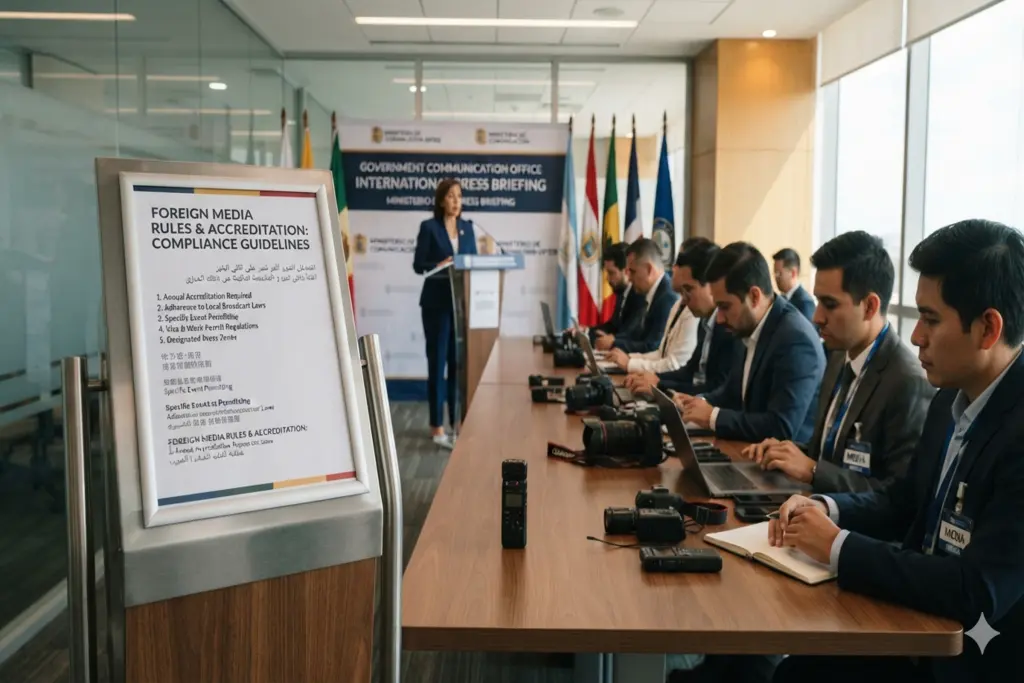
Pakistan has tightened rules for foreign journalists working all over the country. Under new foreign media rules, reporters will need government approval to do many assignments outside of the cities of Islamabad, Lahore and Karachi. The move comes as the international spotlight remains on restrictions on reporting, protests and developments in sensitive areas of Pakistan.
What the new foreign media laws signify
The Foreign Media Facilitation Guidelines, 2026 have strengthened the government’s control over the activities of foreign media in Pakistan. Foreign correspondents enjoy more freedom to work in Islamabad, Lahore and Karachi. Reporting assignments in other parts of the country need prior clearance from the External Publicity Wing of the Ministry of Information and Broadcasting.
The rule can apply to all types of media work, including news stories, documentaries, videos and social media posts. That means a journalist cannot simply go to another city for a job without checking on what permission requirements there might be.
Why Pakistan Imposed Tighter Restrictions
The government says media activity should be “managed with important considerations” for security and public order. Security problems exist in various parts of Pakistan and access to sensitive areas is a thorny issue.
Meanwhile, press freedom groups have voiced concerns about restrictions on independent journalism. So the debate is over two important things: national security and the public’s need for reliable information.
Impact on Foreign Journalists in Pakistan
The new system could make reporting from the field more difficult and slower. International reporters covering isolated communities, political developments or security incidents may want to plan their travel further in advance.
This can cause practical problems such as:
•Do not begin work on the assignment until you receive official approval.
•Changing travel plans when it takes time to receive approval.
•Exploring Other ways to check facts Exploring Ways to check facts.
•More dependence on local journalists and sources.
•Limited access to unfolding stories in remote locations.
Pakistan’s External Publicity Wing is responsible for the registration and accreditation of foreign media persons. Foreign journalists are reminded to verify documentation and permissions before going on field assignments.
What a journalist must verify before publishing a story
Foreign correspondents travelling out of major cities on assignment in Pakistan should check the latest requirements. Here’s a quick checklist to prepare for:
•Check the requirements for visas and accreditations.
•Determine if a NOC is needed for the proposed location.
•Before you travel, contact the relevant media authorities.
•Bring your identification and assignment papers.
•Work your beat, and stay connected to the newsroom.
Why Rules Matter to Audiences in Pakistan
The problem is not limited to foreign reporters for Pakistani readers. International journalism can bring attention to events that might not receive much local coverage. As such, restrictions on access may shape how Pakistan is viewed internationally, and how stories from the hinterlands reach global audiences.
The rules also could affect how quickly foreign news organisations can independently verify events outside the country’s largest cities.
Conclusion
Pakistan’s hard line on foreign journalists underscores the difficult balancing act between national security and free reporting. Firm rules can help authorities deal with real security concerns, but too many restrictions can block access to important stories. But for the journalists, careful preparation and adherence to the new rules for foreign media will be more important.
Reference-
https://newsonair.gov.in/pakistan-tightens-control-over-foreign-journalists-with-new-media-rules