


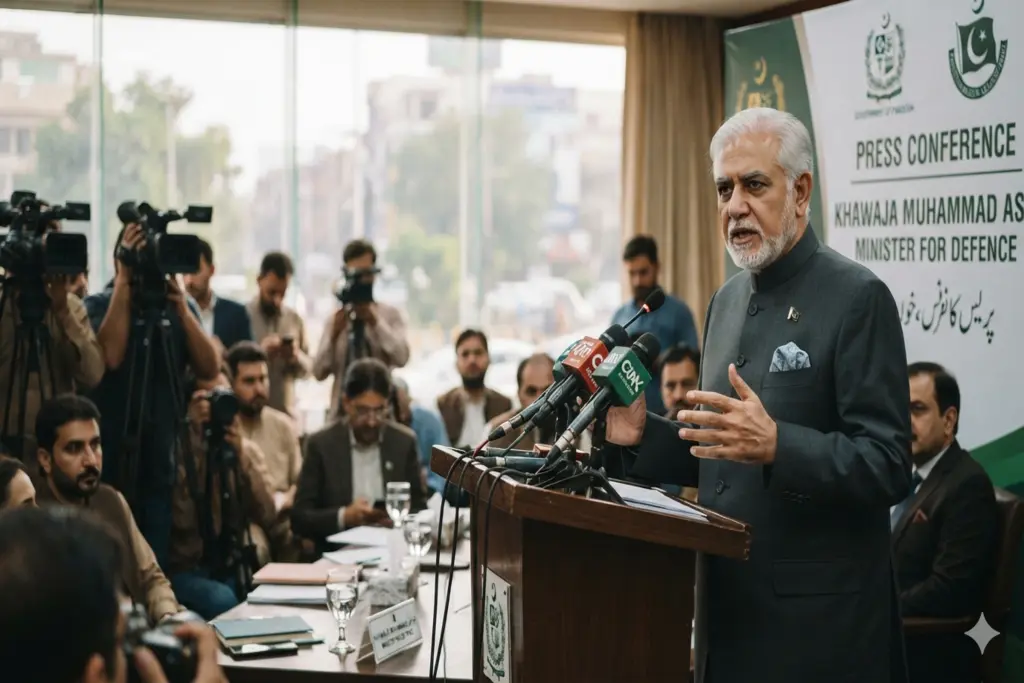
A new political spat has broken out between two heavyweight members of the federal cabinet and it is just the kind of back-and-forth that keeps Pakistani drawing rooms and WhatsApp groups abuzz for days. It began with Interior Minister Mohsin Naqvi telling the Pakistan Economic Summit in Islamabad that the country’s governance system has “collapsed” and is no longer able to solve the country’s problems. Defence Minister Khawaja Asif was quick to respond on X, telling Naqvi that if reform is the goal then he should start with something already in his own control – the Pakistan Cricket board (PCB).
Why Cricket Became Involved in the First Place
Cricket is not a game for an average Pakistani – it is a national mood. So when Asif said that Naqvi has “full powers” over the PCB, with no Prime Minister, no Parliament and no political obstacles, the jibe hit home with cricket fans already annoyed with team selections, bad tournament performances and boardroom politics. Asif’s message was simple: forget talking about reforming the country; first show it works in the one place you have a free hand. “Systems are always evolving,” he added, “and Naqvi can bring a revolution to Pakistan cricket and not just talk about fixing the whole country.
The Bigger Picture: Pakistan
There was a reason for this exchange. Naqvi had just days earlier argued that the governance structure in place for 70 years in Pakistan had failed and called for new administrative units or provinces to bring the government closer to ordinary citizens. Opposition parties like JUI-F jumped upon this, declaring it an admission of failure from within the ruling setup itself. “Cockroaches” are frustrated youth who if their demand for merit-based jobs is continually ignored, can “overturn everything,” Naqvi said, a comment that has already gone viral on local social media.
Why It Matters to You
For many Pakistanis, this frustration is linked to rising utility bills, the controversies surrounding the PIA and PCB, and a general sense that institutions are not delivering. This spat is a reminder of how governance debates in Islamabad often filter down into everyday conversations at chai stalls and office desks.
Quick guide for readers following the story:
•Follow authenticated ministerial accounts on X, not forwarded screenshots on WhatsApp.
•Check updates on trusted outlets like Dawn, ProPakistani or Geo News.
•Let’s see what PCB does. Board changes have happened before due to pressure from the public.
•Watch the new provinces debate. This could change how local government works in your neck of the woods.
Conclusion
Whether this becomes real reform inside PCB or just fades as another political headline, only time will tell. It has, for now, given Pakistanis yet another example of ministers blaming each other’s departments as the common man waits for real change to happen on the ground.
References: