



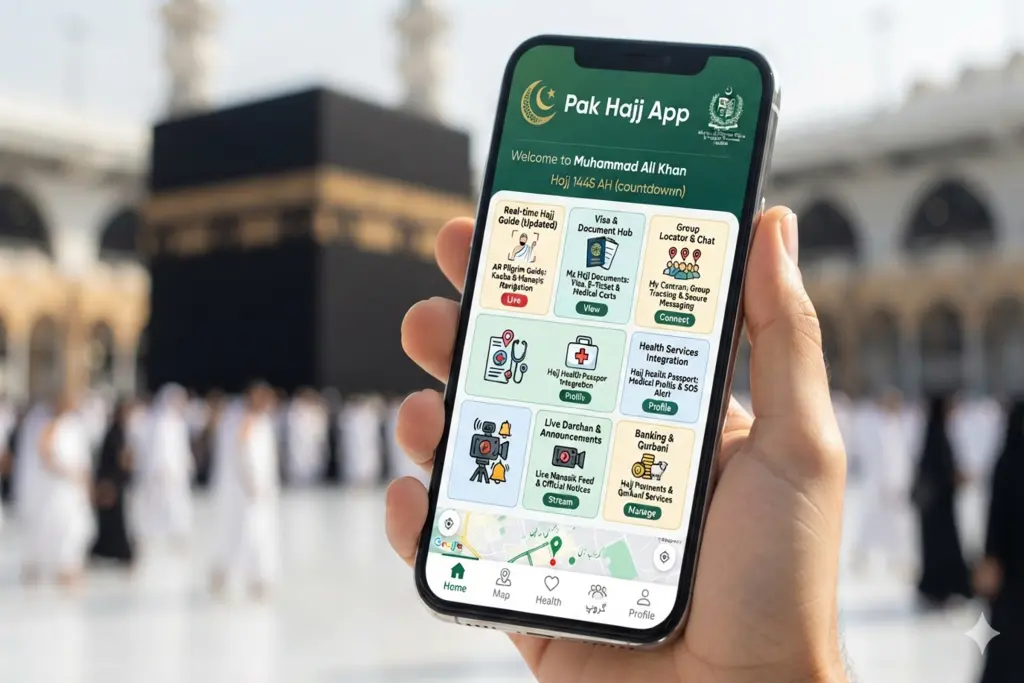
In a major citizen-centric deployment aimed at upgrading national religious transit administration, automating pilgrim logistics validation and removing human error vectors from the seasonal travel lifecycle the Ministry of Religious Affairs has introduced several new features on the Pak Hajj App.
The comprehensive structural realignment transitions legacy manual application routing into a highly secure software-driven choice sandbox. Managed over centralized cloud servers the newly active mobile framework allows intending pilgrims to execute core itinerary changes directly from home effectively shielding consumers from unauthorized processing agent networks and establishing a sophisticated transparent image of Pakistan’s digital public utilities.
Performance of Package Telemetry and Frictionless Duration Adjustments
According to the operational manifesto released by state religious coordinators the updated application infrastructure completely discards old manual document queues at regional processing centers. Intending candidates can securely alter their comprehensive travel parameters by logging into the application on their personal smartphones.
The engineered pilgrim facilitation sandbox functions on two primary performance layers to ensure zero vulnerability:
Frictionless Duration Modification: Users can now immediately alter the total duration of their Hajj package layout through automated data loops, removing the need for physical visits to ministry counters or executive regional offices.
Insulated Configuration Tracking: Every structural package modification executes a real-time data sync with federal identity nodes and state travel registries, generating an unalterable, paperless transaction log for macro auditing.
Restructuring Accommodation Preferences via Cashless Digital Corridors
The secondary high-utility upgrade integrated into the mobile app gives travelers the ability to completely manage and rewrite their accommodation preferences from their home environments. This automated choice matrix eliminates legacy allocation delays allowing families to plan their stay structures against real-time hotel inventories in the holy cities.
Through the digitized grid interface, consumers can lock in their choices based on household size and financial budget constraints:
Two-Bed and Three-Bed Configurations: Tailored for small independent cohorts or private consumer couples seeking dedicated secluded spaces.
Family Rooms and Shared Accommodations: Optimized for interconnected family units or low-tariff travelers looking to reduce structural spending indices.
If these visual adjustments generate variations in the underlying financial tariff rules, applicants can process the delta through secure cashless credit cards or instant digital payment pipelines. A specialized tech help desk remains active across ministry server cycles to handle real-time regulatory inquiries and resolve communication network alerts for applicants. By driving deep institutional digitization and removing legacy manual workflows, Pakistan establishes a resilient blueprint for sustained, high-utility service delivery across its national digital platforms.