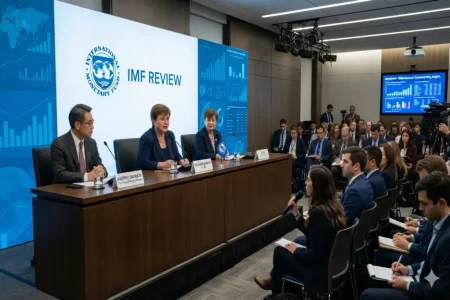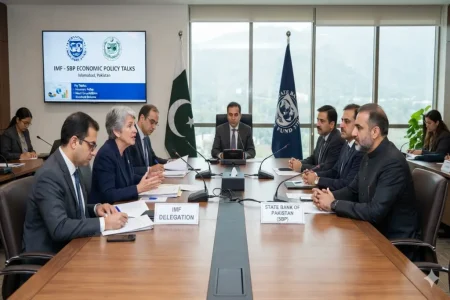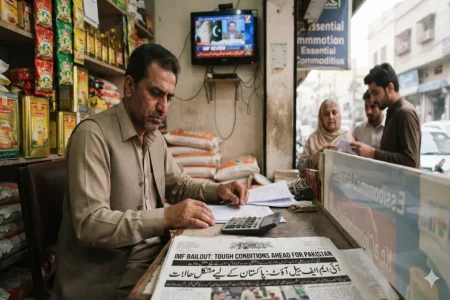




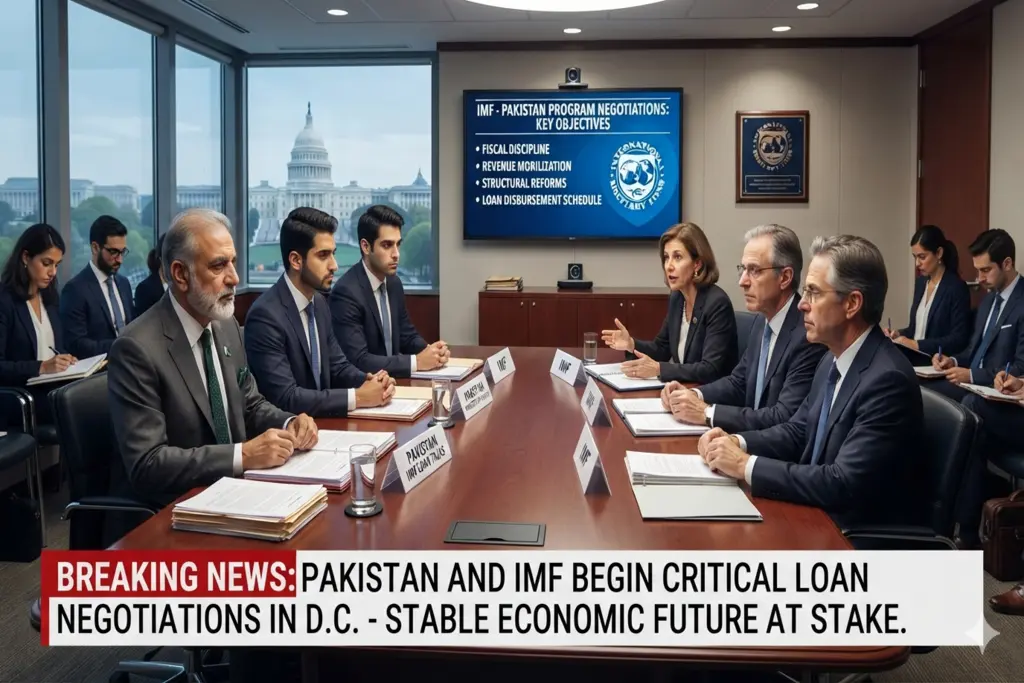
In a major geostrategic advancement for Pakistan’s financial regulatory architecture, central banking telemetry and international market integration formal negotiations have officially commenced today between Pakistan and the International Monetary Fund (IMF). The comprehensive macro-prudential evaluation transitions legacy manual tracking models into a highly structured system-vetted economic sandbox. Directed under the leadership of IMF staff mission chief Iva Petrova the high-level delegation will remain in Islamabad until the first week of October. The reviews form a vital component of Pakistan’s 37-month $7 billion Extended Fund Facility (EFF) alongside the Resilience and Sustainability Facility (RSF) actively aiming to safeguard long-term growth indices through structural reforms, strict fiscal discipline and automated transparency controls.
The successful completion of this integrated assessment lifecycle is projected to unlock approximately $1.2 billion in subsequent sovereign financing by late November or early December 2026. This funding pool includes a critical $1 billion tranche under the EFF combined with an additional $200 million disbursement routed via the RSF. Securing these capital allocations remains a top priority for state managers to safely expand foreign exchange liquidities, minimize sovereign transaction friction and systematically lower national credit default probabilities across global banking networks.
Audit of FBR Revenue Pipelines and Inter-Agency Anti-Evasion Triggers
According to the operational manifesto released by state fiscal managers the entry framework for the current assessment cycle completely discards legacy manual checking procedures. International compliance officers are deploying automated data tracking loops to verify that the domestic revenue matrix perfectly synchronizes with lending covenants.
The engineered fiscal stabilization sandbox focuses heavily on three primary performance layers to ensure zero vulnerability:
Provincial Revenue Log Optimization: Treasury representatives from all four provinces will brief the Fund on their newly deployed software-driven cloud systems to accelerate tax and non-tax revenue collection tracking.
Biometric Tax-Base Expansions: The Federal Board of Revenue (FBR) is evaluating automated point-of-sale integrations and computerized non-filer whitelisting protocols to permanently eliminate structural revenue leakages.
Automated Anti-Money Laundering Frameworks: The National Accountability Bureau (NAB) and the Federal Investigation Agency (FIA) will detail high-speed digital auditing scripts designed to block money laundering and terrorist financing pathways.
Restructuring the Energy Grid and Addressing Structural Deregulation Vulnerabilities
The high utility phase of the IMF negotiations is the second part that will concern the heavy cash drain in the state power grid. The Ministry of Energy is implementing an Energy Sector Circular Debt Reduction Manual, with an operational plan that has been audited, including predictive telemetry analytics, which will be carried out in a systematic manner to reduce the country’s energy debt at multi-billion rupee level.
In addition, the strategic economic interface demands that treasury managers be able to offer data-based justifications for a number of unsettled structural friction zones:
Sugar Sector Liberalization Stalls: The IMF delegation has expressed concern over policy decision-making as sugar prices have not been fully deregulated in the domestic market despite the demand for a shift towards a market-driven pricing mechanism.
Central Bank Telemetry Vetting: State Bank of Pakistan officials are placing transaction logs of current accounts, primary surplus, foreign exchange reserve metrics and the exchange rate stability graph before the audience and comparing with the world index.
Federal administrators say the program’s basic structure is healthy, but long overdue health spending and educational resource allocation adjustments, as well as market-driven agriculture deregulation, continue to create friction. Addressing these factors will continue to be the most crucial need to improve Pakistan’s soft image and give a permanent boost to its sovereign credit ratings in the international economic scene.