

Eid ul Azha is a time of spiritual introspection, a reminder of the example set by the Prophet Ibrahim (AS) and Prophet Ismail (AS) that acted with much surrender. Although its meanings are religious, the act of sacrifice also functions as an important social equalizer that connects the social classes together. The central idea of giving an animal as a sacrifice is not simply to eat what’s been given up, but to do so in a manner that inspires compassion for those who don’t have it to give. Islamic jurisprudence and contemporary social norms include an emphasis on an equitable distribution of Qurbani meat, in order to achieve this.
Distributing and handling small animals or a large collective share responsibly and hygienically like you always do will allow everyone with the freedom to enjoy a rewarding, clean, and safe sacrifice this Eid.
The Three-Part Rule of Distribution in Islamic Tradition
It is highly recommended according to the Islamic Sharia to cut the sacrificial meat into three equal parts. This hierarchical organization brings a balance between individual needs, family bonds, and community well-being:
One-Third for the Needy: A portion has to be set aside for the poor, orphans and distressed families that seldom get to receive high-protein foods.
One-Third for Relatives and Neighbors: This portion goes to extended family, friends, and neighbors. Here sharing food has a bonding effect on the community and performs the religious obligation to maintain kinship (Silah-e-Rahm).
One-Third for the Household: The remaining third is kept by the one doing the sacrifice for his or her own house.
It is assumed this is a three-part division, but it is not a mandatory requirement. If the family is very large or very low income they are allowed to retain more of it. On the other hand, if the family is rich, they can donate the whole amount of meat to charitable people.
Precision, Weighing, and Equity in Meat Cutting
Precision is crucial when cutting up the meat, and this is especially important during collective sacrifices (Ijtamai Qurbani), where several people share one animal.
If you use a Weighing Scale, it will ensure an even share. When administering a weight, use a digital scale so partners can receive an equal amount of weight, ounce for ounce.
Balance of Bone and Fat Distribution: A fair share means a good balance, not just equal weight. Each portion should consist of the same proportion of choice cuts, bone-in cuts, organs and fat tissue.
Maintaining Contamination-Free Zones: Ensure that there are Contamination-Free Zones by keeping the carcass off bare ground. Limit dirty plastic sheets or hooks that threaten to spoil meat intended for somebody else with animal hair or blood clots.
Preserving Dignity During Distribution
The rewards of charity in the spiritual realm are much linked to mannerism of giving. During Eid, it is one’s moral obligation to preserve the dignity of the poor and the lowly.
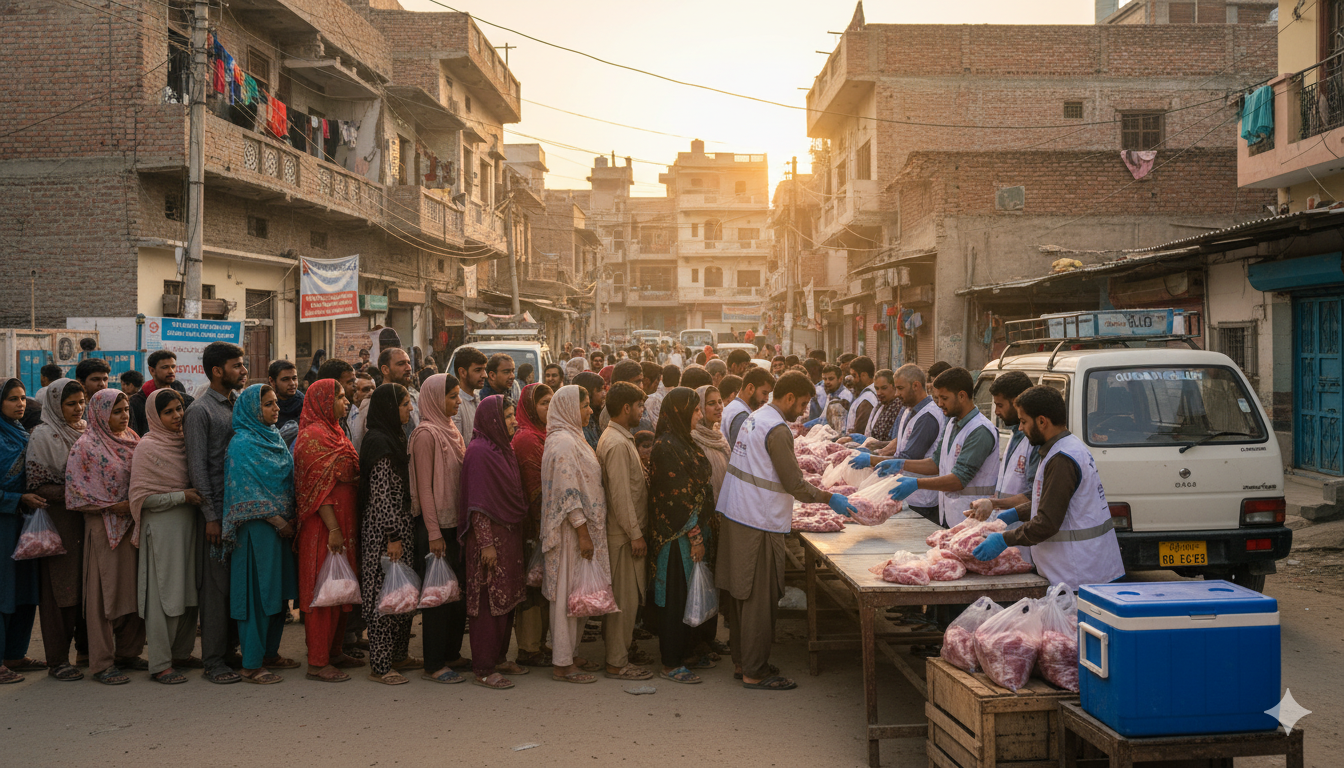
Avoid Public Queues: Forcing vulnerable individuals to wait in long lines under the sun degrades their dignity. Avoid using cameras or video to post images or videos of recipients on social media.
Discreet Doorstep Delivery: Pack the meat in clean, durable, opaque bags and deliver them quietly directly to the doorsteps of deserving households.
Use Registered Charities: If you cannot easily find or contact where impoverished and distant, you can send your shares through verified non-profit network
Hygienic Storage and Meat Safety Protocols
The health risks are very high with regards to food-borne bacteria as well as meat spoilage due to Eid ul Azha occurring in the summer months. Apply the following health tips to your food!
The Cooling Phase: Do not put hot newly slaughtered meat straight into a freezer. Exposure time is 2-3 hours in a shaded well-ventilated area. This will help to lower the temperature of the animal and any excess fluids to unclog, which is important to avoid a sour product.
Small Portion Packaging: Don’t freeze an entire, thick portion at once. Meat also should be portioned into small, flat bags of 1kg or 2kg, which should be closed up in a zip lock bag. All flat packs will freeze faster to the core to stop bacterial growth.
After distribution, wrap left over bones and offal securely (civic cleanliness rules). Give them to the official municipal garbage collectors instead of leaving them in open plots.