




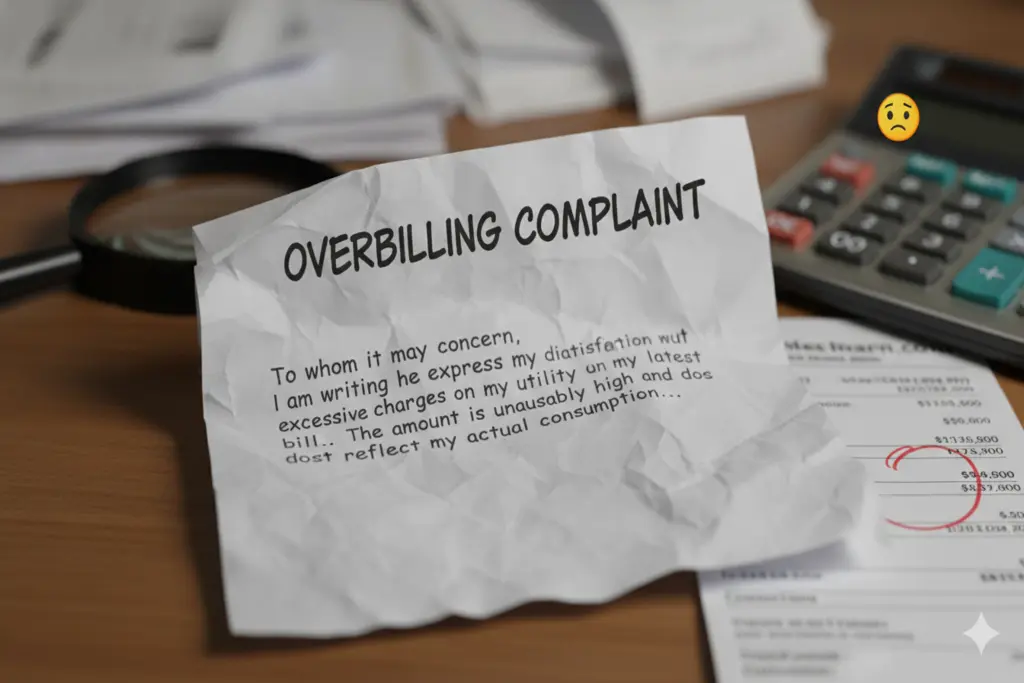
Foreseeing a further blow on household finances, escalating energy tariffs are already putting more strain on consumer’s pockets in Pakistan while they often receive a double whammy due to institutional overbilling. Issues of deliberate slow meter reading, manipulations of pro-ratings or errors in the calculation of the power units are common complaints raised by users regardless of whether it is LESCO, IESCO, MEPCO, K-Electric or any other distribution company. Unfortunately, a large number of consumers end up paying those charges obnoxiously, even though they don’t understand the correct way to complain about an electricity bill.
If the utility has had an unexplained sudden increase and the rate increase on the current statement is not based on the number of units of electricity service that you are receiving, then you are in command and have legal consumer protection rights. Those who have been overcharged know that there are steps they can take—here is a full, step-by-step guide to take them through the legal system to correct inflated bills—with the proper authority.
Step 1: Approach the Customer Care Center of Your Respective DISCO
By law, your primary step must always be to give your specific utility distributor the opportunity to resolve the anomaly locally before escalating to federal watchdogs.
- Submit a Written Application: Visit your local sub-division office or Revenue Office (RO). Address a formal written complaint regarding the overbilling issue directly to the Sub-Divisional Officer (SDO) or Executive Engineer (XEN).
- Attach Crucial Evidence: Accompany your application with a copy of the disputed bill, your Computerized National Identity Card (CNIC), and most importantly, a clear, high-resolution photograph of your physical meter display showing the current reading date and index units.
- Collect the Tracking Receipt: Ensure the data entry operator provides you with a computerized complaint tracking number. Do not leave the facility without an official acknowledgment slip.
Step 2: Utilize the Prime Minister’s Performance Delivery Unit (PMDU)
If the local SDO or XEN office delays processing your case or refuses to entertain your evidence, you can bypass local bureaucracy using federal digital grievance networks.
- Pakistan Citizens Portal (PCP): Download the official PCP smartphone app. Navigate to the “Energy & Power” category, select “Electricity,” and log a formal complaint against your respective DISCO.
- Ministry of Energy Portal: Alternatively, you can visit the official online grievance portal managed directly by the federal Power Division to log data regarding false meter logging or late delivery of bills that causes consumers to cross into higher tariff slabs.
Step 3: File an Official Complaint with NEPRA
The National Electric Power Regulatory Authority (NEPRA) is the apex autonomous regulator governing Pakistan’s power market. When a DISCO acts negligently, NEPRA’s Consumer Affairs Department (CAD) possesses the statutory power to intervene.
- Access the CAD Portal: Navigate to NEPRA’s official website and open the Consumer Affairs Department portal.
- Complete the Grievance Form: Input your exact consumer reference number, full name, active contact information, and the detailed history of your overbilling case.
- Upload the Meter Proof: Attach your photographic proof showing the discrepancy between the bill’s “current reading” and the actual numbers registered on your device. NEPRA systematically monitors these submissions, forcing DISCOs to submit compliance responses within designated timelines.
Step 4: Seek Free Legal Remedy via the Wafaqi Mohtasib (Federal Ombudsman)
If NEPRA or the commercial utility fails to provide structural relief, the Wafaqi Mohtasib (Federal Ombudsman) serves as the ultimate institutional shield for consumer protection. This forum offers completely free, fast-tracked administrative justice, and its decisions are legally binding on all power distribution executives.
- File Form A: You can register your dispute entirely online through the Wafaqi Mohtasib’s web portal (WMS) or print “Form A,” fill it out by hand, and mail it to their nearest regional office via Pakistan Post.
- The Hearing and Final Resolution: The Ombudsman normally schedules a formal joint hearing within 30 to 60 days, summoning both the consumer and a senior representative of the DISCO. If the distribution company is found guilty of predatory billing habits, the Wafaqi Mohtasib issues an absolute mandate ordering the immediate correction of the bill, directing that any excess money already collected be fully adjusted in upcoming monthly invoices.