



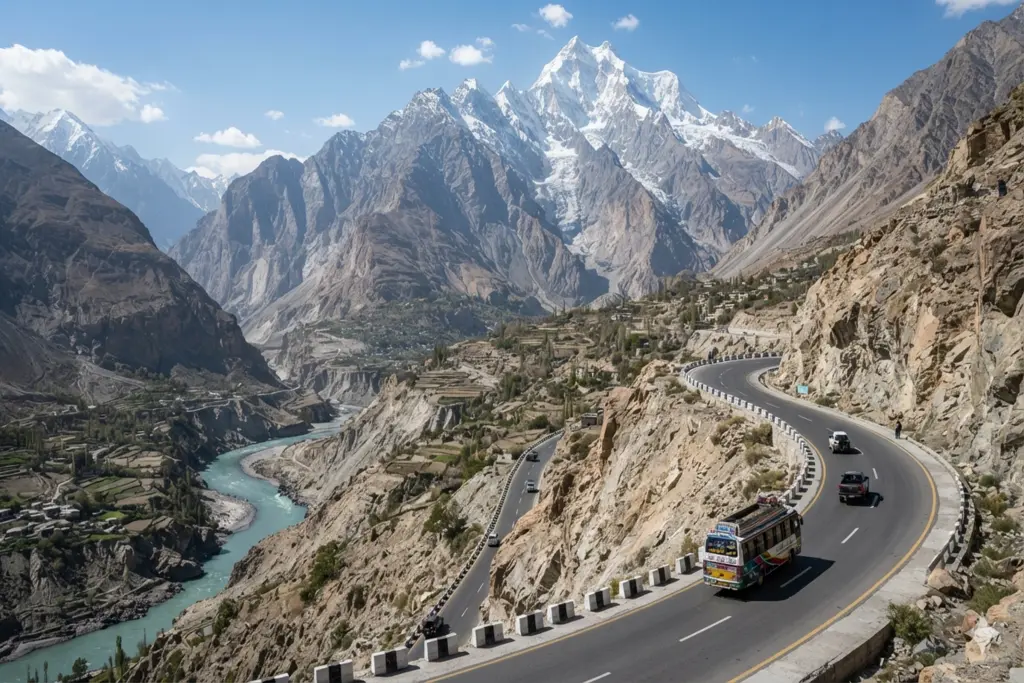
The drive through Gilgit-Baltistan has always been a test of patience, with narrow, damaged roads winding their way in between some of the world’s highest mountains. That may finally be about to change. The federal government is proposing to take over seven key roads in the region in a move that could change the way locals and visitors travel, trade and take in the sights.
What the Road Upgrade Plan Is Really About
Under the tourism initiative of Prime Minister Shehbaz Sharif, 464 kilometers of road network will be handed over to the federal government. Once approved construction, widening and long-term maintenance will be done by the National Highway Authority (NHA) instead of the provincial government.
The seven roads are:
•Astore-Chilim Chowki Road (54 KM)
•Deosai-Skardu Road (31km)
•Skardu-Khaplu Road (100km)
•Skardu (Thorgu)-Shigar Road (17km)
•Road from Karakoram Highway-Naltar to Satrangi Lake (36 km)
•Thalichi-Astore-Rattu-Shounter Road (121km, under construction)
•Gorikot-Shagarthang-Skardu Road (105km, under construction)
This plan has already been approved by the GB cabinet and both governments have signed a memorandum of understanding. Now, the last step is for the federal cabinet to approve. The move comes at a time when other regions are also witnessing road upgrades, like the Peshawar road remodeling project, indicating a broader national push toward better infrastructure.
Why It Matters to Gilgit-Baltistan’s People
For families living in the most remote valleys, these are real roads, beyond the tourist roads. They connect villages with hospitals, schools and markets. When winter floods or breaks up roads, entire communities can be isolated for days. The federal money means these routes will get regular maintenance instead of being dependent on strained provincial budgets.
And there’s a practical, financial side, too. The government has suggested a toll tax for tourists visiting GB, but locals will be exempted. With this toll revenue, more improvements could be made, a trend already seen in other road remodeling efforts around the country.
What locals and travelers must remember
•Now, maintenance costs are covered by provincial funds, but often delays occur during the peak tourist season.
•Once federalized, NHA will be responsible for funding and repairs directly.
•Once the system is in place, tourists will have to pay a toll fee.
•Locals won’t be hit with this toll, easing the pressure on household budgets.
•Road conditions may still cause temporary delays this year on routes under construction.
Trip Checklist for Travellers to GB
•Check the current road status before travelling, especially during monsoon season.
•Take some cash, as the facility of digital payment is still not available in the far-flung areas.
•Watch the local tourism department for toll tax announcements.
•Avoid travelling at night on still-under-construction roads.”
Conclusion
This plan of upgrading roads could actually change the way people travel in Gilgit-Baltistan, making the trips safer and opening the region further to tourism. For residents it means less disruption and better access for emergencies. For travellers, that means smoother roads ahead as funding and construction move forward. Better roads to Gilgit-Baltistan are finally on the way, so keep an eye out for official updates before your next trip north.



1 Comment
Pingback: Islamabad Traffic Route Diversion Plan 2026 | Pakistan Truth