



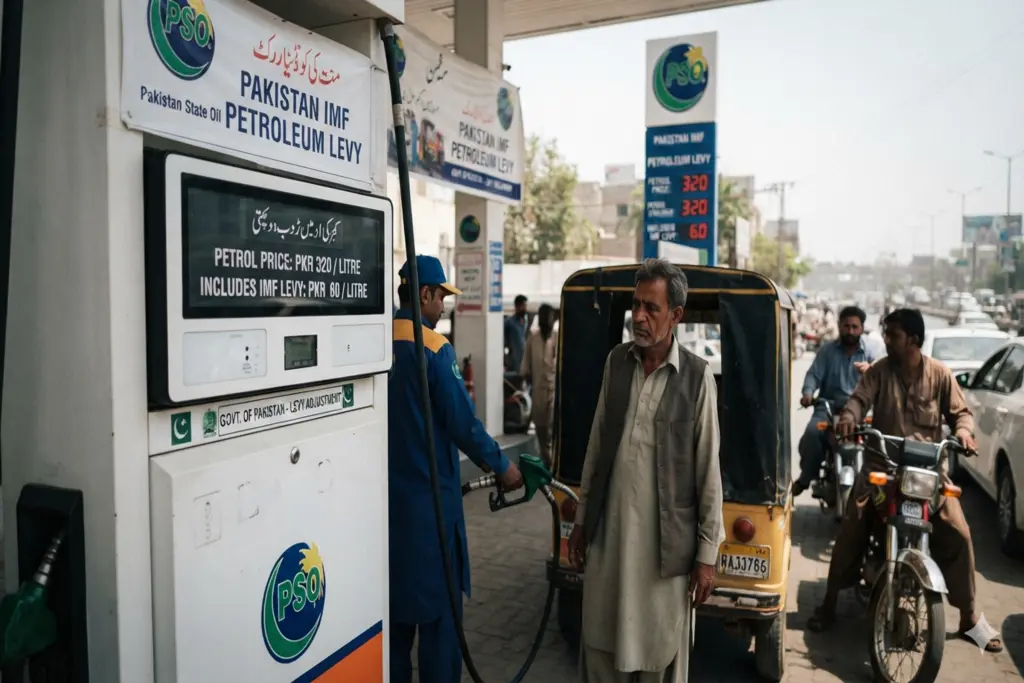
In a major macro-fiscal advancement for national revenue allocation, energy infrastructure stabilization and international monetary compliance the International Monetary Fund (IMF) has strongly urged Pakistan to secure alternative revenue streams if the petroleum development levy is reduced. The comprehensive structural evaluation, being conducted directly by the visiting IMF staff mission in Islamabad transitions legacy ad-hoc budget processing into an automated system-vetted fiscal compliance sandbox. Designed as part of the country’s ongoing 37-month economic program, the rigid policy parameter isolates the Petroleum Development Levy (PDL) as a core baseline for state revenue logging mandating that any localized tariff relief must be instantly offset by secondary fiscal buffers to maintain strict budget targets.
The high-stakes negotiations form a critical priority for state managers looking to whitelist and unlock approximately $1.2 billion in secondary sovereign financing under the combined Extended Fund Facility (EFF) and the Resilience and Sustainability Facility (RSF). By demanding automated data tracking loops to continuously preserve a high primary fiscal surplus the Fund directly removes the risk of revenue shortfalls, addresses historical systemic leakages and successfully elevates Pakistan’s structural accounting image across global financial networks.
Performance and Monitoring of Energy Sector Circular Debt Reductions
Addressing the severe cash-burn localized within the domestic energy grid the IMF delegation has flagged rising power-sector circular debt as a critical macro-financial vulnerability. The custom compliance framework deploys specialized data telemetry layers across three primary execution tracks:
The Absolute Fiscal Stability Threshold: Enforcing unalterable data logging parameters to ensure that budget deficit targets remain tightly locked against sudden revenue shocks.
The Phased Subsidy Disintegration Audit: Moving away from broad manual utility buffers to systematically eliminate untargeted power sector cushions confining financial assistance exclusively to vulnerable consumer segments via digitized welfare nodes.
Automated Tariff Indexing Integration: Forcing real-time synchronization between international energy pricing telemetry and domestic electricity and gas grids completely neutralizing manual administrative processing delays.
Mitigating Geopolitical Shock Vectors and Passing Through Global Price Fluxes
According to the official brief submitted by the Ministry of Finance Pakistani authorities have reassured the lending mission that structural reform implementation will remain 100 percent live and insulated despite ongoing Gulf war geopolitical pressures. However, treasury administrators explicitly informed the Fund that the financial impact of escalating global crude oil rates will be automatically and systematically passed on to domestic retail consumers through the state’s optimized petroleum tariff rules.
Concurrently, state managers detailed the active deployment of targeted digital help desks and cash-free fund transfer channels under the Benazir Income Support Program to mitigate consumer price shocks for lower-income households. Adhering to these strict structural boundaries remains the absolute first priority for federal planners to elevate Pakistan’s sovereign credit ratings, preserve market predictability for cross-border enterprise channels and permanently safeguard national public finance metrics.