




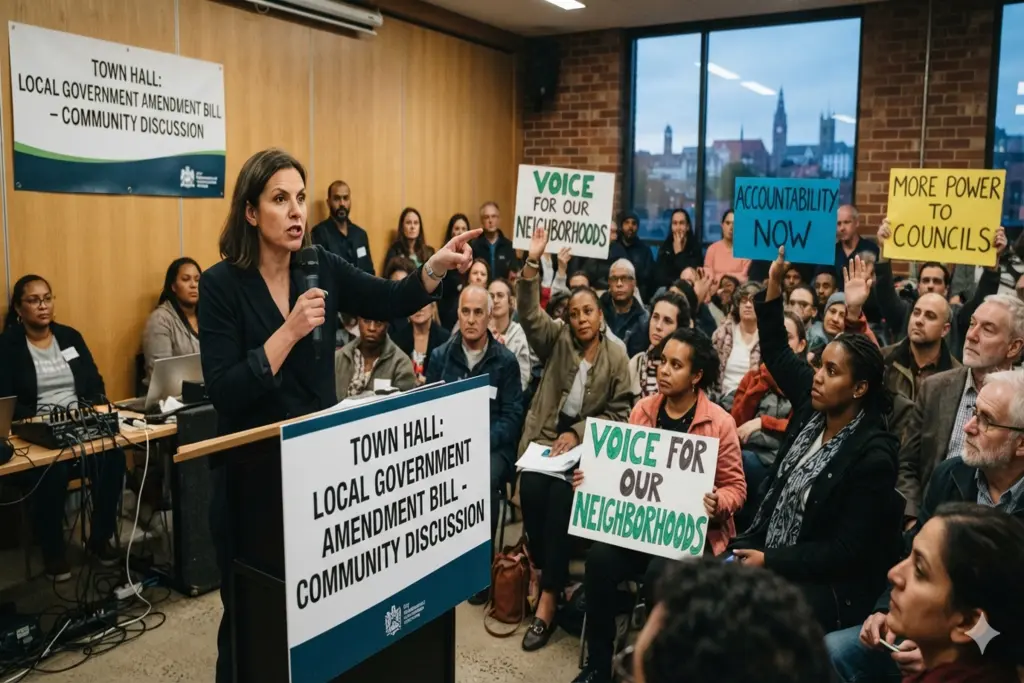
In a major legislative leap aimed at restructuring the administrative architecture of the federal capital and paving the way for delayed municipal polls, the National Assembly Standing Committee on Interior has officially passed the Islamabad Capital Territory Local Government (Amendment) Bill, 2025. Chaired by MNA Raja Khurram Nawaz, the committee approved the draft by a majority vote. The endorsement of this local government amendment bill signals a comprehensive overhaul of Islamabad’s rural and urban governance, injecting a new wave of political activity into the twin cities.
Intense Political Friction and Formal Dissent by PPP Lawmakers
The passage of the legislative draft within the standing committee was met with stiff resistance from within the ruling coalition itself. Prominent lawmakers from the Pakistan Peoples Party (PPP), including MNAs Agha Rafiullah and Abdul Qadir Patel, raised severe structural objections to the proposed amendments.
The PPP members formally recorded their notes of dissent during the session. They argued that running a capital city’s municipal infrastructure through frequent presidential ordinances and reactionary legislative shifts compromises democratic transparency. The dissenting members demanded that the government halt ad-hoc adjustments and instead empower the Election Commission of Pakistan (ECP) to hold immediate, unhindered local body elections under fixed rules.
Dismantling the MCI: Introducing Three Autonomous Town Corporations
The newly approved local government amendment bill introduces a decentralized administrative model for the capital territory, effectively dismantling the older structure. The core changes include:
Abolition of the MCI: The singular Metropolitan Corporation Islamabad (MCI) will be completely dissolved.
Three Town Corporations: Islamabad will be geographically divided into three independent Town Corporations, each managing its own distinct municipal zones.
Mayoral Elections: Each newly formed Town Corporation will feature one Town Mayor and two Deputy Mayors. They will serve a fixed four-year term and will be chosen through indirect elections by Union Council (UC) Chairmen.
Inclusive Seat Allocation: The corporate councils will incorporate dedicated quotas to ensure proportional representation for women, youth, laborers, and religious minorities.
Transfer of Civic Powers: Essential municipal services, financial funds, and civic portfolios currently managed by the Capital Development Authority (CDA) will be gradually transferred to these grassroots councils.
Addressing Ordinance Expirations: Legal Clarifications by the Ministry of Law
During the high-level debate, opposition and coalition members questioned the legal status of the bill, noting that the underlying Presidential Ordinance was set to lapse on September 5. Addressing these constitutional anxieties, legal experts from the Ministry of Law and Justice provided a detailed briefing under Article 89 of the Constitution of Pakistan.
The ministry clarified that even if a presidential ordinance expires or lapses due to time constraints, the sovereign parliament and its standing committees retain the absolute constitutional authority to adopt, modify, and pass the text as a permanent Act of Parliament through a majority vote.
Following this committee clearance, the draft will be sent to the floor of the National Assembly and the Senate for final voting. Once it receives the formal presidential assent, the ECP will be legally mandated to initiate fresh delimitation processes and announce the final election schedule for the capital’s new towns.