


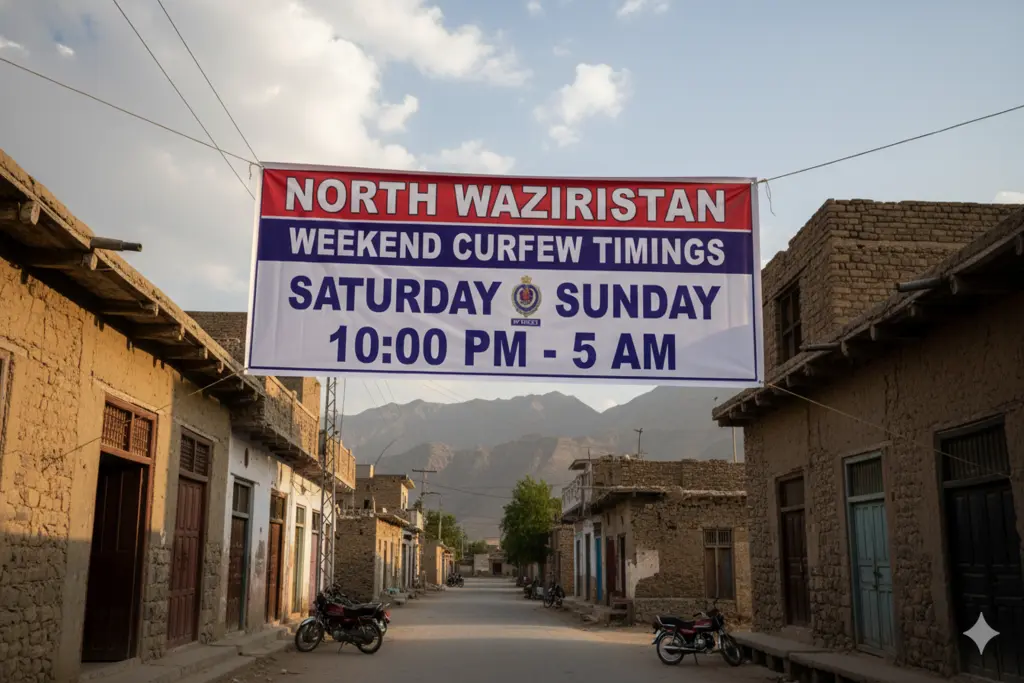
Periodic curfews are being implemented in North Waziristan by the district administration as per explicit instructions from Deputy Commissioner Yousaf Karim, in line with which the curfew hits selected localities in the district every Saturday. These localized lockouts are implemented due to the changing circumstances of regional security dynamics and security movements by the police officials in that region. Knowing when and how to use the transit windows and being aware of local health hotlines as well as the usual emergency procedures is necessary for the daily life of locals to comply with the safety guidelines.
Active Weekend Restrictions and Transit Rules
Once a district administration has officially declared that the weekend lock-up is to be implemented, all the following strict regulations come into effect in all the tehsils of the district as follows:
Typical Restricted Window: Normal rules for curfew apply on Saturday and Sunday. This is a strict lockdown procedure in effect every day from 5:00 AM to 7:00 PM, which means that no normal civilian movement is allowed whatsoever.
Arterial Thoroughfare Closures: All major highways, connecting link roads and commercial transport highways that cross the district are closed to regular public travel.
Exclusive Security Passage: During these hours only vehicles that are registered by the security forces, the police and fear of emergency responders are legally allowed to pass through the checkpoint cordons.
Commercial Shutdown: Local markets, bazaars and merchants stalls need to be completely closed to prevent formation of public gathering and securing the area.
Medical Helpline Access and Healthcare Contingencies
The provincial health department and the district administration work to ensure that people receive alternative routes for human safety during active enforcement blocks in cases of medical emergency:
1. Emergency Pass Issuance
Families in acute medical crisis situations will need to advise their local Assistant Commissioner (AC) office to obtain an official waiver for the movement. These passes can be endorsed through Khyber Pakhtunkhwa Government Portal.
2. Local Control Rooms and DHQ Access
Civilians may directly contact the Emergency Desk set up at District Headquarters (DHQ) Hospital at Miran Shah for emergencies. Ambulance co-ordination is assigned to security checks stationed at various locations after the emergency pass has been seen.
3. Support via Mobile Medical Units
Ensuring close cooperation with local health authorities and emergency teams, the Pakistan Red Crescent regularly sends out mobile medical camps and field health vans to remote corners. These deliver basic obstetric services, essential medicines and give immediate first-aid directly to resource-poor communities, when conventional travel corridors are disconnected.
Emergency Advisory and Civilian Safety Rules
It is highly recommended that residents of North Waziristan take the following precautionary procedures in the interest of not facing any penalties, legal complications or risks that may bring them into trouble at security check posts:
Travel with Valid Documentation: Always have a valid National Identity Card (CNIC) with you. Verify or update official household status before setting off on the road – visit your records online using NADRA portal.
Pre-Stock Necessary Provisions: This has meant that in order to receive curfew instructions, families need to have sufficient dry goods, baby formula and chronic care prescription medications in advance, since instructions are announced about 24-48 hours before the curfew.
Use Verified Bulletins: Ignore unverified hearsay that is going around on social platforms not monitored. Use official Radio Pakistan bulletins or formal announcements made through Deputy Commissioner’s official channels strictly.
It is important to follow the set timings of curfew and the security rules in this part of North Waziristan as it is crucial to ensure the safety of local households and to coordinate with the security teams working in the area.


1 Comment
Pingback: KP Land Record Digitization Portal: E-Fard App Live