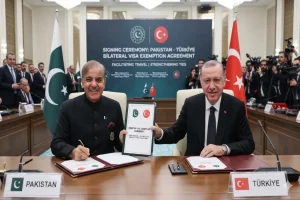


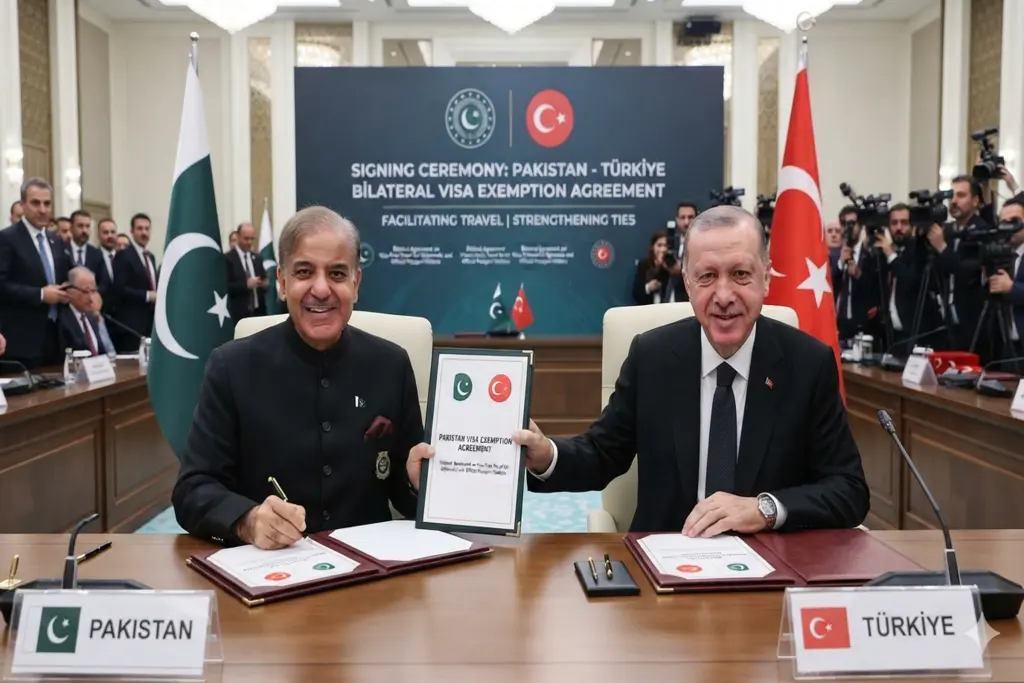
In a major geostrategic advancement for international diplomatic mobility, trans-border security cooperation, and paperless public sector governance, Pakistan has officially entered into comprehensive visa exemption agreements with dozens of friendly countries.
The landmark automated configuration, validated by the federal cabinet, coordinates directly with the Federal Investigation Agency (FIA) and its localized immigration zones to streamline entry point vetting. Under the newly enacted operational manual, the bilateral arrangements transition traditional border tracking into a high-speed digital surveillance sandbox, offering uninterrupted visa-free stays ranging from one to three months for certified holders of diplomatic and official passports to completely eliminate manual processing friction across state airports.
Structural Distribution of Whitelisted Nations and Border Enforcement Metrics
According to the implementation directives issued by treasury and immigration managers, the updated travel ledger completely discards old manual identity verification loops. When a foreign diplomat routes their profile through automated airport custom gates, the FIA’s enrollment software executes an instantaneous cloud synchronization check to confirm eligibility.
The multi-sectoral travel matrix incorporates several key global regional blocks:
The Middle Eastern Corridor: The whitelisted registry encompasses high-yield geopolitical partners including Saudi Arabia, the United Arab Emirates (UAE), Qatar, Bahrain, Kuwait, and Iran.
The Eurasian and South Asian Grid: Prominent trade and infrastructure allies such as Türkiye, Russia, Malaysia, Indonesia, Thailand, Azerbaijan, Bangladesh, and Nepal are securely locked into the system.
Alternative Regional Vectors: The digital database extends reciprocal access channels to critical sovereign territories including Argentina and Egypt.
This reciprocal configuration shifts bilateral state visits away from slow manual underwriting into a transparent utility, effectively protecting international public safety indices, enhancing administrative transparency, and upgrading Pakistan’s software image on the global stage.