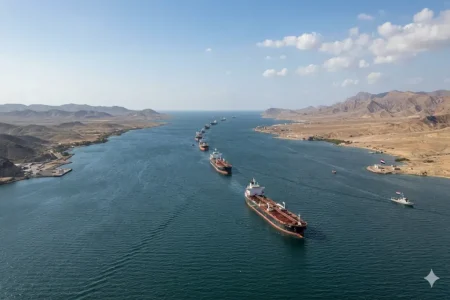
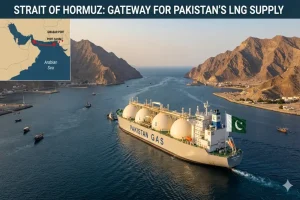


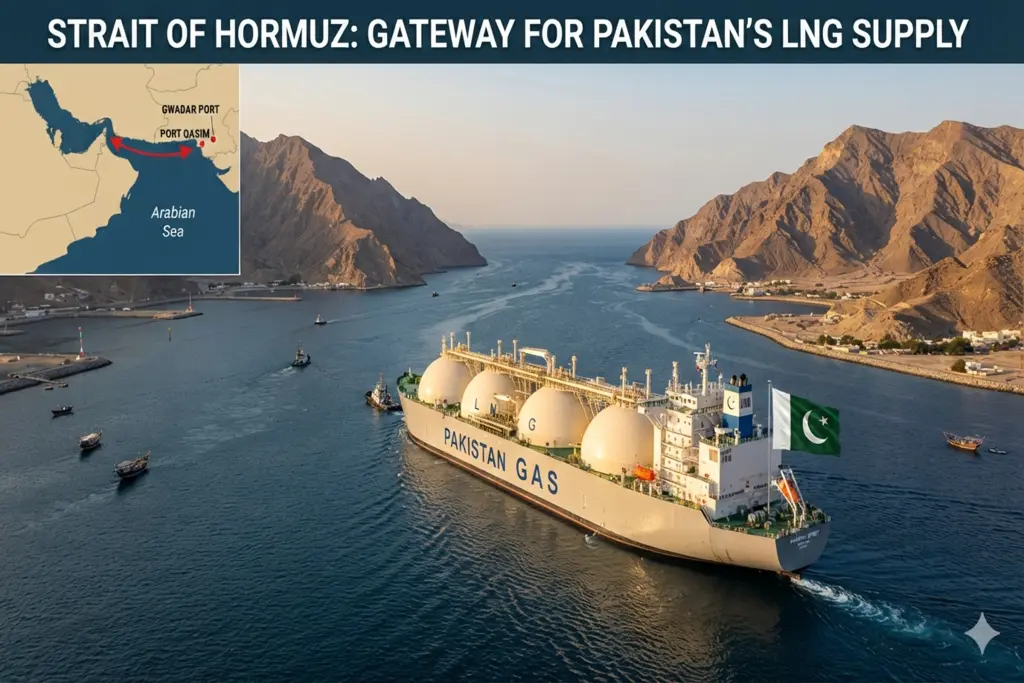
In a major geostrategic advancement for national energy security, maritime diplomacy, and macroeconomic financial stability, Pakistan has successfully secured safe passage through the volatile Strait of Hormuz for a premium Qatari Liquefied Natural Gas (LNG) shipment. The landmark organizational configuration, engineered directly by the Ministry of Energy in absolute coordination with the Pakistan Navy, transitions traditional maritime escorting into a highly integrated, software-driven vetting sandbox. Amidst intense regional geopolitical frictions and escalating transport risk indexes across Middle Eastern shipping lines, the successful transit of this high-volume cargo shields the state’s industrial production lines and electricity generation grids from severe supply deficits while reinforcing sovereign financial predictability.
As global energy supply chains navigate severe maritime blockades and unpredictable military movements, maintaining open access to the Persian Gulf remains an absolute priority for Pakistan’s economic managers. The Strait of Hormuz serves as a vital shipping bottleneck where unexpected closures or localized conflicts can instantly disrupt national fuel reserves and inflate cargo insurance costs to unsustainable levels. By leveraging high-level backchannel diplomacy and advanced naval monitoring infrastructure, the federal cabinet has successfully neutralized these operational barriers, allowing the massive LNG vessel to complete its transit without a single hour of operational delay.
Technical Performance of the JMICC Digital Telemetry Architecture
To fulfill strict global maritime safety and tracking standards, the Pakistan Navy deployed the extensive capabilities of its Joint Maritime Information Coordination Centre (JMICC). Bypassing old manual communication charts and legacy radio checks, the advanced naval command hub utilized computerized satellite telemetry grids to establish a transparent, machine-readable validation ledger during every nautical mile of the carrier’s transit through international waters.
The engineered vessel protection sandbox functioned on three critical operational tracks to ensure zero vulnerability:
Automated Threat Telemetry Ingestion: The JMICC system database performed continuous, real-time radar scans and electronic signal tracking, locking the Qatari vessel’s precise coordinates on an automated cloud dashboard the exact millisecond it entered the high-risk shipping chokepoint.
Predictive Asymmetric Risk Modeling: Integrating automated drone detection software and multi-spectral infrared camera arrays allowed naval specialists to continuously scan the surrounding maritime perimeter, protecting the cargo from aerial or sub-surface technical hazards.
Inter-Governmental Communication Loops: Pakistan’s diplomatic managers activated secure digital communication portals with regional gulf authorities and neighboring maritime states, eradicating manual bureaucratic delays to guarantee continuous, frictionless transit verification.
Insulating Domestic Industrial Operations and Enhancing Market Predictability
The commercial implications of this successful maritime routing are highly vital, providing critical liquidity buffers to high-yield industrial zones across major production hubs like Karachi, Lahore, and Faisalabad. Because a massive portion of the state’s power generation infrastructure and textile manufacturing units rely entirely on consistent, uninterrupted LNG supply chains, any unexpected shipment freeze would have injected severe transaction friction across corporate production lines and compromised macro-financial investment ratings.
By achieving absolute safe passage and directing the Qatari shipment securely to its final offloading destination at Port Qasim, the federal cabinet has stabilized domestic market predictability and protected long-term supply models established with international energy corporations. This successful deployment completely dismisses fears of automated system halts or widespread industrial blackouts across the province. Furthermore, the Ministry of Energy has issued a fresh strategic manual to automate future trade corridor monitoring, successfully uplifting Pakistan’s software image on the global economic landscape.
Compliance Frameworks and Future Maritime Energy Corridors
To ensure continuous adherence to international maritime law and global energy safety protocols, the federal administration has deployed dedicated compliance tracking portals across multiple industrial ministries. Commercial shipping lines and state-run energy enterprises can now securely upload their voyage itineraries, cargo specifications, and active risk-assessment data logs to verify system readiness prior to entering high-density transport zones.
A specialized technical help desk has been activated by the trade development authority to handle real-time regulatory inquiries and resolve document processing anomalies for incoming international vessels. This collaborative sandbox bridges the gap between state policymakers and corporate executives, transforming maritime trade reporting into a transparent, data-driven utility. By driving institutional digitization and honoring its international commitments, Pakistan establishes a resilient blueprint for sustained, high-utility economic growth across global trade networks.