


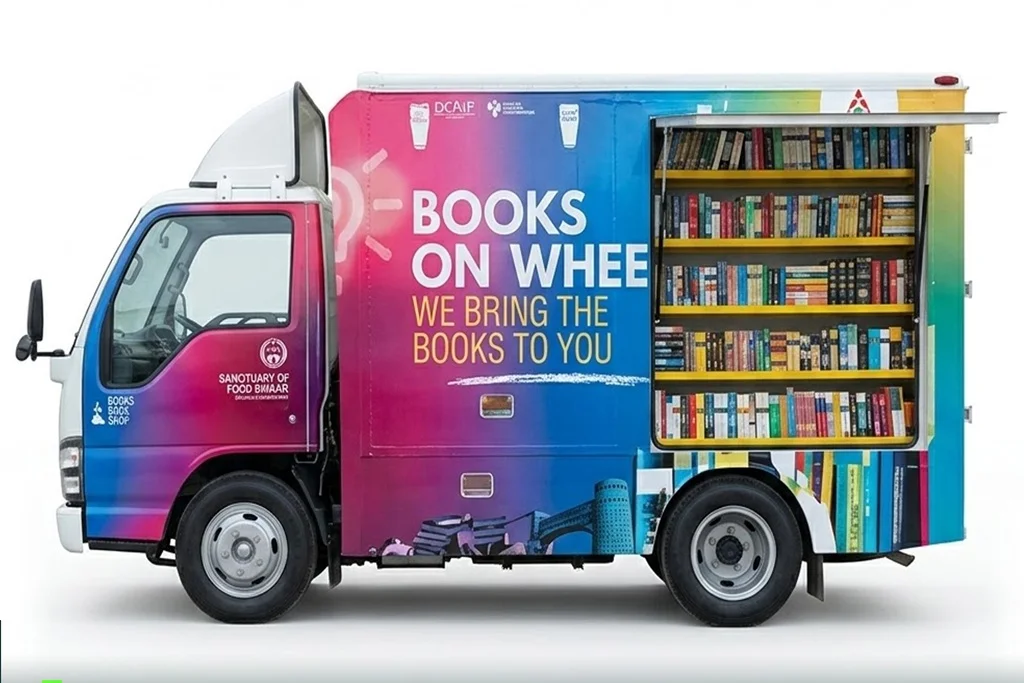
In a groundbreaking move, the Government of Pakistan led by the Chief Minister of Punjab Maryam Nawaz Sharif and Education Minister Rana Sikandar Hayat has unveiled a pioneering initiative to provide free smartphones to students in government schools across Punjab. A mobile library system of 198 million. Known as “Libraries on Wheels” project, it’s an ambitious educational program designed to champion a love for reading, help empower the marginalized section of society and introduce modern and innovative interactive technology in government schools around Lahore as well as all over Punjab.
The project combines the use of traditional literacy tools with a very modernized digital learning ecosystem, which guarantees that thousands of students within regions that are not well served have equal access to books, electronic resources, and educational animations.
Read Also: India Planning Military Action Against Pakistan Within 36 Hours: Tarar
Cutting-Edge Tech Features of the Mobile Libraries
Structurally the “Libraries on Wheels” project is based on a fleet of specially modified and environmentally friendly transit vehicles. Instead of being just book delivery vans, these mobile units are complete, smart multimedia hubs.
The project uses 85 fully electric mobile library vans (EVs) with a view to championing the use of green energy and reducing carbon emissions in the overcrowded city of Lahore.
20 Modern Tablets Per Unit: Each electric vehicle gets 20 high tech, Android tablets and iPads. Curriculum aligned apps, science videos and encyclopedias are pre-loaded, enabling students to access personalized digital learning.
High tech LED screens on the outside of each van: Each van will have a high-definition LED screen mounted on the exterior to allow for audiobook playing, visual animation and teacher-led collaborative learning with a larger group.
Dedicated In-School EV Charging: To prevent potential operational disruption, dedicated EV charging stations have been installed at specific government school hubs where vans are charged every day.
Operations, Timing, and School Route Details
In order to ensure maximum contact time with students, the Punjab School Education Department (SED) has adopted a well-coordinated deployment blueprint in the provincial schools.
1. The “One Vehicle, One School” Daily Schedule
The approved framework enforces a “one vehicle, one school per day” policy on the mobile libraries. The van parks in the school’s parking area before the morning assembly and stays in the parking area until the dismissal bell sounds. It is a stretch of time which enables primary, middle and matriculation sections to visit the library during their normal recess or special proxy time without interrupting the main section’s program.
2. Strategic School Route Planning
The District Education Authorities publish the maps of the route from week to week in the various big sub-towns, such as Shalimar, Wagah, Ravi Town and Model Town etc. The routing logic is designed to prioritize Government schools which do not have dedicated functional library facilities or Computer labs strategically. A route is tailored dynamically each time with the aim of the same school being visited every two weeks to ensure continuity of learning.
Key Financial and Operational Parameters
| Project Metric | Approved Specification |
| Total Financial Outlay | Rs. 198 Million |
| Active Fleet Size | 85 Eco-Friendly Electric Vehicles |
| Digital Terminals per Van | 20 Preloaded Educational Tablets |
| Operational Mandate | 1 School Deployment Per Day |
| Core Slogan Alignment | “Parho Gay To Barho Gay” (Read to Progress) |
Advancing Literacy Beyond Textbooks
The project runs in parallel to the provincial “School on Wheels” project, which uses an e-rickshaw with solar power to bring primary lessons straight to local playgrounds, public parks and poor communities. The project has brought English, Urdu and science materials for the public school students and digital materials together and is thus transforming the quality of education in Punjab at the foundation level.
Read Also: Mobile Phone Prices in Pakistan After Budget 2026: New PTA Tax Slabs & Price Hike Impact Explained