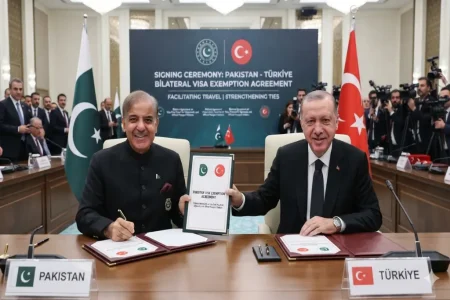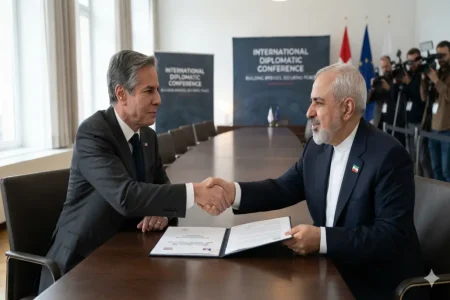
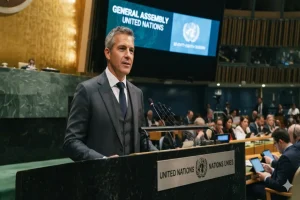



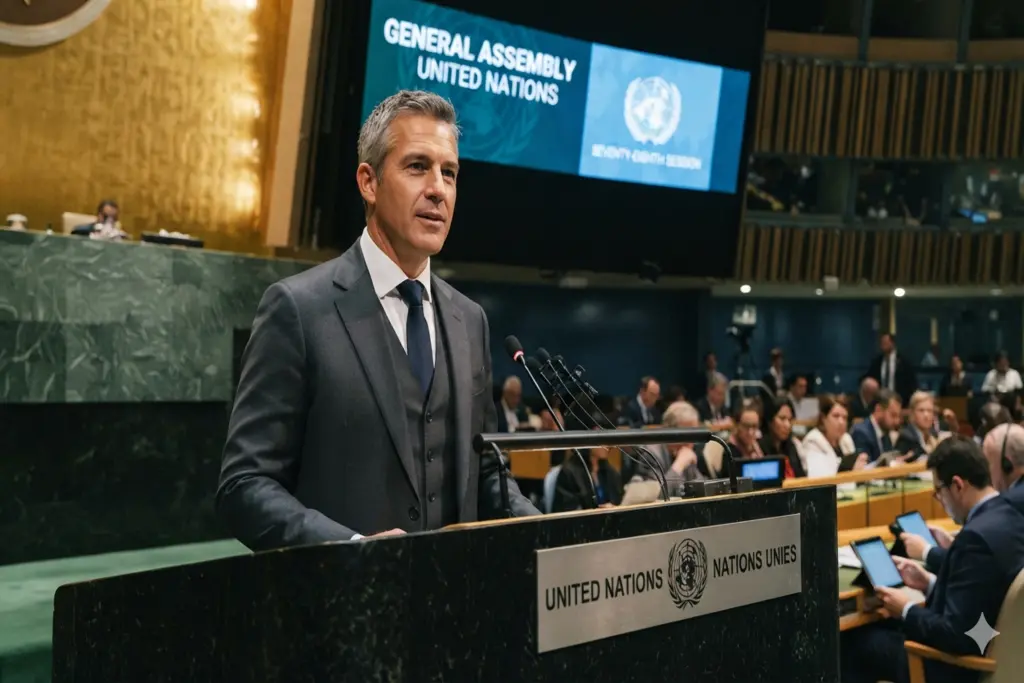
In a major geostrategic advancement for Pakistan’s foreign policy, cross-border economic integration, and international humanitarian advocacy, Prime Minister Muhammad Shehbaz Sharif has officially arrived in New York to attend the 81st session of the United Nations General Assembly (UNGA). The high-level bilateral and multilateral configuration, validated directly by Pakistan’s diplomatic corps upon arrival at John F. Kennedy International Airport, transitions traditional statecraft into a highly integrated, data-driven diplomatic sandbox. Tasked with steering a top-tier delegation, the Prime Minister’s multi-sectoral layout focuses directly on raising a calculated voice for universal human rights, demanding absolute structural compliance with international frameworks, and fast-tracking macro-financial foreign direct investment (FDI) alignments to stabilize the country’s sovereign economic predictability.
As global geopolitical fragmentation creates deeper divisions across regional security lines, maintaining an active, premium presence at the United Nations remains an absolute priority for Pakistan’s administrative managers. The UNGA podium serves as a premium communications utility where sovereign states pitch their core national narratives to direct global public policy trends. By utilizing a highly synchronized diplomatic matrix, the federal cabinet aims to deploy a sophisticated policy manual that elevates the state’s soft image, addresses cross-border security challenges, and opens new electronic avenues for trade and economic development with international partner states.
Audits of the UNGA Master Agenda and Core Strategic Briefings
According to the operational manifesto released by the Ministry of Foreign Affairs, the Prime Minister’s high-utility address before the UN General Debate will bypass traditional rhetoric to deliver an empirical, evidence-based manual on regional and global peace imperatives. The system-vetted presentation matrix zeroes in on correcting severe geopolitical imbalances through data-driven advocacy.
The engineered diplomatic protection sandbox operates on three primary operational tracks to ensure zero vulnerability:
The Non-Negotiable Kashmir Mandate: Reaffirming Pakistan’s principled stance by demanding immediate UN resolutions enforcement to secure an automated, voter-backed plebiscite and protect civilian safety indices in Indian Illegally Occupied Jammu and Kashmir (IIOJK).
The Palestinian Humanitarian Crisis: Drawing sharp parallels with international double standards to demand an immediate end to illegal military occupations, ensuring absolute human dignity, food security, and self-determination loops for the people in the Occupied Palestinian Territories (OPT).
Automated Climate Justice Metrics: Presenting audited loss-and-damage logs to compel developed nations to distribute specialized, cashless alternative energy sub-sector grants and green technology to climate-vulnerable developing economies that suffer from severe environmental imbalances.
Linking Corporate Wall Street with SIFC Cloud Gateways
Beyond formal United Nations conventions and multilateral state gatherings, the Prime Minister’s itinerary features extensive technical roundtables with international corporate managers, private equity chiefs, and global financial utility executives on Wall Street. Utilizing a completely transparent, software-backed repository, the Prime Minister will present real-time performance indicators from the Special Investment Facilitation Council (SIFC), showcasing secure, automated corridors ready for immediate investment across local agricultural engineering, robotic medical technology, and software infrastructure sectors.
This calculated commercial integration aims to lower national credit default metrics, upgrade sovereign credit ratings, and project a highly sophisticated, transparent image of Pakistan on the global financial landscape. By eliminating manual policy bypass vectors and offering friction-free investment portals, the federal administration seeks to attract high-yield foreign capital, building a robust corporate network that boosts market predictability and establishes a resilient blueprint for sustained economic growth from within.
Compliance Frameworks and Future Sovereign Engagement Standards
To ensure continuous adherence to international maritime law, human safety parameters, and global trade safety protocols, the federal administration has deployed dedicated compliance tracking portals across multiple industrial ministries. Traveling business delegations and state-run enterprises can now securely upload their performance metrics, regulatory compliance records, and trade data logs to verify system readiness prior to high-density economic interaction phases.
A specialized technical help desk remains active across federal server cycles to handle real-time regulatory inquiries and resolve documentation processing anomalies for registered international corporate representatives. This collaborative sandbox bridges the gap between state policymakers and corporate executives, transforming professional economic reporting into a transparent, data-driven utility. By driving institutional digitization and honoring its international commitments, Pakistan establishes a resilient blueprint for sustained, high-utility workforce and investment protection across global commercial networks.