


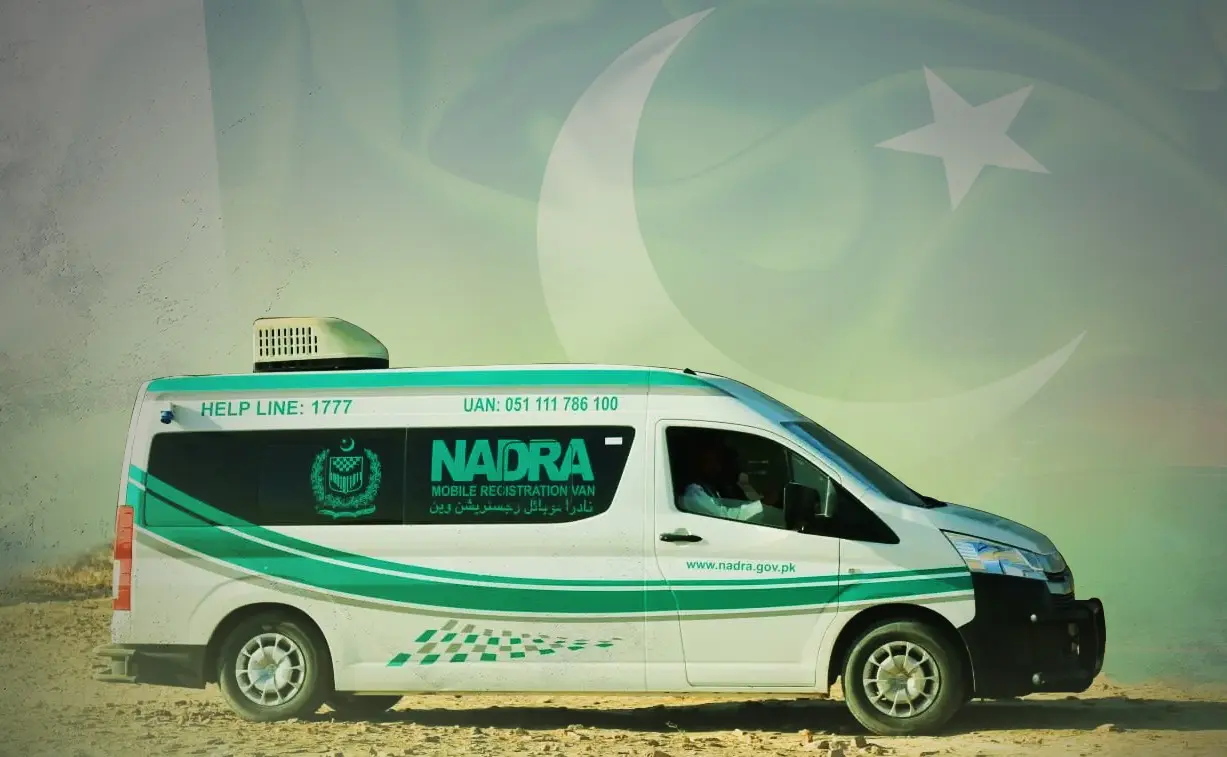
The deployment of the NADRA Mobile Registration Van (MRV) has considerably improved and facilitated citizens to avail of essential identification services in the underserved, rural and remote localities. These mobile units, organised by the National Database and Registration Authority (NADRA), help to provide biometric registration services to the doorsteps of the local communities. But many of the applicants are not sure about the next procedure to get their final physical Computerized National Identity Cards (CNICs) after completing their Biometrics.
The state database authority has put together various secure logistic channels to distribute the cards, in order to achieve maximum public convenience. During the data acquisition phase, the applicants have to indicate the delivery route, at the mobile workstation terminal:
Option 1: Direct Home Delivery: These candidates will need to provide an absolute, verified and full address of their home with the van operator. The identity smartcard is then sent, directly to the recorded doorstep, by secure postal service.
Option 2: Central Office Collection: Applicants may wish to collect physical credentials from a permanent and stationary regional office. At the initial registration session the citizen needs to choose a registration center within a certain region.
Protocol for Default Collection Procedures
An automated backup routing workflow is followed by the authority if the applicant doesn’t choose a separate delivery track during their stay at the mobile unit. In these cases, the processing staff will automatically choose the closest stationary regional center as the fulfillment center. The applicant will be notified verbally or electronically of this designated venue location, which will facilitate a smooth in-person retrieval at the end of the normal state retrieval window.
Crucial Security Verification Requirements
The authority has a strong policy for physical verification at all stationary desks so as not to issue duplicate documents nor be retrieved by anyone else. Citizens are responsible for holding their official application token receipt (or digital tracking ID) in strict confidence, and during the entire application processing period. This tracking document is required as part of the primary proof of ownership; the actual card won’t be issued without the barcode or tracking ID to the distribution desk.
The citizens can keep a track of their application printing through their official website – www.nadra.gov.pk or can simply send their tracking number to the short code utility (central 8400). To get secondary logistic support and tracking disputes done by automation, for special delivery modification, applicants are asked to call the centralized institutional customer helpline number 1777 from any domestic mobile network provider.
Who Is Authorized to Collect the Identity Card In Person? Look into the strict physical verification parameters requiring the primary applicant or immediate family members to present original token slips.
Why Is Precise Address Logging Mandatory for Smartcards? Find the official logistical explanations aimed at preventing postal delivery failures and high-security document misplacement.
Which Tracking Systems Monitor Real-Time Document Printing? Dive into the automated digital platforms, including the short-code SMS service and central web dashboards.
How Do Default Routing Protocols Manage Unselected Delivery Paths? Uncover the localized administrative steps that automatically transfer pending profiles to the nearest permanent registry facility