


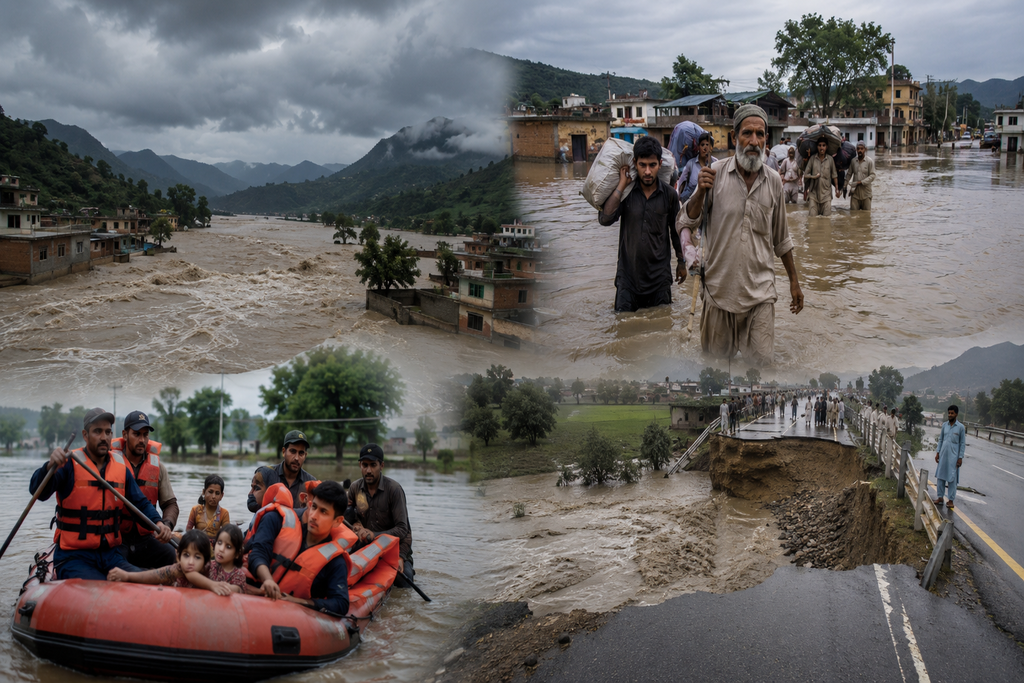
This year’s monsoon rains have claimed over 40 lives in Punjab and Khyber Pakhtunkhwa and the damage doesn’t stop when the water recedes. For daily wage earners, farmers and small traders, monsoon flooding means lost working days, ruined crops and sudden medical costs, all adding to the strain on already thin household budgets.
How Poor Families are Most Affected by Flooding
Pakistan is one of the most climate-exposed countries in the world and yet the families with the least savings tend to take on the biggest losses. Roads are flooded, so daily wage laborers are unable to work. Farmers in Waziristan and Punjab have seen floodwaters wash away topsoil and standing crops. When the markets are flooded, sellers lose their stock and the delay in transportation, such as the recent closure of the Wana Gomal Zam Road leaves fruit and vegetable traders with rotten produce and no buyers.
The cost of medicine, house repairs and clean water added together can plunge a stable household into debt for years in a single flood season.
Why Government Assistance Often Fails
Agencies like the National Disaster Management Authority and Provincial Disaster Management Authorities do issue early warnings and coordinate rescue work. Officials have used Section 144 near rivers and streams this year to keep people away from danger zones. Relief funds, however, go mostly to emergency rescue and large infrastructure, not to direct cash aid for informal workers with no payslip or insurance. Many families end up borrowing informally just to make it through the season.
What families can do now
•It takes years to change policy, but there are things households can do today to mitigate the financial impact of flooding.
•Before traveling or working outdoors, heed the local weather advisories issued by the Pakistan Meteorological Department and PDMA.
•Maintain a small emergency fund. Set aside a few thousand rupees as savings through JazzCash, EasyPaisa or a local committee savings group for medical or repair costs.
•Avoid old and weak buildings during heavy rain, as roof and wall collapses have resulted in the most fatalities this season.
•Register for or check eligibility for programs such as the Benazir Income Support Program, which sometimes makes emergency cash transfers after major weather events.
•Diversify income if possible; for instance, a small mobile-based selling or delivery job in combination with farm work so that one bad season does not wipe out the entire budget.
•Contact local jirgas, farmer cooperatives or community groups, who tend to pass on early warnings and small emergency support faster than formal channels.
Local systems to use
Even in areas where there is little national funding, district disaster management units, PDMA helplines and community elders are active during floods. Elders in tribal districts have also been demanding better roads and infrastructure standards, showing how community pressure can support long-term protection, as well as personal savings.
A PRACTICAL PATHWAY
Government funding alone is not going to Flood-proofing family income. Families that listen to weather warnings, accumulate even small savings and make use of available community and mobile tools are better positioned to bounce back quickly when the next monsoon spell hits.
Small steps today can protect your income from monsoon floods; don’t wait for the next disaster.