




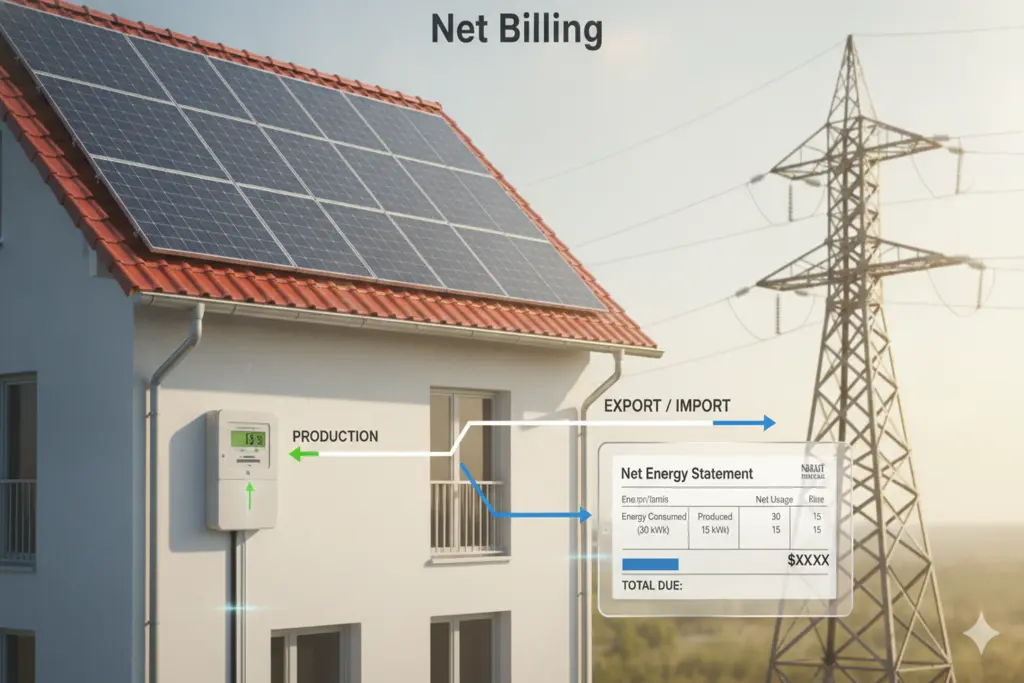
Surging electricity tariffs across Pakistan have forced millions of households to switch to solar energy as a shield against crippling utility expenses. However, the National Electric Power Regulatory Authority (NEPRA) is introducing a pivotal regulatory shift by transitioning from the traditional 1:1 net metering framework to a localized Net Billing infrastructure.
Under the classic net metering mechanism, solar consumers could offset their nighttime electricity consumption on an equal 1:1 unit barter exchange with the national grid. The newly enacted Net Billing rules change this equation completely. The national grid will now purchase excess solar energy produced by your home during peak daylight hours at a lower wholesale buyback rate. Concurrently, it will charge you standard commercial retail rates for electricity drawn at night.
While this regulatory adjustment has sparked anxiety among current and prospective solar owners, you can still easily wipe out your monthly power bills. By transitioning from a passive energy producer to a strategic energy manager, you can secure maximum financial returns. Here are the top 3 secrets to maximize your savings under Pakistan’s new solar paradigm.
Secret 1: Migrate to Hybrid Systems and Lithium Battery Storage
The biggest financial bottleneck under Net Billing is exporting cheap solar units to the grid during the afternoon, only to buy expensive grid units back under nightly Peak Hours (usually 6:00 PM to 11:00 PM). The definitive antidote to this challenge is energy self-reliance via battery storage.
- Bank Your Surplus Energy: Instead of feeding your afternoon surplus production back into the national grid at low buyback rates, route that energy directly into high-capacity Lithium Iron Phosphate (LiFePO4) or advanced tubular batteries.
- Evade National Peak Hours: Program your hybrid inverter to disconnect from the WAPDA grid entirely as soon as evening peak hours commence. Running your heavy household loads exclusively on stored battery power during these high-tariff windows keeps you from buying the grid’s most expensive units.
Secret 2: Deploy Strict Load Shifting Practices
Under Net Billing, a single unit of electricity consumed directly at the point of generation is worth far more than a unit sold to the national grid. To extract maximum utility from your solar investment, you must align your heavy power usage with peak sunshine hours.
- Run High-Load Appliances in the Afternoon: Shift heavy operations—such as running inverter air conditioners, water pumps, deep freezers, electric irons, and washing machines—exclusively to the 10:00 AM to 3:00 PM window.
- Achieve Direct Grid Displacement: Powering your heavy appliances straight from your solar panels means this energy never passes through the utility meter. Utilizing your own power locally yields 100% retail-rate value, completely bypassing the discounted export rates enforced by the new rules. You can easily automate this process using smart timer switches.
Secret 3: Maintain Absolute Photovoltaic (PV) Yield Efficiency
Because the financial return per exported solar unit is lower under the new guidelines, your system must operate at peak capacity to ensure your home generates a massive volume of baseline units.
- Enforce Rigid Cleaning Schedules: Pakistan’s ambient environment features high concentrations of dust and airborne particulate matter. Accumulated dust can slash your solar panel efficiency by up to 20% to 30%. Wash your panels thoroughly with clean water at least twice a week.
- Adopt Seasonal Tilt Modifications: Avoid using completely fixed structural mounting frames. Transitioning to adjustable, multi-angle seasonal structures allows you to alter the physical tilt of your panels during summer and winter. Tracking the sun’s changing path increases your total annualized unit generation by up to 15%, providing a solid buffer against net billing policy changes.
Ultimately, while national regulatory policies may change, adopting smart hybrid technology and conscious load-shifting ensures that your solar arrays remain an exceptionally profitable investment in Pakistan.




1 Comment
Pingback: SIFC Saudi Investment Pakistan: Multi-Billion Dollar Boost