

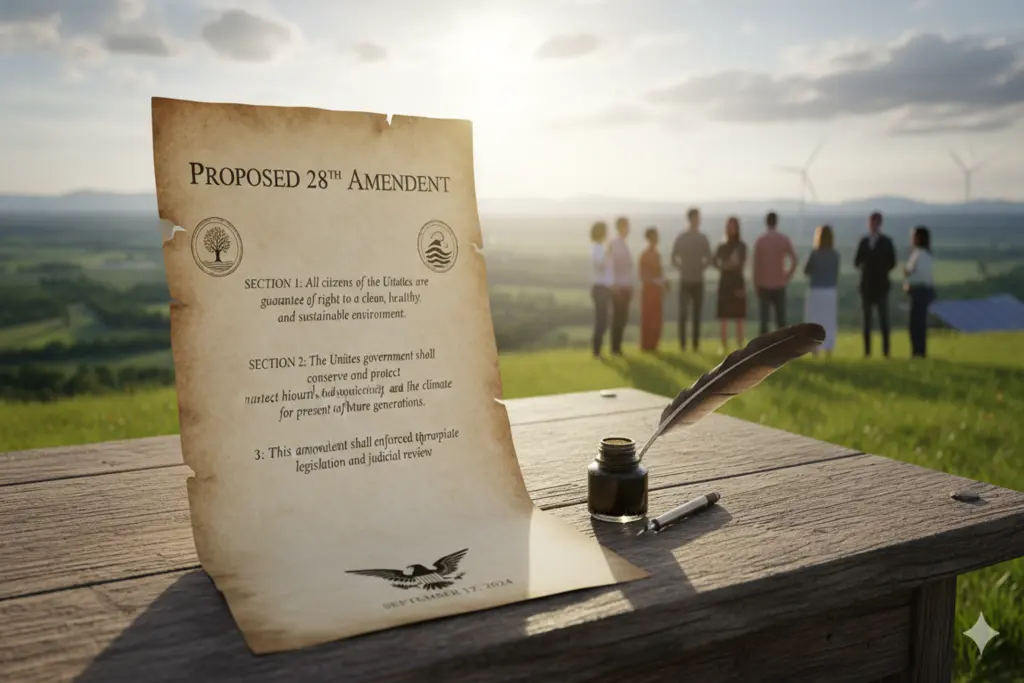
The whole political saga has been rife with waves of concern and heated debates across Pakistan. Ministerial and state statements indicate that the political landscape is considering a proposed option on 28th amendment to the Constitution. One of the most hotly debated parts of this proposed bill is a suggestion to change the minimum voting age from 18 to 25 years.
This proposed all-encompassing constitutional shift, if implemented, would literally deny almost half of Pakistan’s population of youths the right to vote. This detailed diagnosis examines the history of this proposal, its constitutional challenges and gains traction, and the serious nationwide adverse reactions.
The Rationale Behind the Move: Political Logic or Strategy?
The discussion started to grow more intense after government leaders began discussing publicly their country’s growth and development with the people. There is a fundamental dichotomy between the age at which one becomes eligible to vote and the age at which one is eligible to become a candidate. In theory, there should be no difference between the age of the voting population and the age of those who are allowed to participate in elections in the decision-making process.
According to the existing legislation, an individual who is a Pakistani citizen can contest for his seat in the National Assembly if he is aged 25 years or more. The supporters of the proposed 28th amendment are of the opinion that:
If the voting age is the same as eligibility to public office (25 years), legislative uniformity is established.
At the age of 25, he is more mature in terms of cognitive and social development, and thus is better prepared to lead a more “calculated” political life.
De-codifying the constitutions by eliminating political inclinations according to the age criteria will make unnecessary changes in politics to be meaningless.Avoiding sudden elections changes arising from emotional demographic waves brings the constitutional age requirements to the fore of politics as a strategy to curtail them.
The Demographics: Disfranchising 30 Million Young Voters
Pakistan has one of the youngest populations and 64% of the population is that which is less than 30 years old. The threshold of 25 would completely change the electoral landscape of the country overnight.
Demographic data kept by the Election Commission of Pakistan (ECP) indicates that people aged 18 to 25 are some 30 million registered voters. This has been the standout segment—most vibrant, digitally-connected and politically active. Removing them from the voter register would significantly change election outcomes and leave youth with less voice in national discourse.
Severe Backlash from Opposition and Civil Society
Opposition parties, human rights organisations and law experts have expressed immediate repulsion to the offer. The move has sparked outrage on social media platforms, including X, formerly known as Twitter, as many users call it an existential threat to democratic progress.
According to critics, if an 18 year old is legally grown enough to marry, drive, pay taxes and be in the armed forces to defend the state, he/she should be informed of their rights to determine the way they are governed. The opposition says the amendment is a tactic designed to silence the population that generally votes against political status.
Inside on the proposed 28th Amendment? Why are PPP-PMLN on odd with the terms on this biggest constitutional package. Is 28th Amendment becoming a bombshell in Pakistan’s history? What really hidden proposed amendments in around 117 Articles might create political chaos &… pic.twitter.com/ZBTJcvpOey
— Zahid Gishkori (@ZahidGishkori) May 15, 2026
Constitutional Obstacles and Global Norms
A change in voting age would need to be enacted under the Constitution of Pakistan, Article 106(2), which guarantees voting rights to everyone aged 18 years and above with a valid National Identity Card.
In the past, the voting age was reduced from 21 to 18 in 2002, according to international democratic norms. Most, if not all, democracies around the world hold an upper age limit of 18 for voters, and progressive countries discuss lowering the age there.All but the vast majority of democratic nations have an upper age limit of 18 for their electors, and some advanced nations are considering exactly how to lower that age. To raise it to 25 would make Pakistan a stark aberration from around the world with regard to democratic norms.
Any such bill would need to be two-thirds majority in the National Assembly of Pakistan and two-third majority in the Senate. Legal experts say if it takes Parliament, it would be certain to have serious challenges in the Supreme Court which will inevitably point to the infringement of fundamental rights.
Conclusion: A Litmus Test for Pakistan’s Democracy
The proposed 28th amendment and the corresponding clauses on the voting age point to one of the most pivotal moments in the nation’s history as 30 million youths will be denied the opportunity to exercise their peaceful political rights, which risks perpetuating political polarization and creating a sense of disillusionment among the country’s most valuable resource.