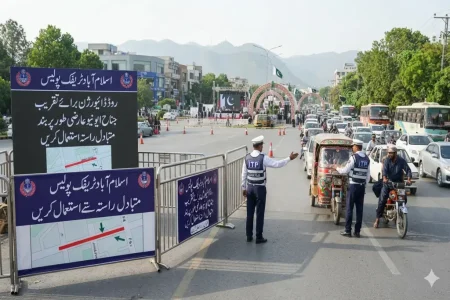



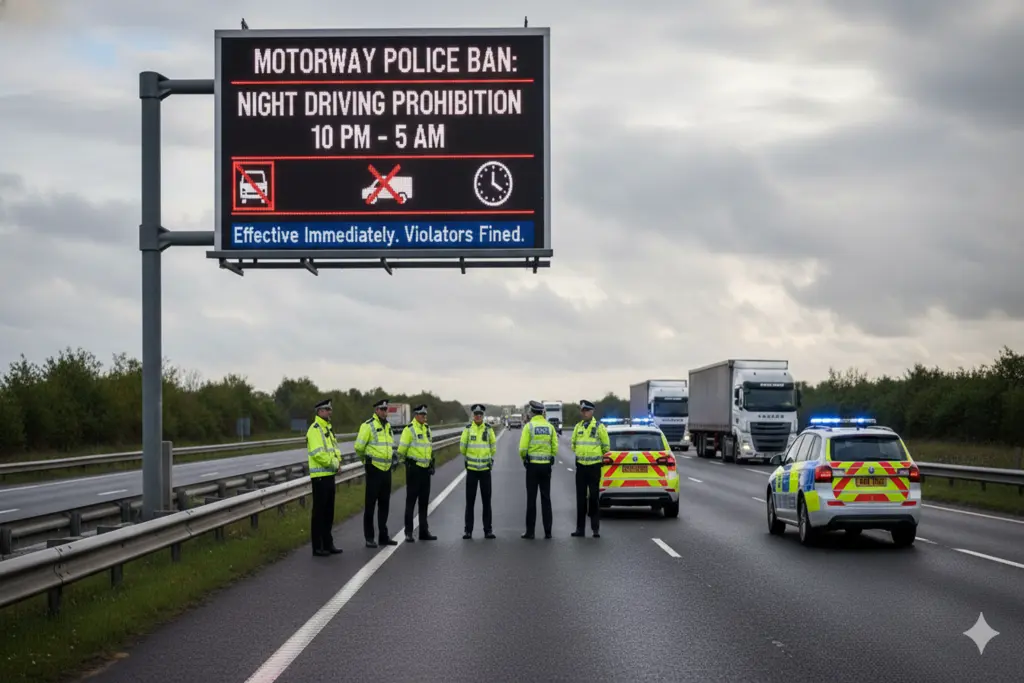
During the approaching day of Eid-ul-Adha, a great surge in the movement of sacrificial animals can be seen in Pakistan. Officials from the National Highways and Motorway Police (NHMP) have issued a comprehensive Motorway Police ban on all vehicles carrying sacrificial animals on the country’s national motorways, knowing they can cause traffic disruptions at critical times as well as endanger passengers, pedestrians and other vehicles on the road.
This decision is with the purpose of preventing the occurrence of high risks that can take toll on the commuters as a result of livestock transport not done in an appropriate manner. This detailed policy outlines the reasons the policy was created, the enforcement of this policy and alternatives that are available for transporters.
The Core Reasons Behind the Motorway Police Ban
This strategy has been formulated following historical traffic analysis of previous festive seasons, carried out by the NHMP. Heavy moving goods such as free-flowing livestock are not structurally appropriate for high speed motorways. The main reason behind the Motorway Police ban are:
Prevent Fatal Accidents: Overloaded and unattractive trucks often lose balance or go off the road at high speeds, often creating multi-vehicle pileups that are deadly.
Slow moving and heavy loaded animal trucks affect the average speed of the highway to significantly low amounts, thus causing bottle neck during Eid holiday rush.
When animals are not properly secured aboard trucks, they are a direct and immediate risk at highway speeds of 120 km/h to cars that are inboard of the truck.
Strict Enforcement and Joint Border Checkpoints
Highway bodies are closely cooperating with provincial administrations to achieve complete adherence to legislation. The National Highways and Motorway Police (NHMP) has officially asked the Punjab and Khyber Pakhtunkhwa police departments to set up checkpoints for motorists, with particular emphasis on constabulary stations, that operate 24 hours a day and operate throughout the year.
The checkpoints are located at key motorway entry points and close to key regional cattle markets. All vehicles carrying livestock will not be allowed on the motorway network and will be directed to alternative national highways and the Grand Trunk (GT) Road.
مال بردار گاڑیوں پر خطرناک انداز میں جانوروں کی ترسیل اور سواریوں کو بٹھانے سے گریز کریں۔ pic.twitter.com/iakskWqRJm
— National Highways & Motorway Police (NHMP) (@NHMPofficial) May 17, 2026
Combined Passenger Transport and Illegal Parking Crackdowns
Animal restrictions are not the only place the enforcement shows up. The NHMP made a firm call that such movement of humans with livestock in commercial truck beds was a serious crime that cannot be remediated and won’t be tolerated.
Moreover, a large-scale crackdown has taken place on the ticketing of unlawful parking in close zones of motorway junctions and cattle markets. Vehicle parking on highway shoulders clogs roadway traffic and includes heavy fines and impoundment.
Essential Guidelines for Travelers and Transporters
In maintaining the safe and certain transport of sacrificial animals, it is very important to comply with official safety regulations in order to avoid penalties when buying or transporting such animals:
Make use of Alternative Roads: Plan the route completely on one of the GT Roads or on secondary provincial roads, which are open for any route.
Check the Vehicle Fitness: Make sure your transport truck is mechanically fit to run, it is covered and not excessively heavy.
Separate Vehicle for Passengers and Animals: Do not share vehicles; handlers/passengers travel in different vehicles.
Have Emergency Contacts on hand: In case of any road assistance, incident or meteorological emergencies, go to NHMP emergency number (130) right away.