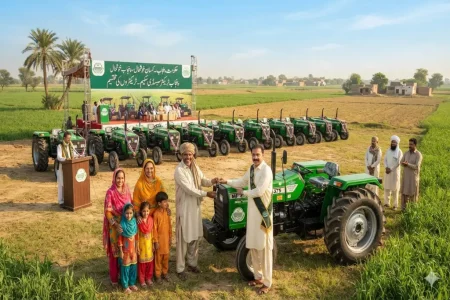



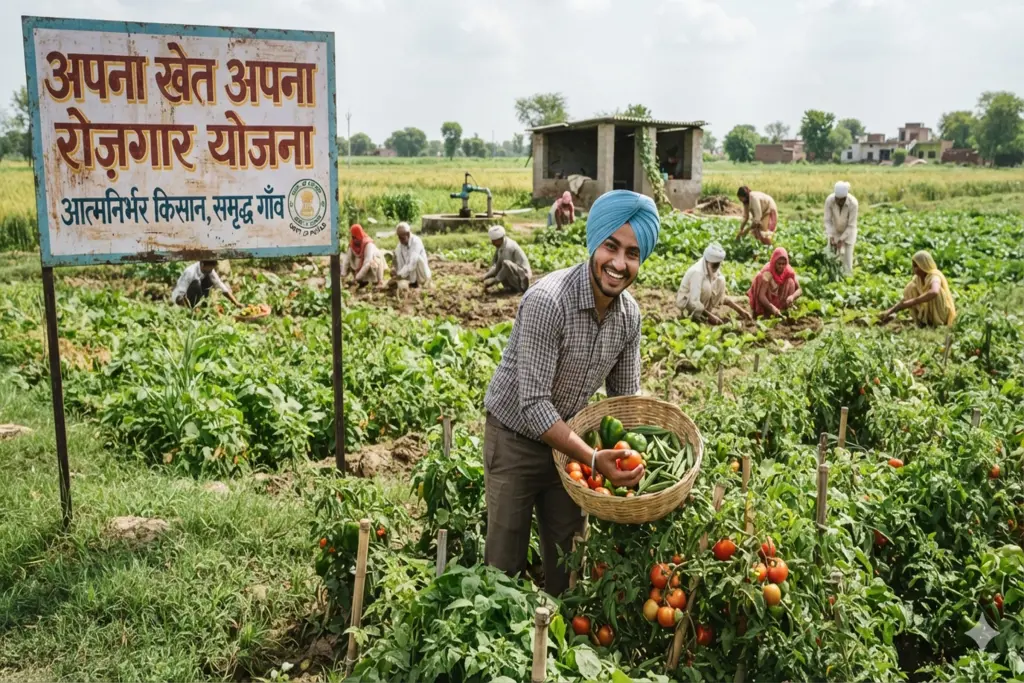
In a groundbreaking initiative, the Government of Punjab, under the visionary leadership of Chief Minister Maryam Nawaz Sharif, officially launched the Apna Khet Apna Rozgar Scheme. This groundbreaking project seeks to enable landless farmers, rural youth and marginalized families by giving them economic independence. The scheme involves the allocation of large areas of bare and unused state land, which is aimed at addressing rural unemployment, poverty and ensuring food security across the country.
To guarantee transparency and get rid of corruption, the government has implemented a state-of-the-art digital portal and only computerized balloting to provide land on merit.
Apna Khet Apna Rozgar Scheme Core Features
For this mega-project the Punjab government has earmarked more than 124,000 acres of government land worth about PKR 160 billion. The structure of the program consists of:
Long-Term Lease Agreements: In case the applicant has succeeded, they get agricultural land on a secured lease agreement for a period of 20 years.
The rent of land is charged at a very nominal rate of only PKR 100 per year with an aim of putting less pressure on poor farmers.
Allotment Sizes: The families in Cholistan area are allotted 5 acres of land each while 4 acres are being allotted to the applicants in other districts.
The government will also provide an interest free financial aid of PKR 50,000 per acre (up to PKR 200,000 per family) to aid early expenses such as seeds, fertilizer, land leveling etc.
Apna Khet Apna Rozgar Scheme Distribution Progress
The initial phase of Apna Khet Apna Rozgar Scheme heavily targets Southern Punjab and Cholistan desert areas. Out of 52,000 applications, the Cholistan Development Authority (CDA) verified more than 27,000 of them.
More than 16,000 families are going to benefit from 83,000 acres of land in Bahawalpur. The first phase involves sending out 10,290 rural households allotment letters. Meanwhile, computerised voting and manual balloting has been held in some areas such as Faisalabad and Muzaffargarh, where thousands of farmers have already got their allotment certificates.
Eligibility Criteria for the Apna Khet Apna Rozgar Scheme
The government of Punjab has put in place stringent eligibility requirements to ensure that the benefits are only available to the most deserving recipients:
Punjab Residency: Applicant should be a Permanent resident of Punjab with valid Domicile.
Valid NADRA Computerized National Identification Card is compulsory.
Target Group: Main beneficiaries are the poor tenants, sharecroppers and peasants who do not have any land for agricultural production.
Age and Demographics: The unemployed rural youth are the ones that are prioritized in order to prevent mass migration from villages to urban areas.
Women Empowerment Quota: The role of women in Agriculture has been acknowledged and a specific quota has been reserved, and about 20% of the total applications are from female candidates.
How to Apply Online via the Punjab Digital Portal
The application process is transparent, fully digitized and user-friendly. Anyone interested may apply following these steps:
To register an account, you can go to the official website of the Punjab Agriculture Department or the dedicated page for the scheme. Create an account with CNIC and mobile number.
Complete the Application Form and give accurate personal information, house address, family income sources, farming experience etc.
Supporting Document: Clear copies of your CNIC, domicile and any required affidavits for Landless should be uploaded.
Submit and Track: Make sure to check that they are all correct before submitting. Write down the Tracking ID that the system generates to track the application.
Socio-Economic Impact on the Rural Economy and Agriculture
The Apna Khet Apna Rozgar Scheme is not a one-off relief measure, but a viable economic policy. The development of hundreds of thousands of acres of previously unproductive areas will significantly increase the province’s production of food crops such as wheat, rice, cotton, etc.
It generates jobs directly for the farmers and indirect jobs for the logistics, cold storage and agro industries, etc. at macro level. This pioneering programme marks Pakistan’s history and is for the first time in the country’s history, a programme that is transforming the rural economy and providing financial self-reliance for the people at the grassroots level.