




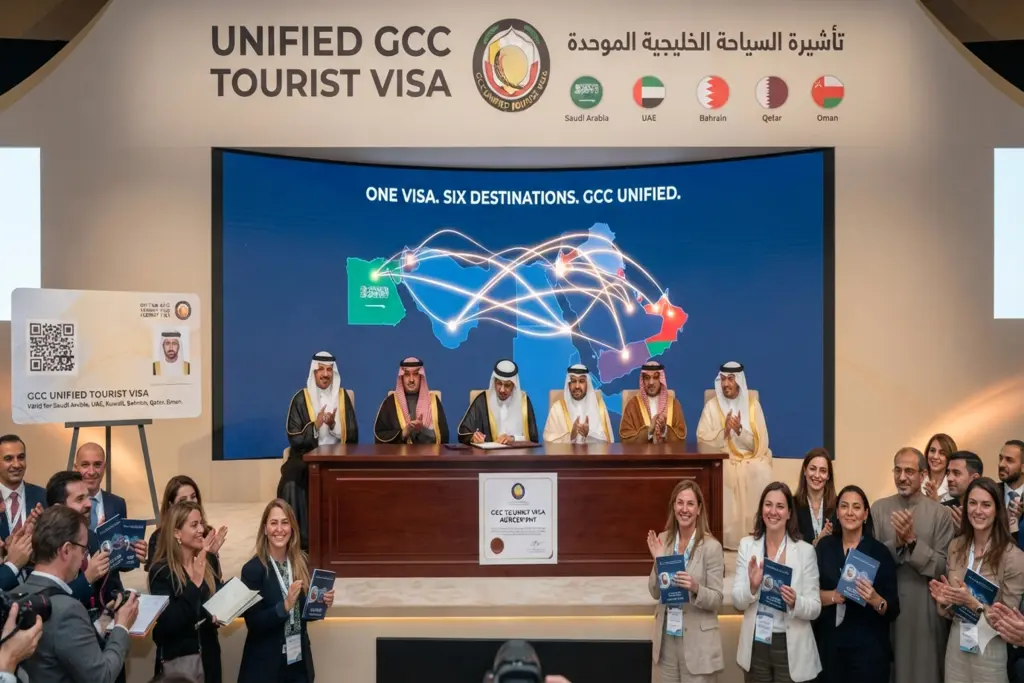
In a major transformation for Middle Eastern tourism, regional aviation logistics, and cross-border macroeconomic mobility, the Gulf Cooperation Council has finalized the structural parameters to launch its highly anticipated Unified GCC Tourist Visa.
Formally announced by GCC Secretary-General Jasem Mohamed Al-Budaiwi during a high-profile diplomatic conference in Riyadh, the centralized immigration platform completely discards multi-tiered manual application codes. By deploying a shared digital visa registry, the dynamic system mirrors Europe’s Schengen model, enabling international travelers to seamlessly tour Saudi Arabia, the United Arab Emirates, Qatar, Bahrain, Kuwait, and Oman under a single, unified travel credential.
One Visa, Six Nations: Flexible Durations and Cloud Application Infrastructure
Sovereign tourism authorities across the Gulf bloc verify that the unified travel route is explicitly engineered to accelerate the region’s broader economic diversification agendas and feed international visitor loops into strategic state frameworks like Saudi Arabia’s Vision 2030.
The digital processing engine operates on three core operational baselines:
Paperless Web-Integrated Portal: Applicants bypass physical embassy processing entirely. The application architecture functions as a 100 percent paperless, secure cloud solution where biometric vetting and fee settlements are handled via system-generated channels.
Flexible Multi-Entry Timelines: The unified permit is calibrated to grant a flexible validity tenure ranging from 30 to 90 days, allowing tourists to cross inter-state borders multiple times within the approved window without manual customs bottlenecks.
Active Biometric E-Gate Integration: To test mass transit viability, a successful pilot framework remains active between Bahrain and the UAE. Under this setup, arriving passengers leverage computer-vision-enabled electronic gates to clear immigration checks for both nations simultaneously at the primary port of departure.
Strategic Advantages for the South Asian Corporate and Expat Diaspora
The systemic roll-out of the Unified GCC Tourist Visa delivers immediate, high-tier professional and logistical utility to the millions of foreign workers and corporate managers residing within the Gulf region, particularly the large Pakistani and Indian expat networks.
Previously, a resident based in Dubai or Doha who intended to perform Umrah in Saudi Arabia or conduct a business meeting in Manama had to process separate localized entry applications. Under the upcoming green corridor framework, corporate visa holders can instantly request trans-border travel clearances directly through an internal mobile interface linked to their corporate residency files.
To utilize this automated portal, travelers simply need to maintain updated verification records:
Sovereign Passport and Balance Telemetry: A passport with a minimum of six months of structural validity alongside system-verified financial logs.
Cross-Border Health Coverage: A digital travel insurance policy universally recognized by the public health regulators of all six participating Arab nations.
Synchronization with the GCC Common Rail Network Master Plan
The Secretary-General confirmed that the unified visa software is being built to integrate directly with major upcoming physical transit networks, most notably the massive GCC Common Rail Project. This trans-gulf rail corridor will link commercial hubs like Dubai and Abu Dhabi directly with Saudi Arabia’s expanding high-speed rail lines.
While the definitive processing tariff has not been officially locked, financial compliance planners estimate the fee structure will sit comfortably between 90 and 130 US dollars, delivering a highly cost-effective and streamlined alternative to buying individual state visas. This macro-prudential migration update significantly boosts the Gulf’s international software image, making it one of the world’s most accessible multi-destination tourism hubs.